Search

GEOGRAPHY EDUCATION

Supporting geography educators everywhere with current digital resources.

Month

April 2012

Welcome to the Anthropocene

See on Scoop.itGeography Education

A 3-minute journey through the last 250 years of our history, from the start of the Industrial Revolution to the Rio+20 Summit. The film charts the growth of…


This video is a great primer to discuss human and environmental interactions as related to industrialization, globalization and climate change. 

See on www.youtube.com
Time to Revisit Food Deserts

See on Scoop.itGeography Education

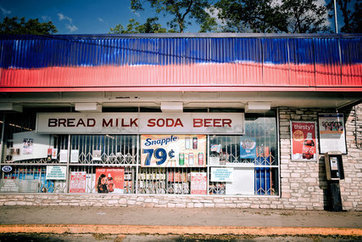
Research on obesity and food availability in poor areas suggests that access must be considered alongside factors like price, taste and education, too.


Access to fresh food is one of the barriers to healthy eating within many poorer neighborhoods in the United States and these areas that lack healthy options are referred to as “food deserts.”  At least that was what the conventional wisdom was.  This article looks other factors and issues surrounding healthy food options including poverty, education, transportation and culture.   

See on opinionator.blogs.nytimes.com

How to Make a Human Arabesque

See on Scoop.itGeography Education

This film and photographic experiment set out to prove The Power of X by attempting an Ideas Worth Doing for TEDxSUMMIT. The project fused architecture, danc…

This is a great demonstration of spatial thinking extending far beyond ‘just’ the discipline of geography.  Using spatial thinking, we can create truly breath-taking works of art.  To see more about this on the TED-ED site, see: http://ed.ted.com/on/AOxez5KX

See on www.youtube.com

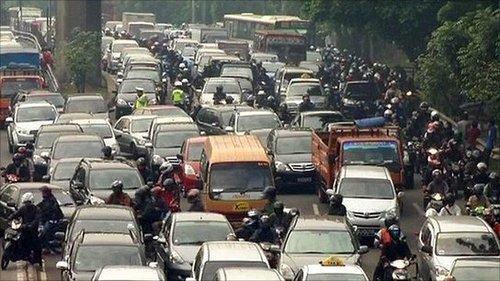
Unusual ways to avoid Jakarta’s traffic

See on Scoop.itGeography Education

Jakarta’s traffic is legendary and locals have now become experts at finding ways to get around the jams, with some even making money out of them.


The population of Indonesia is heavily concentrated on the island of Java, and the capital city of Jakarta faces a tremendous strain on it’s transportation network.  This video show that resourceful people will find inventive ways to make an unworkable situation manageable. 

See on www.bbc.co.uk

Break Dancing, Phnom Penh-Style

See on Scoop.itGeography Education

A former gang member from Long Beach, California, teaches break dancing to at-risk youth in Cambodia.


This video is a great example of cross-cultural interactions in the era of globalization.  Urban youth culture of the United States is spread to Cambodia through a former refugee (with a personally complex political geography).  What geographic themes are evident in this video? How is geography being reshaped and by what forces?

See on video.nytimes.com

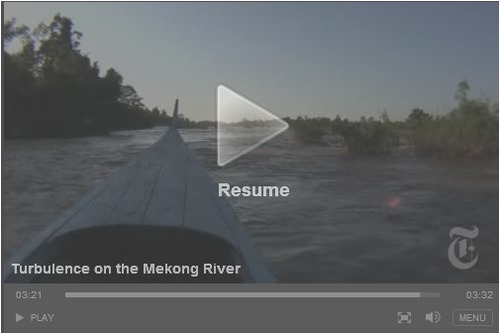
Turbulence on the Mekong River

See on Scoop.itGeography Education

The Mekong River was once a wild and primitive backwater. Today, growing demands for electricity and rapid economic growth are changing the character of what is the world’s 12th-longest river.


Economic progress for some often entails job loss and environmental degradation for others.  The once isolated and remote Mekong is experiences some impacts of globalization with residents having mixed feelings about the prospects. 

See on video.nytimes.com

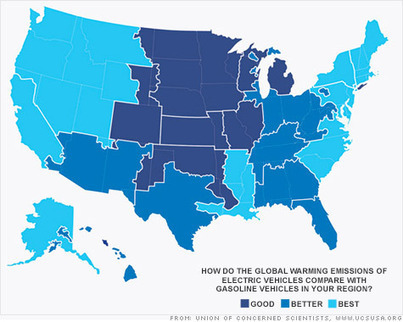
Greenest states to own an electric car

See on Scoop.itGeography Education

The carbon emissions produced by electric cars vary depending on how a given region generates its electricity.


If a consumer is trying to assess the environmental impact of their automotive/transportation practices, that answer may vary according to wher they live; the type of driving, the regions energy source and local air quality all need to be factored in.  Geography always matters. 

See on money.cnn.com

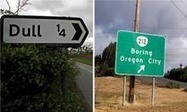
Silly placenames: welcome to Dull, twinned with Boring

See on Scoop.itGeography Education

Yes, there really are villages called Dull and Boring. But if you lived in one of them, would you see the joke?


In the greatest toponym pairing of all time, Dull (Scotland) is now the sister city to Boring (Oregon).  That’s a match made in Yawnsville.

See on www.guardian.co.uk

India’s Census: Lots Of Cellphones, Too Few Toilets

See on Scoop.itGeography Education

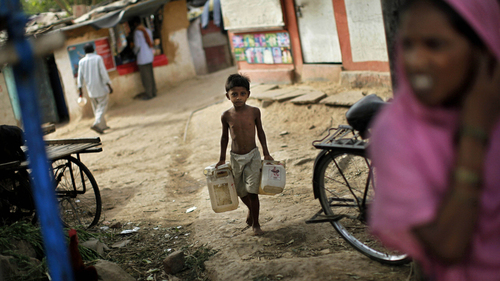
The results of India’s once-in-a-decade census reveal a country of 1.2 billion people where millions have access to the latest technology, but millions more lack sanitation and drinking water.


More Indians are entering the middle class as personal wealth is transforming South Asia’s economy in the private sector.  Yet the government’s ability to provide public services to match that growth still lags behind.  Why would it be that it is easier to get a cell phone than a toilet in India?  What will that mean for development?  

See on www.npr.org

Blog at WordPress.com.

Up ↑