Search

GEOGRAPHY EDUCATION

Supporting geography educators everywhere with current digital resources.

Month

February 2013

Changing Ethnic patterns in London

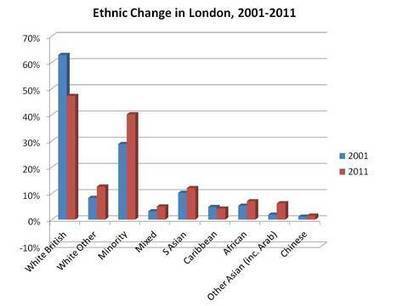
Of all the changes announced by the 2011 census, one of the most startling is the rapid change in the ethnic composition of London’s population.

Seth Dixon, Ph.D.‘s insight:

The fact the immigrants moving to the UK have flocked to London is not surprising (View a map of the census data).  Immigration isn’t the only component to this situation.  White Britons are also leaving London in large number, prompting some to refer to this as “White Flight.”  Today, white Britons are no longer the majority population within London (but still the largest ethnic group).  Some feel that this story has gone underreported and deserves more analysis.  What elements of human geography should an observer of this situation use in their analysis?  

Tags: ethnicity, London, migration, census, urban.

See on www.huffingtonpost.co.uk

Top 10 Countries That Disappeared In The 20th Century

New nations seem to pop up with alarming regularity. At the start of the 20th century, there were only a few dozen independent sovereign states on the planet; today, there are nearly 200!

Seth Dixon, Ph.D.‘s insight:

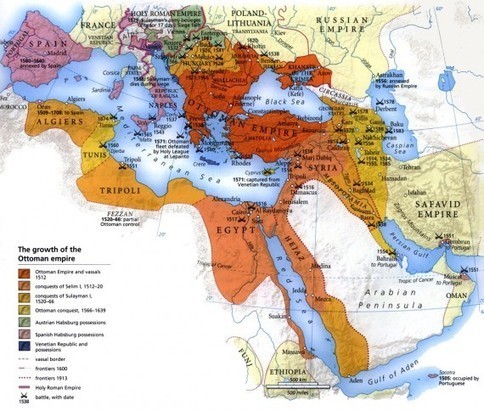
This list of countries that no longer exist in their current form include Czechoslovakia, Tibet, Sikkim, the Ottoman Empire and the Soviet Union. 


Tags: unit 4 political, historical, devolution.  

See on myscienceacademy.org

China’s demand for cotton is helping give the global market for the commodity a boost

See on twitpic.com

Why Vikings Abandoned Colony in Greenland

For years, researchers have puzzled over why Viking descendents abandoned Greenland in the late 15th century.

Seth Dixon, Ph.D.‘s insight:

As the climate began to cool the diet of the Greenland settlers changed dramatically.  Originally their diets consisted of about 20-30% seafood, but as farming became nearly impossible on this increasingly marginal land, it jumped up to about 80%.  The economic livelihood of the settlements was in danger and the solution lay in a cultural transition, but one that they didn’t want to make.  “They saw themselves as farmers and ranchers rather than fishermen and hunters...[and were] worried about the increasing loss of their Scandinavian identity.”  In essence they abandoned Greenland in part because they chose not abandon their Viking heritage to embrace a culture that would have be more like that of the Inuits.  Cultural factors may have mattered more than economic limitations.


Tags: Greenland, folk culture, historical.

See on www.spiegel.de

Who buys all the flowers and jewelry on Valentine’s Day?

Americans like to buy jewelry and flowers all year, not just for Valentine’s Day. How much do they spend annually, and who would probably spend the most?

Seth Dixon, Ph.D.‘s insight:

This is a fabulous set of maps that shows the value of GIS to assess the market feasiblity for any given commodity.  On this Valentine’s Day, it is especially interesting to map out the zip codes that purchase the most flowers, jewelry and diamonds.    

See on smartblogs.com

US Cities Quiz

With a selection of fun, varied trivia on some of your favourite North American cities, this US Cities Quiz is the ultimate way to test your knowledge of US geography!

Seth Dixon, Ph.D.‘s insight:

Tags: games, K12.

See on www.quizfortune.com

Rich Blocks, Poor Blocks

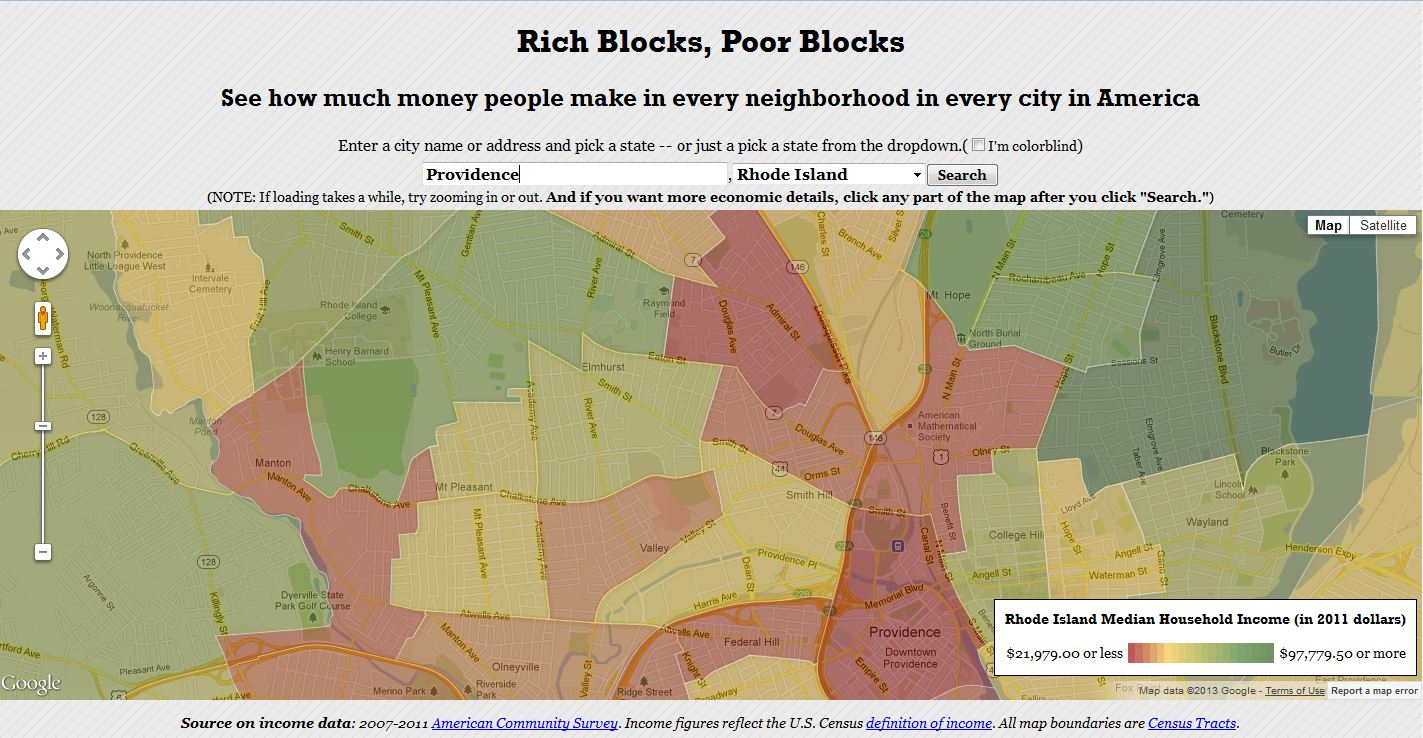
Income maps of every neighborhood in the U.S. See wealth and poverty in places like New York, Los Angeles, Chicago, Philadelphia, San Francisco, Miami, and more.

Seth Dixon, Ph.D.‘s insight:

This is the most user-friendly website I’ve seen to map economic census data.  This maps the average household income data on top of a Google Maps basemap that can be centered on any place in the United States.  This is a great resource to share with students of just about any age. 

Tags: statistics, census, GIS, mapping, cartography.

See on www.richblockspoorblocks.com

RichPoor

Geographic Presents…

Seth Dixon, Ph.D.‘s insight:

I loved this cuff links that I my wife got me for our anniversary, so I thought this bracelet would be a great Valentine’s Day gift for her.  Want to make your own?  Then read on. 

See on geographyeducation.org

As U.S. birth rate drops, concern for the future mounts

“The nation’s fertility rate has slipped below replacement levels partly because of the recession and a decline in immigration. That’s raising concern about the nation’s future.”

Seth Dixon, Ph.D.‘s insight:

During this recent recession, fertility rates in the United States have dropped with many speculating that the financial investment in child-rearing caused this shift.  The big question is this: will birth rates bounce back when the economy fully recovers or is the United States population going to follow the example of Western Europe?  What would the impact be for both of these scenarios?


Tags: USA, declining population, population, demographicsmodels, unit 2 population.

See on www.usatoday.com

Blog at WordPress.com.

Up ↑