Search

GEOGRAPHY EDUCATION

Supporting geography educators everywhere with current digital resources.

Tag

Middle America

Costa Rica’s Recent Struggles

“Costa Rica was once known as Central America’s peaceful paradise. Now cartels, cocaine trafficking, rising homicides, and political battles threaten its stability. Can [the new government] reverse the country’s violent slide?” SOURCE: War Fronts on Youtube

We need to prepare our students for the workforce of tomorrow, not the job market that our parents had.  Likewise, we need teach our students about places are as they are now and as they are becoming, not just relying on what they used to be like when we were young.  Case study—Costa Rica, a country I lived in during the mid-90s (1995-1997), but that country is now a different place.

It was the most peaceful country of Central America and Latin America from the 1950s to the 2000s.  It had no army, a reputation for eco-tourism, and sustainability.  Intel and other computing companies entered Costa Rica in1997, jump-starting numerous industries and expanding into medical instruments to transform this once Banana Republic.  So why would this country be at peril to violence and instability?  Regional geography.  Cocaine from South America  

In the 2000s, drug runners searched countries with both Atlantic and Pacific coasts that had a minimal national security presence. Costa Rica checked all the boxes and the other countries were already used.  As drug runners used the country, the domestic drug market grew, leading to street violence and surging homicide rates.  Gangs  

Costa Rica was a political shining star in the 80s, with their president winning the Nobel Peace Prize. Costa Rica’s politics today are now following El Salvador’s iron fist approach to increasingly gang violence as people are alarmed at the quick cultural and economic changes they are seeing in their country.  A minimal police force is now being boosted. This is a place where we need to update our regional information as things have shifted rather quickly.

TagsCosta Rica, narcotics, Middle America.
The World’s Newest Republic

How one nation’s sovereignty movement is setting off a chain reaction among former British colonies in the Caribbean.

Though Barbados gained its independence as a constitutional monarchy in 1966, only last year did the nation formally sever ties with Britain—removing Queen Elizabeth II as its head of state and electing the nation’s first president in the process. Removing the Queen as head of state is not a political endpoint, then, but one step toward reasserting Black Barbadian identity and sovereignty.” SOURCE: The Atlantic

What is the difference between the United Kingdom, Great Britain, and England?  Or what about the distinction between the Commonwealth, possessions of the Crown, and the British Empire?  It is easy stay out of the complicated nature of these questions, but many people in former parts of the British Empire are starting to delve into these questions; the death of Queen Elizabeth made many of these conversations more on the forefront of the public consciousness. Some Commonwealth countries like Barbados have distanced themselves from what they see as vestigial remains of a complex colonial heritage, and countries like Jamaica are seriously considering following suit.

Questions to ponder: What old forces have kept political connections between the UK and former colonies in place for so many decades?  What new forces are reconfiguring political and cultural institutions in the Caribbean?

TAGS: Barbados, colonialism, Middle America, political, sovereignty.

Queen Elizabeth and Barbados relationship change symbolizes a generational shift

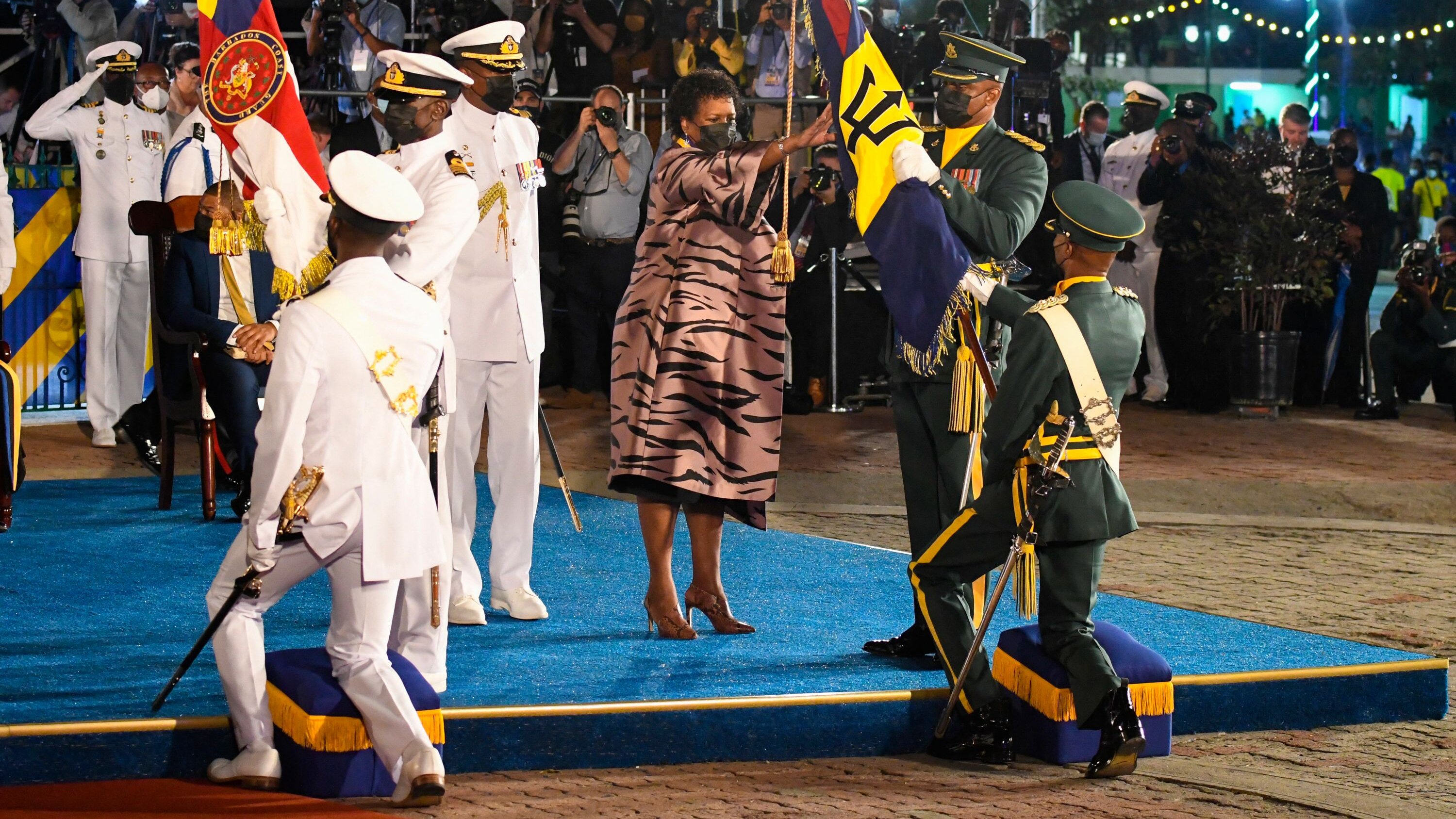
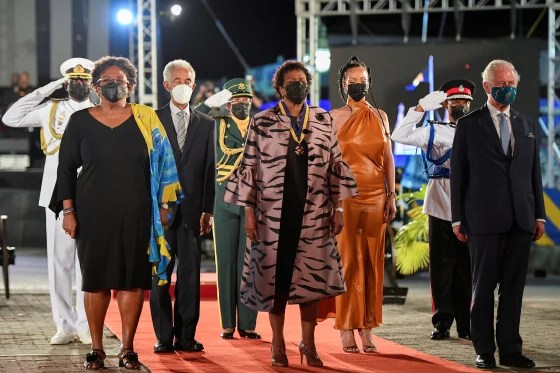
Barbados’ Prime Minister Mia Mottley, new President Sandra Mason, singer Rihanna, former cricketer Garfield Sobers and Britain’s Prince Charles stand during the Presidential Inauguration Ceremony to mark the birth of a new republic in Barbados.

Perhaps against the wishes of an older West Indian generation, the new republic made a move that leaves an open question about what comes next. Barbados breaking with the Queen shows how younger leaders of color will continue to push their countries out of the shadows of colonial rule.” SOURCE: NBC News

Barbados has been an independent country since 1966, so what does this push against the remaining vestiges of the old British Empire mean? It means that the Queen will no longer be the nominal head of state with a local Prime Minister in Barbados; the new position of President will be fully acknowledged as the head of state without any deference to the Queen of England or the United Kingdom. Barbados is NOT, however, leaving the British Commonwealth, a trade association among former members of the British colonial empire. The great thing about the article linked above is the that while skeptics might say this is window dressing, but this symbolic shift is has some powerful cultural reverberations as a new generation is reconsidering the legacy of slavery and colonialism as they frame their future. Jamaica is another country in the Commonwealth now reconsidering their relationship with the British crown.

TAGS: Middle America, political, sovereignty.

Belize: A Spanish Accent in an English-Speaking Country

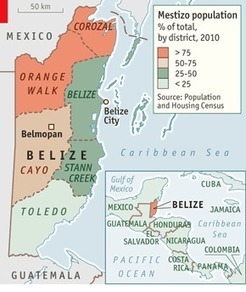
"BELIZE has long been a country of immigrants. British timber-cutters imported African slaves in the 18th century, and in the 1840s Mexican Mayans fled a civil war."

Source: www.economist.com

This is an older article (2012), but the pattern mentioned here is all the more relevant.  Belize has a much higher Human Development Index ranking that its Central American neighbors such as Guatemala.  That fact alone makes Belize a likely destination for migrants.  Given that Belize was ‘British Honduras’ during colonial times, English is (still) the official language, but that is changing as increasingly Spanish-speaking immigrants are changing the cultural profile of Belize.      

At Seattle Mariners games, grasshoppers are a favorite snack

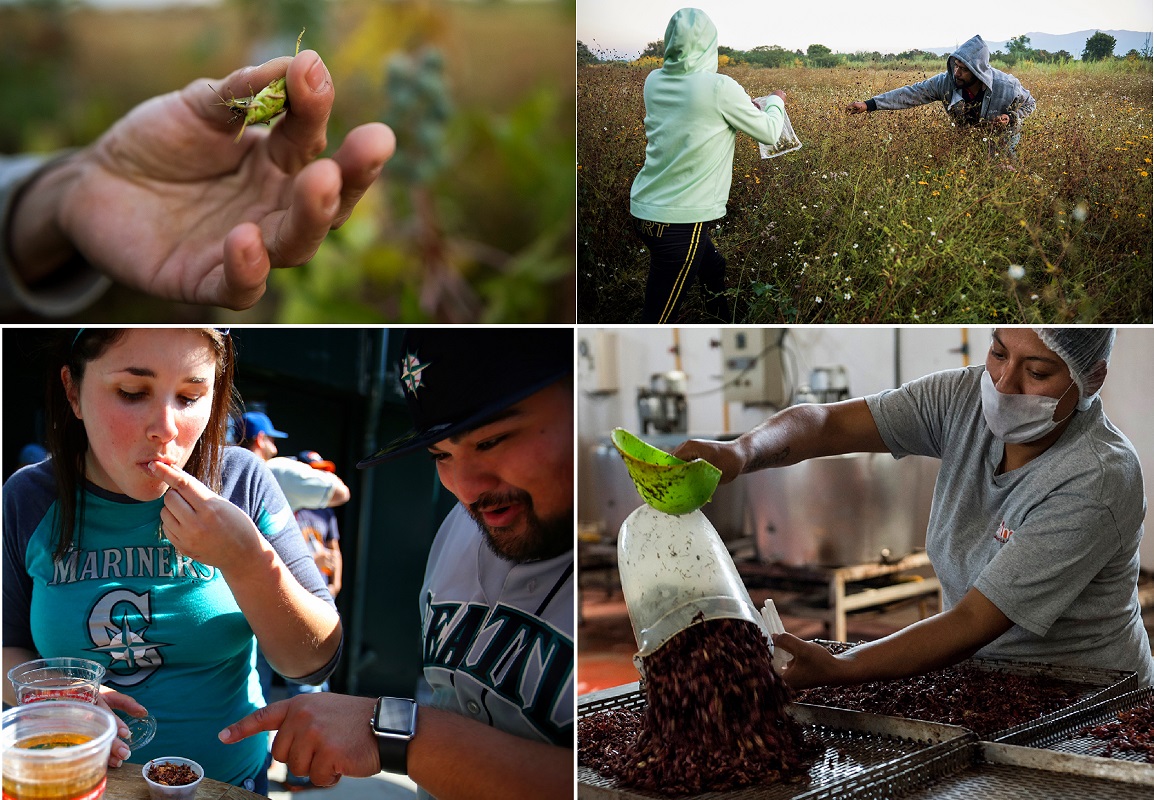
“Chapulines [grasshoppers] have become a snack favorite among baseball fans in Seattle. Follow their path from Oaxaca, Mexico, to Safeco Field. To many, the insect might be a novelty – a quirky highlight for an Instagram story from a day at the ballpark. To those in Mexico consuming them for centuries, they are a building block of nutrition.”

Source: www.espn.com

Eating insects is incredibly nutritious; raising them is cost effective and environmentally sustainable. And yet, the cultural taboos against entomophagy in the West are barriers to the cultural diffusion of the practice.  At some baseball games and high-end restaurants, grasshoppers are sold as a novelty item.  What I especially enjoy about this ESPN article is that it covers the cultural production of the chapulines in Mexico and follows the story to the consumption of the grasshoppers in the United States.  


Tags: sport, popular culturediffusion, culturecultural norms, foodMexico, economic, agriculture.

Nicaragua on the Brink, Once Again

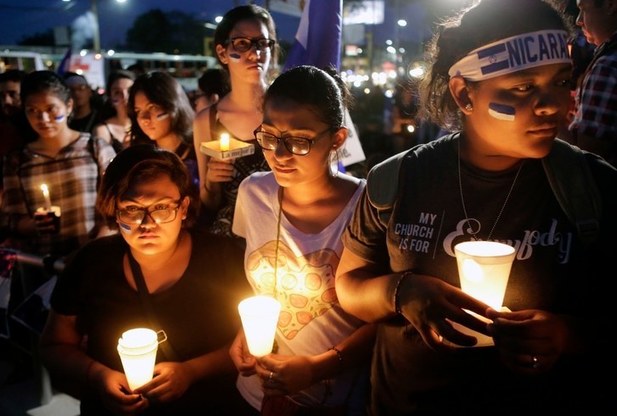
Jon Lee Anderson on protests in Nicaragua over proposed social-security reforms that are threatening the stability of the government of President Daniel Ortega.

Source: www.newyorker.com

The status quo of the Nicaraguan political system threats to be completely upended and this article is a good primer for getting a handle on the situation. 


Tags: Nicaragua, political.

Maya civilization was much vaster than known, thousands of newly discovered structures reveal

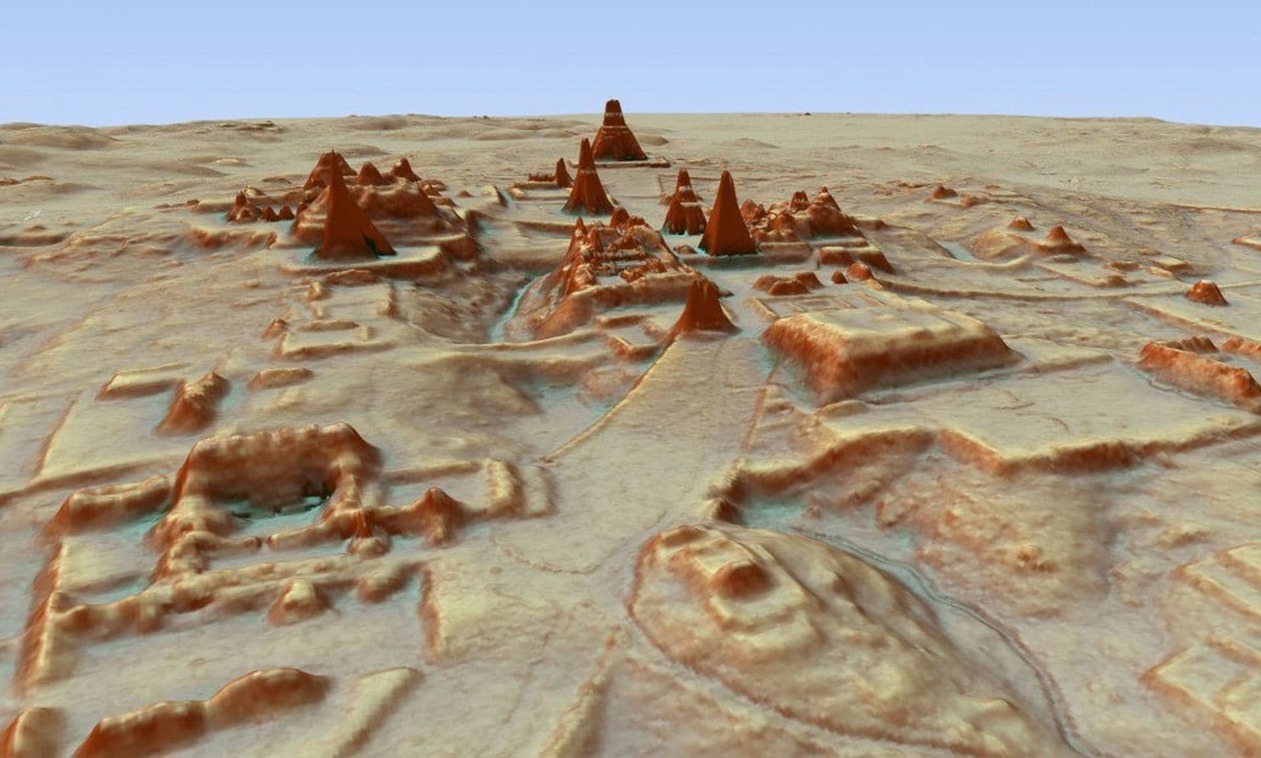
Scientists using high-tech, airplane-based lidar mapping tools have discovered tens of thousands of structures constructed by the Maya.


Archaeologists have spent more than a century traipsing through the Guatemalan jungle, Indiana Jones-style, searching through dense vegetation to learn what they could about the Maya civilization. Scientists using high-tech, airplane-based lidar mapping tools have discovered tens of thousands of structures constructed by the Maya: defense works, houses, buildings, industrial-size agricultural fields, even new pyramids.

The lidar system fires rapid laser pulses at surfaces and measures how long it takes that light to return to sophisticated measuring equipment. Doing that over and over again lets scientists create a topographical map of sorts. Months of computer modeling allowed the researchers to virtually strip away half a million acres of jungle that has grown over the ruins. What’s left is a surprisingly clear picture of how a 10th-century Maya would see the landscape.

Tags: lidar, spatial, remote sensing, geospatial, unit 1 GeoPrinciplesGuatemala, Middle America.

Source: www.washingtonpost.com

Divided island: How Haiti and the DR became two worlds

Haiti and the Dominican Republic share a border, and an island. But the two countries are very different today: the Dominican Republic enjoys higher quality of life for many factors than Haiti. I went to this island and visited both countries, to try and understand when and how their paths diverged.

Source: www.youtube.com

This video is an exciting debut for the new series “Vox borders.”  By just about every development metric available, the Dominican Republic is doing better than Haiti, the only bordering country on the Caribbean island of Hispaniola with the DR.   


Questions to Ponder: How does the border impact both countries?  How has sharing one island with different colonial legacies shaped migrational push and pull factors?


Tags: Haiti, Dominican Republic, video, poverty, development, economic, labor, migration, political, borders.

Mexico City 1968

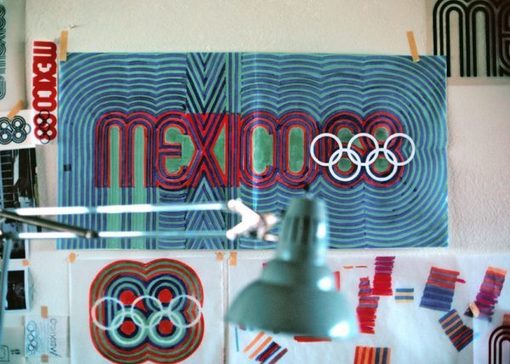
“The 1968 Olympics took place in Mexico City, Mexico. It was the first Games ever hosted in a Latin American country. And for Mexico City, the event was an opportunity to show the world that they were a metropolis as worthy as London, Berlin, Rome or Tokyo to host this huge international affair. The 1968 Olympics were decreed ‘the Games of Peace.’ So Wyman designed a little outline of a dove, which shop owners all over the city had been given to stick in their windows. A protest movement, led by students, was growing in the city around [the organizers and designers]. These protestors believed the long-ruling Institutional Revolutionary Party (PRI) catered to wealthy Mexicans rather than the poor, rural and working class. Although the country had been experiencing huge economic growth, millions of people had still been left behind. The ‘Mexican Miracle’ hadn’t reached everyone.”

Source: 99percentinvisible.org

Few years are as powerful in the minds of Mexican identity as the year 1968.  Like so many 99 percent invisible podcasts, this blends urban design, social geography, local history in a way that deepens our understanding of place. The built environment can be molded to project an image, and can be used to subvert that same message by the opposition.    


Tagssport, Mexico, Middle America, urban, architecture, place, landscape.


Blog at WordPress.com.

Up ↑