Search

GEOGRAPHY EDUCATION

Supporting geography educators everywhere with current digital resources.

Tag

Kazakhstan

A Happier Note from the Aral Sea

Soviet irrigation projects diverted the two great rivers feeding the Aral Sea, and over a few decades the water collapsed, the fishing towns died, and toxic dust storms swept the exposed seabed. We trace how the disaster unfolded, why it became a byword for human-caused ecological catastrophe — and then how a single, focused piece of engineering changed the story in the north. But here’s the twist: the fix wasn’t some vast, impossible re-flooding of the entire sea. It was a dam — the Kok-Aral Dam, completed in 2005 — that concentrated the remaining river flow into the smaller North Aral Sea. Within a few years the water rose, the salinity dropped, the fish returned, and the fishing communities along the northern shore came back to life. We cover what the recovery actually achieved, why the larger southern sea remains mostly lost, and what this divided outcome reveals about what restoration can and can’t do. This is the full story — the collapse, the science, and the surprising truth about the sea that came back from the dead.” SOURCE: Dr. Edmund Hale on YouTube

For years, I taught about the Aral Sea as a cautionary tale of how devastating poor environmental choices can be, and how long reaching the impacts can be. True, the Uzbek side of the Aral Sea is still a mess, but this video shows just how Kazakhstan did what was unthinkable in the 1990s…save their side of the Aral Sea. All the experts said that the damage was irreversible, the devastation too catastrophic and widespread to solve decades of Soviet water mismanagement in a desert ecosystem. This is now a case-study in how small and simple things within our stewardship can bring about great things to come to pass. This video shows how a simple idea damming the water flow could restore Kazakhstan’s lake, ecosystems, fishing industry, and so much more.

Sometimes we act as if all the people can do to the environment is ruin it, and that leaving it alone is the only option for restoration. Admittedly that is an important action for many situations, but we can use our ingenuity, technology, and energy to improve physical environments that have been depreciated. This positive outlook show that human agency can be a force for environmental good while improving the living conditions for our populations.

TAGS: Central Asia, environment, Kazakhstan.

Kazakhstan renames capital of Astana to Nur-Sultan

"Astana has been renamed as Nur-Sultan, as a tribute to former leader Nursultan Nazarbayev, who recently resigned. Astana replaced Almaty as the capital in 1997 and boomed from a minor provincial steppe town into a futuristic city. The name Astana literally means ‘capital’ in Kazakh and there has long been speculation it could, at some point, be renamed after the leader who shaped it."

Source: www.aljazeera.com

St. Petersburg was the classic example of a forward capital that was renamed after the visionary leader responsible for that change.  The world now has another example of this phenomenon. 


GeoEd Tags: political, Central Asia, Kazakhstan.

Scoop.it Tags: political, Central Asia, Kazakhstan.

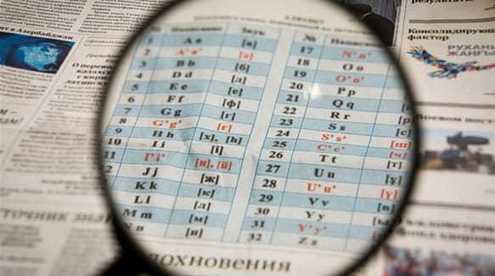
Kazakhstan to switch from Cyrillic to Latin alphabet

“Kazakh was written in Arabic script until 1920 when it was substituted by the Latin alphabet. In 1940, it was replaced by a Cyrillic one. ‘Given that over 100 countries in the world use the Latin script, it is crucial for Kazakhstan’s integration into the global educational and economic environment,’ said Gulnar Karbozova.

The former Soviet Republic declared independence in 1991. Its state language is Kazakh, a member of the Turkic family.

Yet, Russian is widely spoken across Kazakhstan and is its second official language.”

Source: www.aljazeera.com

Having to translate your language into another is one level of cultural difference, but having to change into another writing system (transliteration) adds an extra layer of foreignness that makes interactions more difficult.  Kazakhstan, a with a history of connections to the Middle East and Russia, is now making a choice that appears to signal greater connection to the larger global community.  This is not going to be an easy transitions, as as this additional BBC article notes, the choice comes with plenty of advantages and disadvantages


Tags: languagecultureworldwide, regions, Central Asia, Kazakhstan.

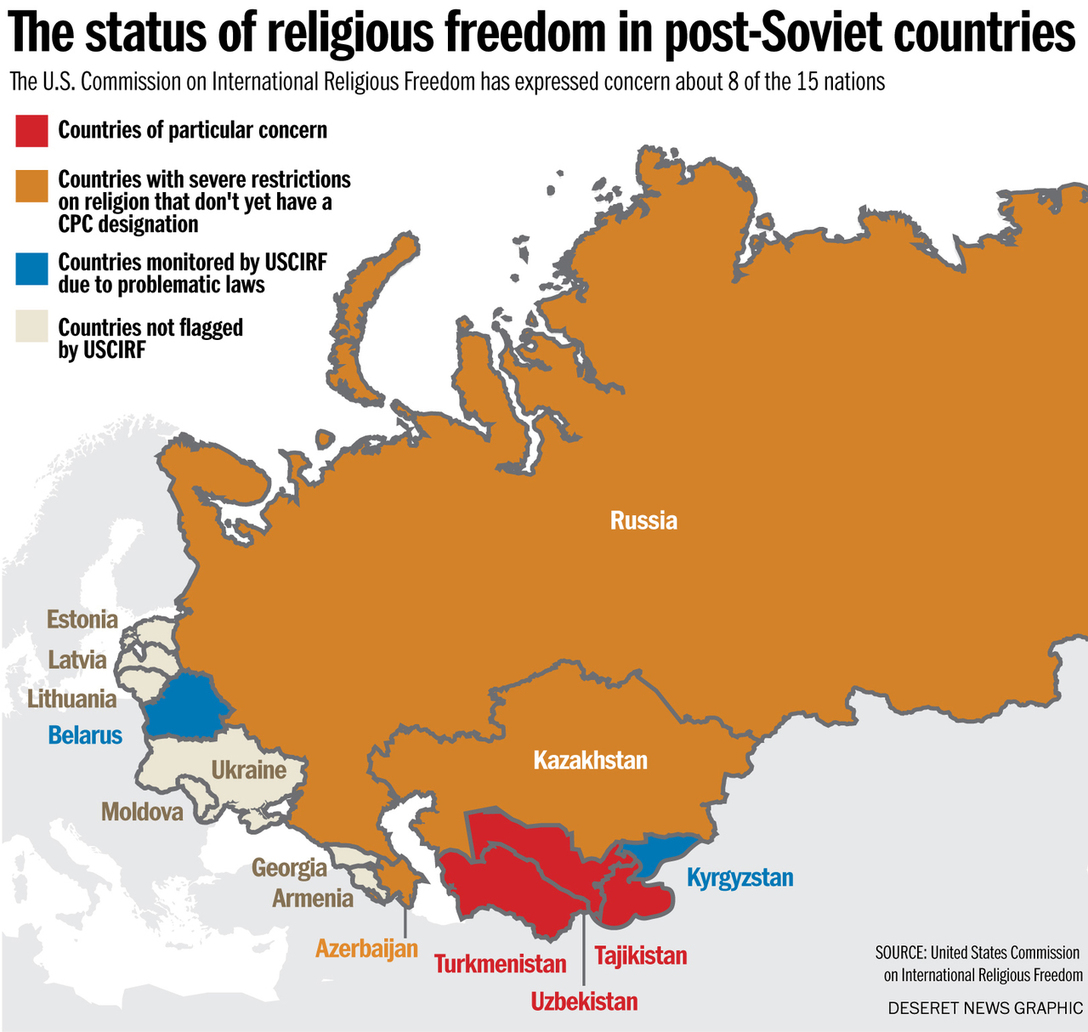
The fate of religious freedom in the former USSR, 25 years after its collapse

It’s been 25 years since the fall of the Soviet Union. How has religious freedom fared in this part of the world?

Source: www.deseretnews.com

The collapse of the former Soviet Union was one of the biggest political events of the 20th century with long-reaching cultural ramifications.  The generations of state-sponsored atheism followed by a variety of new political policies has meant that religious freedoms vary greatly in the regions that were once a part of the USSR.  This article gives a good breakdown of all the former SSR’s and the state of religious freedom today in each of them.    


Tags: religionChristianityIslam, Russia, Ukraine, Armenia, AzerbaijanGeorgia, Belarus, Latvia, Lithuania, Estonia, Moldova, Tajikistan, Uzbekistan, Kyrgyzstan, Turkmenistan, Kazakhstan.      

Blog at WordPress.com.

Up ↑