Search

GEOGRAPHY EDUCATION

Supporting geography educators everywhere with current digital resources.

Tag

narcotics

Costa Rica’s Recent Struggles

“Costa Rica was once known as Central America’s peaceful paradise. Now cartels, cocaine trafficking, rising homicides, and political battles threaten its stability. Can [the new government] reverse the country’s violent slide?” SOURCE: War Fronts on Youtube

We need to prepare our students for the workforce of tomorrow, not the job market that our parents had.  Likewise, we need teach our students about places are as they are now and as they are becoming, not just relying on what they used to be like when we were young.  Case study—Costa Rica, a country I lived in during the mid-90s (1995-1997), but that country is now a different place.

It was the most peaceful country of Central America and Latin America from the 1950s to the 2000s.  It had no army, a reputation for eco-tourism, and sustainability.  Intel and other computing companies entered Costa Rica in1997, jump-starting numerous industries and expanding into medical instruments to transform this once Banana Republic.  So why would this country be at peril to violence and instability?  Regional geography.  Cocaine from South America  

In the 2000s, drug runners searched countries with both Atlantic and Pacific coasts that had a minimal national security presence. Costa Rica checked all the boxes and the other countries were already used.  As drug runners used the country, the domestic drug market grew, leading to street violence and surging homicide rates.  Gangs  

Costa Rica was a political shining star in the 80s, with their president winning the Nobel Peace Prize. Costa Rica’s politics today are now following El Salvador’s iron fist approach to increasingly gang violence as people are alarmed at the quick cultural and economic changes they are seeing in their country.  A minimal police force is now being boosted. This is a place where we need to update our regional information as things have shifted rather quickly.

TagsCosta Rica, narcotics, Middle America.
Colombia rejects FARC deal: What’s next?

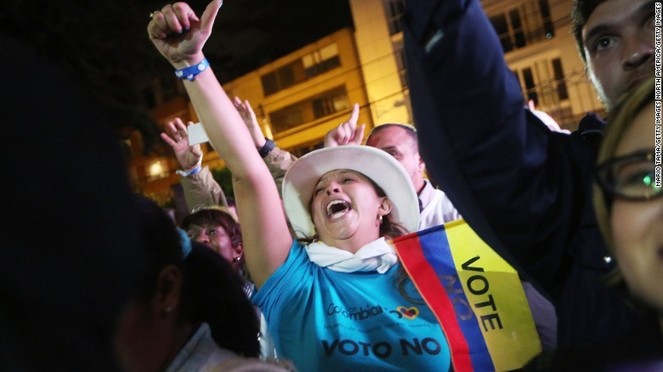
“A narrow win for Colombia’s opponents to a government peace deal with FARC rebels has thrown the country into disarray, leading one journalist to starkly declare, ‘Nobody really knows what will happen tomorrow.’  Likened to the fallout from the United Kingdom’s ‘Brexit’ referendum, the vote’s unexpected failure has left the Colombian political classes reeling and unsure how to respond in order to save four years of hard negotiation with the Marxist militia.”

Source: www.cnn.com

The Colombian peace negotiations with FARC (the insurgent rebels in drug producing regions) were hailed as the key for Colombia to move past it’s violent, drug-cartel past and move into the future.  As the Colombian population rejected the deal by the slimmest of margins (50.22% against), it leaves the government “without a Plan B.” There are more questions than answers at this point about what might happen (if you are asking what’s FARC?, then this primer will walk you through it). 


TagsSouth America, Colombiapoliticalnarcotics, conflict.

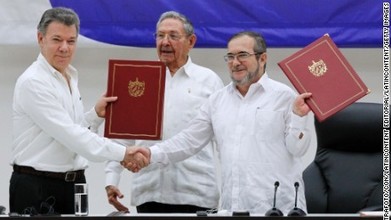
FARC-Colombia peace deal finalized

Negotiators seeking to end the insurgency in Colombia, one of the world’s longest-running conflicts, said they had reached a final peace deal.

Source: www.cnn.com

Farclandia has long been an insurgent state where the Colombian government had no real power to enforce the rule of law and their sovereignty over this area that all the political maps say are Colombia.   This shadowy place became a place where drug cartels could operate freely and many of the concessions that Colombia is making for this deal to happen involve amnesty for past crimes. 


TagsSouth America, Colombiapoliticalnarcotics. conflict.

Mexico’s Drug War

“Despite Mexico’s strengthening democracy and booming economy, the country’s security crisis rages on. Fifty thousand people have been killed in the past five years due to drug and organized crime-related violence.”

Source: www.youtube.com

Drug trafficking between Mexico and the Unites States has been burdening both countries for decades. Violence, drug abuse, kidnappings, murders, and government corruption are just a few of the issues that have resulted from it. The Mexican cartela are the culprits behind all of these issues. This gang is funded by drug money. They even exchange drugs for weapons over the U.S border. Recently, many Mexican marijuana farmers have stopped production due to the legalization of pot in many U.S states. Because pot is being produced in smaller quantities in Mexico, the amount of trafficking over the border will decrease, additionally resulting in lower crime rates and violence at the border. The only sure way to help end the drug war is to end the use of illegal drugs in both Mexico and the United States, but that is easier said than done.


TagsMexico, conflictnarcotics.

Do The Math – Why The Illegal Business Is Thriving

“Globalization hit organized crime over the last decade and now is integral to its most profitable business — the international narcotics traffic. Once a regional problem involving a customer base of a few million, and barely a billion dollars in sales, the illegal drug industry is now a worldwide enterprise with tens of millions of hard core consumers spending hundreds of billions on opiates, cocaine and amphetamines and marijuana, as well as other drugs.”

Source: www.pbs.org

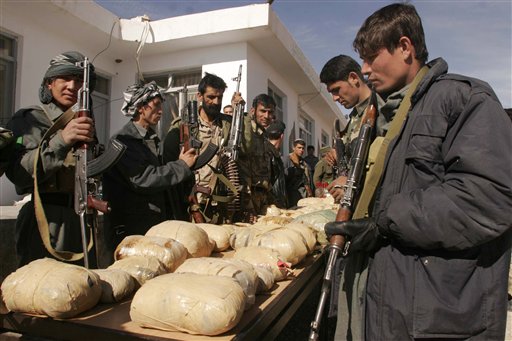
The United Nations Office on Drugs and Crime (UNODC) calls drug trafficking “a global illicit trade involving the cultivation, manufacture, distribution and sale of substances which are subject to drug prohibition laws.”  While some individuals are profiting off these drugs, the overall impact of the society and the places involved with the illegal trade is detrimental. 


Tags: globalization, conflictnarcotics.

Create a free website or blog at WordPress.com.

Up ↑