Search

GEOGRAPHY EDUCATION

Supporting geography educators everywhere with current digital resources.

Month

September 2016

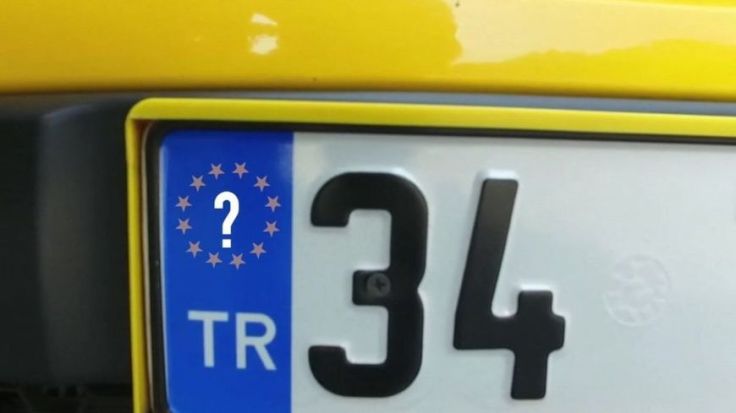
Turkey’s ‘bumpy ride’ into the EU?

“As the UK prepares for what looks like a slow and painful divorce from the European Union, the people of Turkey are wondering how their relationship with Europe will now develop.

The government in Ankara has been seeking to strengthen its case to join the EU, but as Europe grapples with Brexit – is the Turkey’s membership closer or further away?”

Source: www.bbc.com

This video show some of the recent shifts in the always important, often rocky Turkey/EU relationship.   Economically, Turkey has consistently sought greater ties with Europe for the past few decades and Europe keeps Turkey at arms length.    Turkey has applied to join the EU, but that is not going to happen without some massive social restructuring that would take years. 


Tags: EuropeTurkey, supranationalism, economicrefugees, political, video.

It’s a Matter of Perspective

“There’s a flip side to everything,” the saying goes, and in 2 minutes, Derek Sivers shows this is true in a few ways you might not expect.

Source: www.youtube.com

In this ultra-short TED talk, Derek Sivers show that what is considered true is often dependent on your perspective, the context, and how it is situated within a particular paradigm.  This is a mind-blowing video because it exposed our framework (which might go unquestioned as universal) to be but one of many ways in which to organize the world and the information within it.  His first example is the Japanese address system (I prefer to show this version of the same material since the visuals are better).  I also enjoy showing this clip together to hammer home the point that our perspective shapes our view of reality.  
 
Tags: Japan, perspective, TED. 

Death Valley’s Roving Rocks

Death Valley,California – Giant boulders in the desert look as though their moving all on their own! But could weird weather be behind these roving rocks

Source: www.youtube.com

Since the video above was created, the mystery has been solved.  On very rare occasions, when it rains in the region, water will accumulate in the playa (discovermagazine.com).  If the wind is powerful and consistent enough, the wind will push the panels of ice against these rocks and over time, the ice floes will push these rocks, leaving behind distinctive trails (latimes.com). This perfect combination of water, wind, ice and heat creates a remarkable signature on the landscape (livescience.com).  The video in this article (weather.com) nicely explains how the non-aerodynamic rocks of Death Valley’s Racetrack Playa move, leaving behind their trail in the hot desert.  Numerous attempts using GPS receivers (NatGeo.com) and good ol’ fashioned observations have been made, but observing ice in Death Valley is so rare that no one had ever seen it until now (phys.org).  


Tags: physical, geomorphology, landforms, desertlandscape.

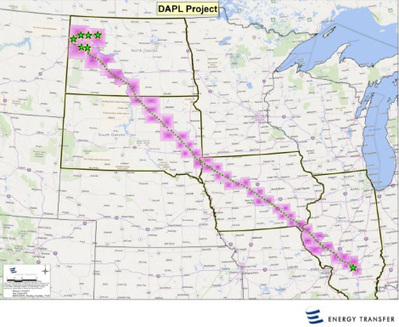
Dakota Access Pipeline: What You Need to Know

Conflict between Native American protesters and private security personnel over construction of the Dakota Access Pipeline has turned violent. What is the Dakota Access Pipeline?


Tags: industryconflict, economic, energy, resources, environmentindigenous, ecology.

Source: blog.education.nationalgeographic.com

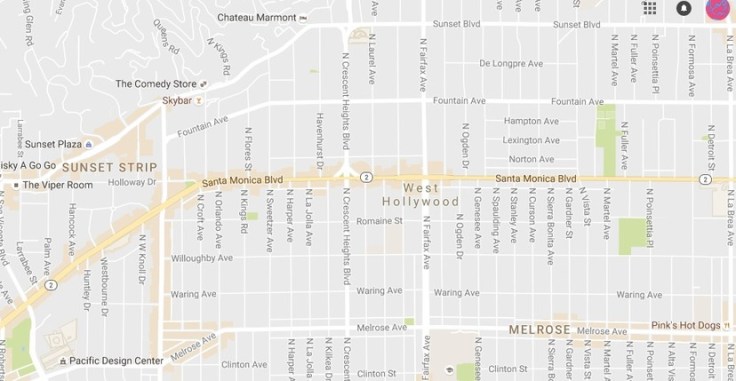
All Maps Are Biased. Google Maps’ New Redesign Doesn’t Hide It.

“Google rolled out its new Maps design…from a navigational tool to a commercial interface and offers the clearest proof yet that the geographic web—despite its aspirations to universality—is a deeply subjective entity.”

Source: www.slate.com

Google Maps was updated over the summer, and the updates don’t make them more impartial, but that isn’t a bad thing.  Google Maps now highlight ‘Areas of interest,’ which are created with algorithms designed to reveal the “highest concentration of restaurants, bars, and shops.” The algorithms aren’t ‘objective,’ but are fine-tuned by human engineers to reflect what they consider ‘Areas of Interests’ should look like.  Maps are never as objective as they appear to be, and that can often be a great thing. 


Tags: google, mapping, geospatial, cartography, visualization.

What assimilation means to the ‘taco trucks on every corner’ Trump supporter

Marco Gutierrez, founder of Latinos for Trump, explains his view of immigration and assimilation to the US.

Source: www.pri.org

I’m NOT trying to use this platform to advance any partisan political agenda, but I think this brings up some very interesting narratives that are used when discussing migration and culture, which becomes a political ‘hot-button’ topic.  There is often cultural pressure on the migrant to assimilate into the host culture (or at least acculturate to a certain degree).  This larger national discussion centers on whether cultural assimilation should be expected of migrants and how much cultural diffusion the host culture will be receiving from the migrants.

Questions to Ponder: How are cultural norms placed on migrants?  What are some recent examples of migrants not wanting to assimilate that have led to political tension?

Tags: culture, cultural norms, migration, political.

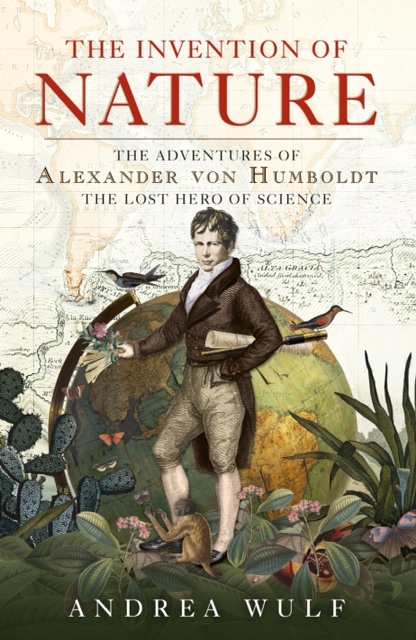
Recovering Intellectual Ancestors

“Andrea Wulf’s new book The Invention of Nature reveals the extraordinary life of the visionary German naturalist Alexander von Humboldt (1769-1859) and how he created the way we understand nature today. Though almost forgotten today, his name lingers everywhere from the Humboldt Current to the Humboldt penguin. Humboldt was an intrepid explorer and the most famous scientist of his age. Perceiving nature as an interconnected global force, Humboldt discovered similarities between climate zones across the world and predicted human-induced climate change. Wulf traces Humboldt’s influences through the great minds he inspired in revolution, evolution, ecology, conservation, art and literature.  In The Invention of Nature Wulf brings this lost hero to science and the forgotten father of environmentalism back to life.”

Source: www.andreawulf.com

I was glad to find this biography of Alexander von Humboldt.  He has been described as the last great ancient geographer concerned with understanding an eclectic cosmography as well as the first modern geographer. He is honored far and wide throughout Europe and especially  Latin America for his explorations, but given that people are confused as how to categorize him and classify his contributions, today he is under-appreciated.  Geographers need to reclaim his memory and call his extensive, globetrotting work on a wide range of subjects ‘geography.’  Here are more articles and videos on the man that I feel geographers should publicly champion as their intellectual ancestor the way that biologists point to Darwin.  


Tags:  historicalbiogeography, book reviews.

Why Italy’s ‘Fertility Day’ is backfiring

“Facing a low fertility rate (1.4), Italy is holding its first ‘Fertility Day‘ on Sept. 22, which will emphasize ‘the beauty of motherhood and fatherhood’ and host roundtable discussions on fertility and reproductive health. That may seem inoffensive, but the country’s health department is trying to raise awareness with an ad campaign that’s striking many as misguided and, worse, sexist and alarmist.”

Source: www.cbsnews.com

This pro-natalist campaign designed by the health ministry has received near universal criticism (in an attempt to see other perspectives, I searched for a more positive or even neutral article on the topic and came up empty-handed).  Italy’s Prime Minister openly scoffed at the premise of the campaign, and many pundits argue that it shames and pressures women into thinking about personal choices of childbearing as if they were communal responsibilities.  Unlike the infamous ‘Do it For Denmark‘ advertisements that were filled with playful innuendos, or Singapore’s ‘Maybe Baby‘ which highlights the joys of parenthood, this one has more overtones of duty and plays on fear more than those other pro-natalist campaigns.   


Tags:  ItalyEurope, declining populations, population, demographic transition model, modelsunit 2 population. 


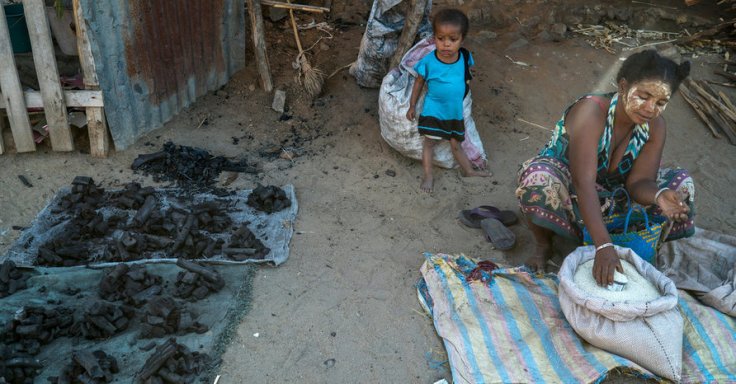
Africa’s Charcoal Economy Is Cooking. The Trees Are Paying.

In Madagascar, the booming charcoal business is contributing to deforestation and may exacerbate the effects of global warming.

Source: www.nytimes.com

Deforestation does not happen in a vacuum–it occurs in an economic, political, and historical context.  Rural Africans have less access to high value commodities and converting forests into charcoal is one of the few options (similar to the issue in Haiti).  The short-term economic gain for a few individuals leads to long-term environmental problems such as soil erosion, flooding, and habitat destruction for many species.  


Tags: biogeography, environmentecology, poverty, development, economic, labor, Madagascar, erosionAfrica, resourcespolitical ecology.

Blog at WordPress.com.

Up ↑