Search

GEOGRAPHY EDUCATION

Supporting geography educators everywhere with current digital resources.

Month

November 2017

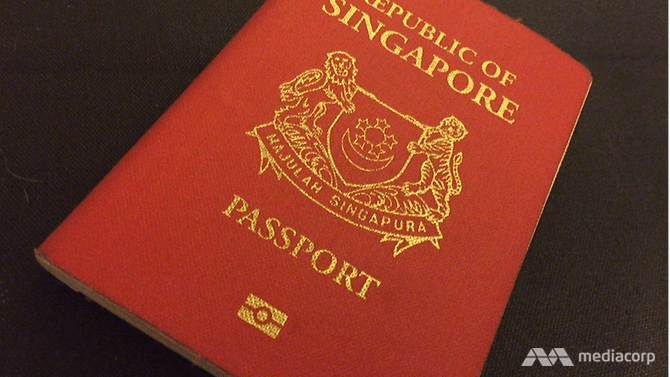
Singapore passport becomes ‘most powerful’ in the world

Historically, the top ten most powerful passports in the world were mostly European, with Germany having the lead for the past two years. Since early 2017, Singapore has tied for number one position with Germany. For the first time ever an Asian country has the most powerful passport in the world. It is a testament of Singapore’s inclusive diplomatic relations and effective foreign policy.”


Tag: SingaporeSouthEastAsia, politicaldevelopment.

Source: www.channelnewsasia.com

Who else is high on the list of the most powerful passports in the world?  This tier system is based on the number of visa-free entries available to the holder of the visa:

1. Singapore

2. Germany

3. Sweden

3. South Korea

4. Denmark

4. Finland

4. Italy

4. France

4. Spain

4. Norway

4. Japan

4. United Kingdom

5. Luxembourg

5. Switzerland

5. Netherlands

5. Belgium

5. Austria

5. Poland

6. Malaysia

6. Ireland

6. USA (that’s tied for 19th for you competitive sorts)

6. Canada

7. Greece

7. New Zealand

7. Australia

When Rich Places Want to Secede

At the core of Catalonia’s separatist movement is an argument that a country’s better-off regions shouldn’t have to pay to cover their less productive counterparts.


As a relatively rich region with its own independence movement, Catalonia’s not alone: A small set of secession movements in historically productive areas, most visibly in Europe, say they’d be better off on their own, and more are pointing to Catalonia’s example to regain momentum.

The common wisdom used to be that separatist movements mostly came from weak minorities that rallied around racial or ethnic injustices. “With globalization, that changed significantly,” said Andrés Rodríguez-Pose, a professor of economic geography at the London School of Economics (LSE). “Virtually everywhere in the world,” movements have swapped out the “identity card” for the “economic card.”

Inequality between regions is baked into the entire concept of modern nationhood—if subsidizing poorer parts of a country were motivation enough to split off, every region would have done it by now. Plus, there are economic perks to staying together: Trade is easier across internal borders, and diversified regions diffuse risk.


Tags: Cataloniaeconomic, political, devolution, autonomyEurope.

Source: www.theatlantic.com

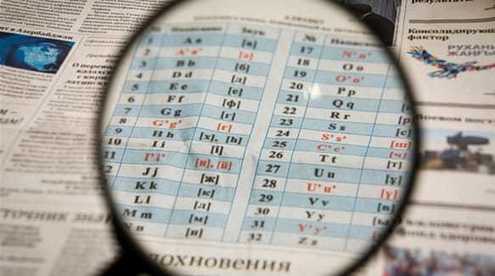
Kazakhstan to switch from Cyrillic to Latin alphabet

“Kazakh was written in Arabic script until 1920 when it was substituted by the Latin alphabet. In 1940, it was replaced by a Cyrillic one. ‘Given that over 100 countries in the world use the Latin script, it is crucial for Kazakhstan’s integration into the global educational and economic environment,’ said Gulnar Karbozova.

The former Soviet Republic declared independence in 1991. Its state language is Kazakh, a member of the Turkic family.

Yet, Russian is widely spoken across Kazakhstan and is its second official language.”

Source: www.aljazeera.com

Having to translate your language into another is one level of cultural difference, but having to change into another writing system (transliteration) adds an extra layer of foreignness that makes interactions more difficult.  Kazakhstan, a with a history of connections to the Middle East and Russia, is now making a choice that appears to signal greater connection to the larger global community.  This is not going to be an easy transitions, as as this additional BBC article notes, the choice comes with plenty of advantages and disadvantages


Tags: languagecultureworldwide, regions, Central Asia, Kazakhstan.

Left For Dead: Myanmar’s Muslim Minority

In recent years, democratic reforms have swept through Myanmar, a country that for decades was ruled by a military junta. As the reforms took hold, however, things were growing progressively worse for the Rohingya, a heavily persecuted ethnic Muslim minority concentrated in the country’s western state of Rakhine. The 2012 gang rape and murder of a Buddhist woman by three Muslim men ignited violent riots in which hundreds were killed as Rakhine Buddhists and Rohingya attacked each other. In the following months, tens of thousands of Rohingya were rounded up and forced to live in squalid camps; Human Rights Watch deemed the attacks crimes against humanity that amounted to ethnic cleansing of the Rohingya. Thousands of Rohingya have since attempted to leave the country, fueling the region’s intricate and brutal human trafficking network.


Tags: Rohingyagenocide, migration, politicalconflict, refugeesBurma, Southeast Asia.

Source: www.youtube.com

Create a free website or blog at WordPress.com.

Up ↑