Search

GEOGRAPHY EDUCATION

Supporting geography educators everywhere with current digital resources.

Author

sethdixon

I am a geography professor at Rhode Island College.

The 20 year history of NAFTA

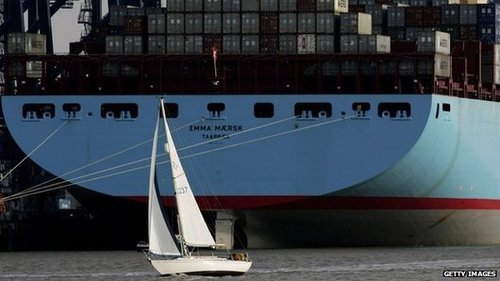
In the 20 years since it entered into force, the North American Free Trade Agreement has been both lauded and attacked in the United States. But to properly assess NAFTA’s record, it is important to first be clear about what the agreement has actually done. Economically speaking, the answer is a lot.

NAFTA was the first comprehensive free-trade agreement to join developed and developing nations, and it achieved broader and deeper market openings than any trade agreement had before.

NAFTA did that by eliminating tariffs on all industrial goods, guaranteeing unrestricted agricultural trade between the United States and Mexico, opening up a broad range of service sectors, and instituting national treatment for cross-border service providers. It also set high standards of protection for patents, trademarks, copyrights, and trade secrets.

NAFTA ignited an explosion in cross-border economic activity. Today, Canada ranks as the United States’ largest single export market, and it sends 98 percent of its total energy exports to the United States, making Canada the United States’ largest supplier of energy products and services. Mexico is the United States’ second-largest single export market. Over the past two decades, a highly efficient and integrated supply chain has developed among the three North American economies.  Intraregional trade flows have increased by roughly 400 percent.

North Americans not only sell more things to one another; they also make more things together. About half of U.S. trade with Canada and Mexico takes place between related companies, and the resulting specialization has boosted productivity in all three economies. NAFTA has also caused cross-border investment to soar.

In spite of this impressive economic record, NAFTA has its critics. Most of those who attack it on economic grounds focus on Mexico, not Canada, and claim that the partnership is one-sided: that NAFTA is Mexico’s gain and America’s pain. But the economic data prove otherwise.

See on www.foreignaffairs.com

The Growth of Megacities

“For the first time in human history, more of the world’s 6.8 billion people live in cities than in rural areas. That is an incredible demographic and geographic shift since 1950 when only 30 percent of the world’s 2.5 billion inhabitants lived in urban environments.

The world’s largest cities, particularly in developing countries, are growing at phenomenal rates. As a growing landless class is attracted by urban opportunities, meager as they might be, these cities’ populations are ballooning to incredible numbers.

A May 2010 Christian Science Monitor article on “megacities” predicted that by 2050, almost 70 percent of the world’s estimated 10 billion people—more than the number of people living today—will reside in urban areas. The social, economic and environmental problems associated with a predominantly urbanized population are considerably different from those of the mostly rural world population of the past.”

See on newswatch.nationalgeographic.com

Rivers from Above

Get a unique view of these rivers beyond the banks.Photo editing by Lia Pepe

Seth Dixon‘s insight:

This is a fantastic photo gallery, filled with great images to show the processes of fluvial geomorphology. 

Tags: physical, water, geomorphology, erosion, landforms.

See on local.msn.com

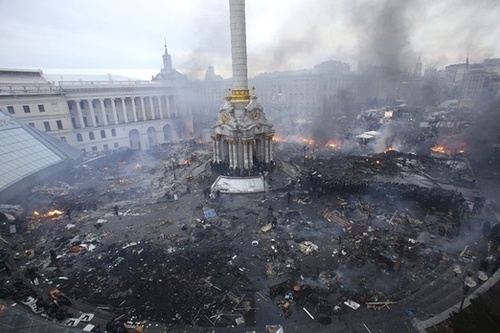
Don’t Give Up on a United Ukraine

The current Ukrainian conflict is typically viewed in stark East-West terms: a pro-Russian East versus a pro-European West, with the threat of Ukraine splitting down the middle.

Ukraine’s divisions are indeed pronounced and the forging of a coherent national identity has remained very much a work in progress since independence.

Nonetheless, far from pointing to its unraveling, polling indicates that support for the Ukrainian state has been on the rise over the past decade – even in the Russian-speaking East and South. This is true despite the often polarizing and dysfunctional policies of successive Ukrainian leaders.

See on www.theglobalist.com

Protests in Venezuela

Seth Dixon‘s insight:

This video shows the student activist perspective as to the reasons and causes of behind the political protests in Venezuela in the last few days (as will many YouTube videos, remember that this source isn’t trying to be ‘fair and balanced,’ but to spread the strength of their movement).  The Venezuelan government has expelled U.S. consular officials, accusing them of helping to organize the student movement.  This is an issue worth following in the coming week.   

Tags: Venezuela, South America, political.

See on www.youtube.com

Cities, Mapped by Their Snow Routes

Street grids of necessity.

See on www.theatlanticcities.com

Global Perceptions of the United States

Placeholder for the Pew Global Indicators Database

Seth Dixon‘s insight:

This is a fascinating chart…the link will show charts and maps of those who consider the United States as a partner/enemy.  The historical data goes back to 2008.     

See on www.pewglobal.org

No union, no pound, British official warns Scots backing independence

LONDON – Escalating the fight against secession, the British government warned Thursday that Scotland would lose the right to continue using the pound as its currency if voters there say yes to a historic referendum on independence this fall.

Osborne’s stark warning, delivered in a speech in Edinburgh, the Scottish capital, represented a new willingness by unionists to take a hard line in persuading Scottish voters to shun independence in a September plebiscite. A thumbs-up would end Scotland’s 307-year-old marriage to England and Wales and cause the biggest political shakeup in the British Isles since Ireland split from the British crown nearly a century ago.

Sturgeon predicted that “what the Treasury says now in the heat of the campaign would be very different to what they say after a democratic vote for independence, when common sense would trump the campaign rhetoric.”

Seth Dixon‘s insight:

This is an intriguing strategic move by the UK as Scotland considers  independence. 

Tags: devolutionpolitical, states, sovereignty, autonomy, Europe, unit 4 political, currency, economic.
.

See on www.latimes.com

China, India sign border defense pact

Agreement aims to ease tension on their contested border, as the two countries try to break a decades-old stalemate

China and India signed a deal Wednesday aimed at easing tension on their contested border, as the two countries try to break a decades-old stalemate on overlapping claims to remote stretches of the Himalayas. Beijing lays claim to more than 55,000 square miles disputed by New Delhi in the eastern sector of the Himalayas. In turn, India says China occupies about 24,000 square miles of its territory on the Aksai Chin plateau in the west.  Under the provisions of the new deal, the two sides will give notice of patrols along the ill-defined border to reduce the chance of confrontation, and will exercise “maximum self-restraint” should the two sides come face to face in areas where the line of control is unclear.

See on america.aljazeera.com

Create a free website or blog at WordPress.com.

Up ↑