
See on twitter.com

“Staff Sergeant Edgar D. Bledsoe, of Olive Branch, Ill., cradles a critically ill Vietnamese infant. The child was brought to Fire Support Base Pershing. This image, with this caption, was originally published in Vol. 3 No. 53 of Tropic Lightning News, December 30, 1968.”
Seth Dixon, Ph.D.‘s insight:
This gallery of 46 vintage images of the Vietnam War (primarily of U.S. GI’s) shows the humanity and the pains of war. This photoessay is very informative and moving.
See on www.boston.com

“Ogooglebar. That’s Swedish, and means “something you can’t find with the use of a search engine.” At least, that’s what the Language Council of Sweden wanted Ogooglebar to mean–until Google stepped in, fearing that the word had negative connotations for the firm.”
Seth Dixon, Ph.D.‘s insight:
I am used to the French trying to slow the flow of English words into French, but shocked that Google would join in the fray to slow linguistic change. Words evolve based on cultural shifts and technological changes and the computer industry has especially created new words to describe emerging, new social interactions. I’m certain that the company Google is thrilled that “to google” is the verb of choice to describe the action of searching for online for content. I would have guessed that Google was savvy enough to understand that this “ungoogleable” term is not an indictment on the company, but a new way to define that elusive, mysterious, indefinable quality for a generation that sometimes acts as if everything can be found of Google.
Tags: language, culture, technology, google, diffusion.
See on www.fastcompany.com
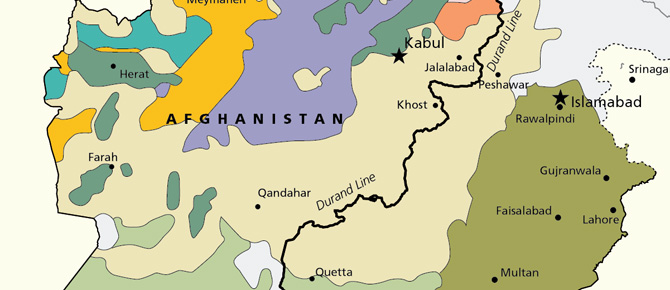
Students are introduced to the physical and human features of Afghanistan.
Seth Dixon, Ph.D.‘s insight:
This tremendous set of resources is the result of a partnership between The Choices Program (housed at Brown University) and National Geographic Education. This link takes you to a portal with lesson plans, videos, maps, student worksheets, etc. These are some of the materials that form the core of the Choices Program Summer Institute that focuses on the United States’ involvement in Afghanistan.
Tags: Afghanistan, political, culture, Central Asia, National Geographic.
See on education.nationalgeographic.com
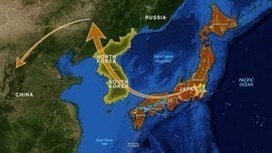
Stratfor examines Japan’s primary geographic challenge of sustaining its large population with little arable land and few natural resources. For more analysi…
Seth Dixon, Ph.D.‘s insight:
Part of knowing Japan’s expansionist history has to do with understanding the geographic setting of the islands.
Tags: Japan, population, historical.
See on www.youtube.com

If a NYC location got a shout out in some rap lyrics, Jay Shells has probably made a sign out of them and placed it at that specific location for his amazing new project.
Seth Dixon, Ph.D.‘s insight:
Street art has a subtle, but powerful connection with place. How does an art installation alter a neighborhoods sense of place? How does a place alter the meaning(s) of an art installation?
Tags: mapping, NYC, culture, landscape, place, socioeconomic, neighborhood.
See on gothamist.com
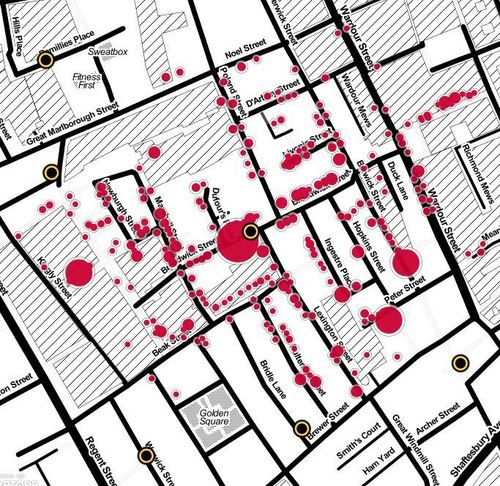
What would John Snow’s famous cholera map look like on a modern map of London, using modern mapping tools?
Seth Dixon, Ph.D.‘s insight:
John Snow’s cholera map is often noted as a prime example of using spatial thinking to solve a scientific problem. Here are a variety of resources to explore this classic example. Here is an article that highlights the spatial thinking that produced this map, with KML files and in Google Fusion Tables. See also these online GIS layers of Dr. Snow’s famous map.
See on www.guardian.co.uk
“As a child growing up in North Korea, Hyeonseo Lee thought her country was ‘the best on the planet.’ It wasn’t until the famine of the 90s that she began to to wonder. She escaped the country at 14, to begin a life in hiding, as a refugee in China. Hers is a harrowing, personal tale of survival and hope.”
Seth Dixon, Ph.D.‘s insight:
Not all migration is voluntary and this woman’s personal struggle to flee North Korea alternates between heartwarming and heartbreaking. Her accent is thick, but it is worth it to her her story from her own mouth.
Tags: North Korea, migration, political, East Asia, development, states, poverty.
See on www.youtube.com
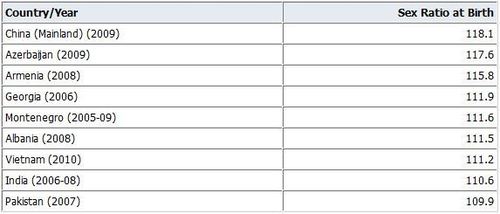
“Every year, as a result of prenatal sex selection, 1.5 million girls around the world are missing at birth. How do we know these girls are missing if they were never born? Under normal circumstances, about 102 to 107 male babies are born for every 100 female babies born. This is called the sex ratio at birth, or SRB.”
Seth Dixon, Ph.D.‘s insight:
How do local cultures create these demographic statistics? How do these demographic statistics impact local cultures?
Tags: gender, statistics, China, population.
See on www.prb.org




