See on Scoop.it – Cultural Geography

Ambitious research project aims to bring pig production into urban areas.
See on sciencenordic.com
See on Scoop.it – Cultural Geography
Ambitious research project aims to bring pig production into urban areas.
See on sciencenordic.com
See on Scoop.it – Geography Education
“Far from revered, the Kingdom’s first female athletes are ignored or insulted at home, writes Qanta Ahmed.”
KH: It took international pressure, but for the first time, all participating nations have sent female athletes to the Olympics. Saudi royalty allowed female participation, which has not been entierly well recieved in the Kingdom. Should we be glad that the women are there at all? Or is this simply for show, a hollow gesture?
See on www.thedailybeast.com
See on Scoop.it – Geography Education
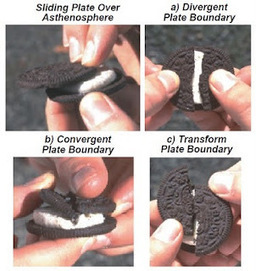
The lithosphere (Earth’s crust) is a hard, rigid plate on top of a softer molten layer known as the asthenosphere. Sounds like an Oreo to me! As a crude analogy that lets you bring food into the classroom, this lesson on plate boundaries sound like a winner. This blog post was inspired by this academic article on how to use Oreo’s to teach about Earth’s crust.
See on redcrosspdx.blogspot.fr
See on Scoop.it – Social Media Classroom
Students at an education conference said it was time to tear down the wall between their digital lives outside of school and in school, where much access to technology is restricted.
When students are asking to use the technology at their fingertips to improve their education and have ideas on how to successfully implement them in the classroom, I think we should listen.
See on www.nytimes.com
Robyn shares her personal story and how it inspired her current path as a “Real Food” evangelist. Grounded in a successful Wall Street career that was more i…
Robyn authored “The Unhealthy Truth: How Our Food Is Making Us Sick and What We Can Do About It.” A former Wall Street food industry analyst, Robyn brings insight, compassion and detailed analysis to her research into the impact that the global food system is having on the health of our children. As new proteins are engineered into our food supply to maximize profits for the food industry, childhood food allergies are on the rise. What are the connections between cancer and modern consumption patterns? The correlation is clearly there; is causation also present? How have the economics of agriculture shaped this situation? How will the future economics of agriculture reshape food production?
See on Scoop.it – Geography Education See on www.youtube.com
See on Scoop.it – Geography Education
Just a few weeks ago, warnings were flying thick and fast that the Olympic Games would reduce London to chaos, jamming the capital’s roads and clogging up its aging transport system.
The Olympic Games have had a very uneven impact on the various neighborhoods of London. Many businesses that cater to tourists on the western end of London have not seen the typical crowds for a regular summer, much less a summer that was so highly anticipated. The majority of the neighborhood renovation projects were carried out on the East End. So the question “are the Olympics an economic success for London?” is not one with a simple, straightforward answer.
See on www.npr.org
See on Scoop.it – Regional Geography

“Last spring, as the Occupy movement struggled, vainly, to recapture its lost energy in New York and elsewhere, in Oakland it remained vital.”
See on www.nytimes.com
“Executives have long said America can’t compete in building electronic devices. But the migration of carmaking from Japan is a case study in the most unlikely of transformations.”
“The iEconomy: Nissan’s Move to U.S. Offers Lessons for Tech Industry.” This is an excellent article on how the car and tech industries are changing the global economy. Numerous foreign car companies are now investing in US; so is a Nissan produced in Tennessee a foreign car or a domestic? The global economy is blurring many of the traditional ways in which we view production and affecting the United States in particular. The interactive feature linked to the article provides some excellent data and resources. This would be a great background to prepare students before taking a sample test AP Human Geography test (like Question #3 from 2011):
See on Scoop.it – Geography Education See on www.nytimes.com