Search

GEOGRAPHY EDUCATION

Supporting geography educators everywhere with current digital resources.

Author

sethdixon

I am a geography professor at Rhode Island College.

Cartographic Table

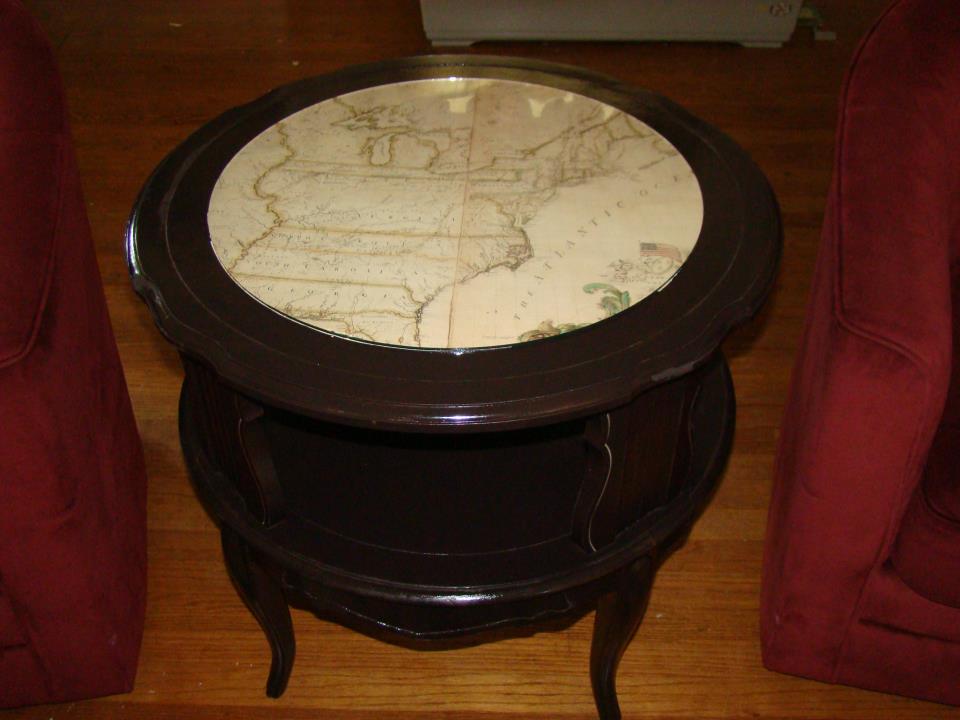
I’ve always loved this 1784 map of the United States produced by Abel Buell.

One of the most striking differences from the modern maps of this region is the massive area of disjointed territory that is classified as Connecticut as well as the western extensions of most southern states.  This map’s title is a stunning as it’s cartography.  Entitled “A New and Correct Map of the United States of North America,” this made is a making a bold political statement, not just attempting to describe the current borders.  At this point it is important to note that Abel Buell, the engraver who created this made was from Connecticut and this map was commissioned by the Governor and State of Connecticut.  As a National Geographic reproduction of this map states, “He [Buell] portrayed the confused status of Connecticut’s western claim, which is based on the 1662 charter to all land between the 41st and 42nd parallels.”  Both Pennsylvania and Connecticut encouraged residents to settle this region, and Connecticut was not to be deterred by the fact that New York State’s eastern border functionally ended Connecticut’s claim to the land.  Despite the map, Connecticut eventually retracted their claim to land in Pennsylvania and even lands  in Ohio as well.

But beyond being a gorgeous map and a an early attempt to use a map to legitimatize territorial claims in United States history, I’m thrilled with this map because it is now a part of my home decor.  My crafty and ingenious spouse collected assorted items (all free discarded items, mind you) to put together this fantastic end table!

With a little bit of paint (okay it’s now a $4  investment) and a lot of  hard work and love, this is the end product.  There isn’t a thing about this table that doesn’t make me just positively elated.

U.S. Cities With Bigger Economies Than Entire Countries

See on Scoop.itGeography Education

How do the individual economies of U.S. cities stack up against the world? Here’s a few quiz questions that can be answered with our chart of the 50 largest U.S. metro areas.

This WSJ article shows the economic strength of numerous greater metropolitan regions in the United States.  Even more important than the article is the “Interactive Graphics” which presents the tabular data of the top countries by GDP interlaced with U.S. metro area’s GDPs.  Amazingly, 11 metropolitan areas (if they were independent countries) would rank in the top 50 countries of the world based on total GDP.

See on blogs.wsj.com

Satellites Reveal Sudden Greenland Ice Melt

See on Scoop.itGeography Education

NASA researchers are expressing concern about something they’ve never seen before: the melting of ice across nearly the entire surface of Greenland earlier this month.

Climate changes are afoot in the Arctic and the Greenland ice sheet.

In related news, Texas and Louisiana have introduced education standards that require educators to teach climate change denial as a valid scientific position. South Dakota and Utah passed resolutions denying climate change. Tennessee and Oklahoma also have introduced legislation to give climate change skeptics a place in the classroom.

See on www.theworld.org

Hijab: A Different Definition of Freedom

See on Scoop.itCultural Geography
Hijab: A Different Definition of Freedom http://t.co/WzAFA5Fv...

The meaning you ascribe to a cultural artifact is inherently based on your cultural perceptions and values.  While many in the West perceive the hijab to be a symbol of male hegemonic power and female oppression.  In this article that defends the Hijab, it is presented as a distinct form of female liberation.

See on www.moroccoworldnews.com

U.S. AID education/poverty infographic

See on Scoop.itGeography Education

An excellent infographic that highlights the importance of education in the process of fighting poverty.  Why is education (especially women) so pivotal for development?  Should this change how we think about humanitarian aid?       

See on 50.usaid.gov

India’s Census: Lots Of Cellphones, Too Few Toilets

See on Scoop.itGeography Education

The results of India’s once-in-a-decade census reveal a country of 1.2 billion people where millions have access to the latest technology, but millions more lack sanitation and drinking water.


More Indians are entering the middle class as personal wealth is transforming South Asia’s economy in the private sector.  Yet the government’s ability to provide public services to match that growth still lags behind.  Why would it be that it is easier to get a cell phone than a toilet in India?  What will that mean for development?  

See on www.npr.org

Bridging the Digital Divide

See on Scoop.itGeography Education


This is an inspiring project that seeks to elevate poor slum-dwelling Indians by providing educational resources to children.  As free computer terminals are made available, their literacy skills soar and possibilities are widened.  Visit the projects homepage at: http://www.hole-in-the-wall.com/

See on www.youtube.com

Containerization Shaped Globalization

See on Scoop.itGeography Education

Sometimes a single unlikely idea can have massive impact across the world. Sir Harold Evans, the author of They Made America, describes how frustration drove…

The economies of scale that globalization depends on, relies on logistics and transportation networks that can handle this high-volume.  In a word, the container, as mundane as it may seem, facilitated the era within which we live today.

See on www.youtube.com

Ignite Education: On Demand Learning

See on Scoop.itGeography Education

“I want to contrast this ‘on demand’ learning from typical classroom learning…below are three examples of how an educator might include ‘on demand’ learning within a geography or GIS course.” 


In this article (from a excellent geography/GIS education blog), the three main ways to use on-demand learning are: 1) Project-based work  2) Flipped Classroom and 3) Creating a Learning Resource.  All three are designed to use technology within the classroom (with geographic content especially). 

See on blog.abs-cg.com

Create a free website or blog at WordPress.com.

Up ↑