Search

GEOGRAPHY EDUCATION

Supporting geography educators everywhere with current digital resources.

Author

sethdixon

I am a geography professor at Rhode Island College.

Hiking Preikestolen in Norway

See on Scoop.itRegional Geography

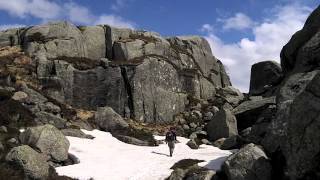
Hiking to the top of Preikestolen (the Pulpit Rock) near Stavanger, Norway. An amazing and wondrous hike.


For the inner explorer in all of us, this is a geographic dream.  To read more about this fantastic climb, see: http://digitalnomad.nationalgeographic.com/2012/05/24/hiking-preikestolen/

See on www.youtube.com

Container City

See on Scoop.itGeography Education

Channel 5 – Behind closed Doors Series on Container City at Trinity Buoy Wharf…

On my daily commute, I drive by a colorful container building in Providence, RI.  In terms of it’s spatial configuration and aesthetic statement within the urban landscape, I found it fascinating.  After doing some more research, I began to appreciate this as a form of sustainable housing that 1) costs less than traditional structures, 2) can be built MUCH quicker that standard buildings and 3) has the potential to be an effective recycling method.  For more on ‘Container Cities,’ see: http://sustainablecitiescollective.com/kaidbenfield/40875/shipping-container-cities-bring-creative-funky-approach-green-construction

See on www.youtube.com

Early World Maps

See on Scoop.itGeography Education

I typically would not link to a Wikipedia article, but this one is not only well crafted, but represents an academic collaborative work in its own right.  This a fabulous cartographic gallery that explores the history of geographical thought through the ages (as archived in the earliest maps).  Enjoy the maps, and even more, the intellectual context that this article provides for each of these images.      

See on en.wikipedia.org

How geography shapes cultural diversity

See on Scoop.itCultural Geography

Study offers evidence that long countries give better protection to languages than those that are wide.


This article explains some of the research that Jared Diamond’s hypothesis in “Guns, Germs and Steel” generated.  More specifically, this particular research hypothesizes that in a given country, its primary axis of orientation (North-South, East-West or balanced) helps to predict the survival of indigenous languages.  While I have some skepticism about Diamond’s core thesis, this is a good extension for teachers that use Guns, Germs and Steel in their classes. 

See on www.nature.com

Spatial Analysis of the NBA Finals

See on Scoop.itGeography Education

Navigate court maps and view analysis of every shot taken over the ’11-’12 season for the Miami Heat and Oklahoma City Thunder.

Who said geography has nothing to do with sports?!?  While there are many cultural and economic impacts on sport preference and prevalence, let’s discuss the geography of the hardwood and a spatial analysis of the shot selections between the two teams.  Clearly ‘place matters’ to many NBA players as their success on the court depends on finding their preferred spots within the flow of offense.

See on www.nytimes.com

AP Human Geography test results

See on Scoop.itGeography Education

On Twitter,  College Board’s Head of AP test Trevor Packer tweeted about AP HG test results, noting: “2012 AP Human Geography scores: 12.6%=5; 19.5%=4; 20.4%=3; 17.9%=2; 29.6%=1. These may shift slightly as late exams are scored.”

In other tweets about AP HG test results, Trevor Packer noted: “AP Human Geography students showed stronger learning this year than in the past–smaller percentage of 1s, higher percentages of 4s/5s. College professors say: AP Human Geo students who score 1s need more critical interpretation of maps and cause/effect focus in essays.  In terms of really distinguishing which AP Human Geo students deserve college credit, Question 3 was the most effective.  AP Human Geo students did best on the walls/barrier question (#1), while many struggled with the international migration question (#3).”

See on twitter.com

Scientists observe ‘tragic experiment’ of tsunami debris

See on Scoop.itGeography Education

Jeff Larson has seen just about everything wash up on the shores of Santa Cruz: bottles, toys, shotgun shells, busted surfboards and fishing floats that looked like they had bobbed across the Pacific.


This is just another long-term ‘after-shock’ of the tsunami that devasted Japan over 1 year ago. 

See on www.latimes.com

How Racist Are We? Ask Google

See on Scoop.itCultural Geography

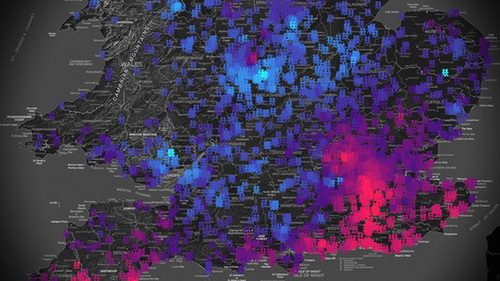
Research that compares the use of racially charged search terms with voting patterns suggests that Barack Obama’s race lowers his chance of re-election.


The United States is not a ‘post-racial’ society, obviously.  This research uses  region-specific Google searches on racial ephitats to act as a proxy for regions that are most racially charged.  This graphic is a result of the research found at: http://www.theatlantic.com/politics/archive/2012/06/can-google-predict-the-impact-of-racism-on-a-presidential-election/258322/ 


See on campaignstops.blogs.nytimes.com

Vector-Based Maps in iOS 6

See on Scoop.itGeography Education

Apple announced today that it’s revamping the Maps application on iOS devices—iPhone, iPad, iPod touch—introducing a lot of showy new features like…


Earlier this week I posted an article that was skeptical about Apple’s foray into online mapping that essentially said that Apple could not replace Google.  This article focuses on the differences in Apples mapping strategy–primarily shifting digital mapping for raster based data to vector data.  This is a perfect example to show GIS students the relevance of how data is stored. 

See on persquaremile.com

Create a free website or blog at WordPress.com.

Up ↑