Search

GEOGRAPHY EDUCATION

Supporting geography educators everywhere with current digital resources.

Author

sethdixon

I am a geography professor at Rhode Island College.

The Geography of Gay Marriage

See on Scoop.itGeography Education

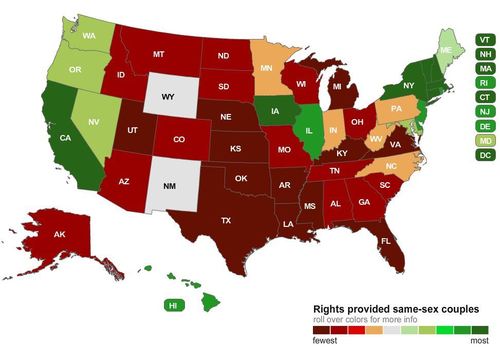
With President Obama announcing that he now supports the legalization of gay marriage and Gov. Romney reiterated the GOP stance that marriage should be between a man and a woman, this sets the stage for a ‘culture war’ to be at the center of the 2012 election.  While communities, churches and families may be split on this topic, there are some strong regional patterns that (given the electoral college) will have important political ramifications.  As Jennifer Mapes stated about this interactive map, “it’s useful in showing the geographic polarization of the country (coasts/center; urban/rural) as states strengthen laws that either allow for or restrict gay marriage/civil unions over the past ten years.” 

See on www.latimes.com

Understanding Population Pyramids

See on Scoop.itGeography Education

This covers what a population pyramid is, and how to analyze one. It covers the three basic shapes and how they correspond to population growth or decline.


Simple introduction on how to analyze population pyramids. 

See on www.slideshare.net

Understanding the Darfur Conflict

See on Scoop.itGeography Education

This is a short, but effective video to quickly explain the geographic factors that have led to such turmoil within the Darfur region.  For more in-depth resources, see:

http://www.scoop.it/t/darfur-devastation


See on www.youtube.com

Colorful Places & Spaces

See on Scoop.itGeography Education

It is only right to start this site off with photos of the Holsteiner Stairs by artist Horst Glaesker. In 2008, I saw photos of this installation in Wuppertal, Germany and I knew I had to create a colour blog.


How can public art help create a sense of place?  How does this transform the neighborhood and community?  What are the cultural and econommic impacts of public art?       

See on plentyofcolour.com

Could there be Water Wars in the Future?

See on Scoop.itGeography Education

The debate on Aquifers continues as new technologies designed by oil companies are able to tap historic water reserves deep in the Earths crust.  The geopolitical significance of water rises as population growth within dry climates continue to rise. 

See on www.princeton.edu

The Artist Behind the Apple Globe

See on Scoop.itGeography Education

I recently discovered the identity of the artist who created the “apple globe” that I use as my twitter avatar and that is prominently displayed on my various sites.  The artist, Kevin Van Aelst, teaches at Quinnipiac University and has kindly allowed me to continue using the image.  Please check out more of his work and enjoy his thoughtful use of mundane object in new spatial ways: http://www.kevinvanaelst.com/ 

See on www.kevinvanaelst.com

12 of the Most Beautiful Bays in the World

See on Scoop.itGeography Education

This is a great set of images that show coastal processes for a geomorphology or physical geography class.  Pictured above is Palm Bay, Australia, which also happens to show fluvial processes as well.  

See on www.theworldgeography.com

What is the Arab Spring?

See on Scoop.itGeography Education

The Choices Program asks Brown University’s Political Scientist Melani Cammett to briefly explain the Arab Spring.  This is a great primer to teach young students who don’t follow international news to understand the beginnings of the Arab Spring.  For more videos by the Choices Program in their “Scholars Online” series, see:

http://www.choices.edu/resources/scholarsonline.php

See on www.youtube.com

Antipodes Map: The other side of the world

See on Scoop.itGeography Education

In geography, the antipodes of any place on Earth is its antipodal point; that is, the region on the Earth’s surface which is diametrically opposite t…


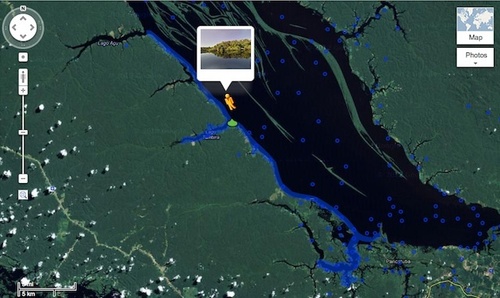
I know that most Americans have learned at an early age that if you dig a hole through the center of the Earth, you’ll end up in China.  Geologic and impossibilities aside, most Americans would actually end up in the Indian Ocean as displayed by this clever pairing up maps that shows the user the Antipode of any given place on Earth.

See on visual.ly

Create a free website or blog at WordPress.com.

Up ↑