Search

GEOGRAPHY EDUCATION

Supporting geography educators everywhere with current digital resources.

Author

sethdixon

I am a geography professor at Rhode Island College.

Silly placenames: welcome to Dull, twinned with Boring

See on Scoop.itGeography Education

Yes, there really are villages called Dull and Boring. But if you lived in one of them, would you see the joke?


In the greatest toponym pairing of all time, Dull (Scotland) is now the sister city to Boring (Oregon).  That’s a match made in Yawnsville.

See on www.guardian.co.uk

India’s Census: Lots Of Cellphones, Too Few Toilets

See on Scoop.itGeography Education

The results of India’s once-in-a-decade census reveal a country of 1.2 billion people where millions have access to the latest technology, but millions more lack sanitation and drinking water.


More Indians are entering the middle class as personal wealth is transforming South Asia’s economy in the private sector.  Yet the government’s ability to provide public services to match that growth still lags behind.  Why would it be that it is easier to get a cell phone than a toilet in India?  What will that mean for development?  

See on www.npr.org

Global Index of Peace

See on Scoop.itGeography Education

A ground-breaking milestone in the study of peace. For the first time, an Index has been created that ranks the nations of the world by their peacefulness and identifies some of the drivers of that peace.


The last post showed that national rankings of the states that were the most (and least) peaceful.  This is the international version.  1)Iceland 2)New Zealand and 3) Japan lead the list while 151)Sudan 152)Iraq and Somalia are at the bottom. 

See on www.visionofhumanity.org

Survey: Maine ranked ‘most peaceful’ state; Louisiana last

See on Scoop.itGeography Education

An annual survey ranks Maine as the “most peaceful” state, while Louisiana places last for the 11th straight year.


The five criteria used in the ranking are the number of homicides per 100,000 people; number of violent crimes; incarceration rate; number of police employees; and availability of small arms.  How ‘peaceful’ is it where you live?  How would you measure it?   

See on content.usatoday.com

California Declares War on Suburbia

See on Scoop.itGeography Education

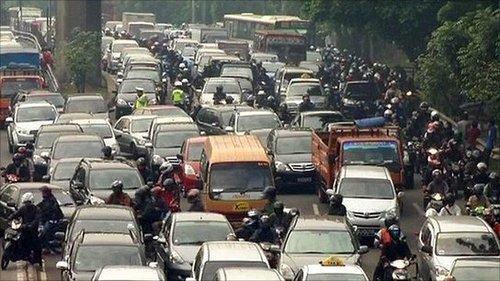
In The Wall Street Journal, Wendell Cox writes that government planners intend to herd millions of new state residents into densely packed urban corridors. It won’t save the planet but will make traffic even worse.


This is a article/video against many of the regulations that embody the ‘Smart Growth’ movement that would serve as a good ideological counterweight to many of the other sources that are available.  Would more dense neighborhoods create transit problems?

See on online.wsj.com

What Sex Means for World Peace

See on Scoop.itGeography Education

“The evidence is clear: The best predictor of a state’s stability is how its women are treated.” 


This article, based on the research derived from the Woman Stats Project (http://womanstats.org/ ), outlines clearly the political significance of cultural values.  Discussion questions: Why would the levels of gender empowerment be a factor in state stability?  What connections are there between cultural and political institutions within a state.     

See on www.foreignpolicy.com

Stop Calling Them ‘Developed Countries’

See on Scoop.itGeography Education

This particular graph shows Total Fertility (x axis) and Life Expectancy (y axis) which collectively can explain some of what can be called human development.  This is an interactive graphic that shows both temporal and regional patterns in changes in development. 

See on www.gapminder.org

100 Cities and Their Nicknames

See on Scoop.itGeography Education

I like nicknames, they define us better than our names, they are clever and funny and they tell so much about our personality and sometimes, about our aspect, although this might be the worst case.

This is a good list…what does a nickname tell us about the city?

See on travelaway.me

For first time since Depression, more Mexicans leave U.S. than enter

See on Scoop.itGeography Education

A study sees a decline in immigration to the United States from Mexico after tightened border control, increased deportations, a flagging U.S. economy and a declining Mexican birthrate.


The wave of immigrants coming into the USA is something of the past. Push factors: Why are more Mexicans choosing to stay in Mexico?  Pull factors: Why is the United States less on an option for many would-be migrants these days?  Cross-border issues: How are issues on both sides of the border changing these patterns? 

See on www.washingtonpost.com

Blog at WordPress.com.

Up ↑