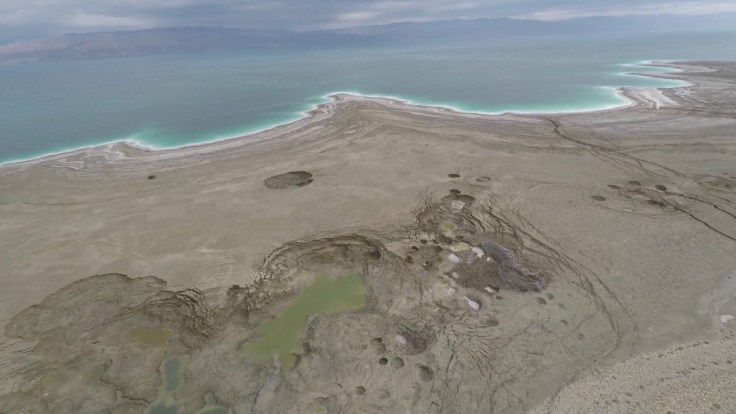
Fields of sinkholes instead of beaches, roads swept away by floods, large industrial ponds instead of a sea and one overarching question: What can be done so that things don’t get even worse in the next 20 years?
Source: www.haaretz.com
Fields of sinkholes instead of beaches, roads swept away by floods, large industrial ponds instead of a sea and one overarching question: What can be done so that things don’t get even worse in the next 20 years?
Source: www.haaretz.com
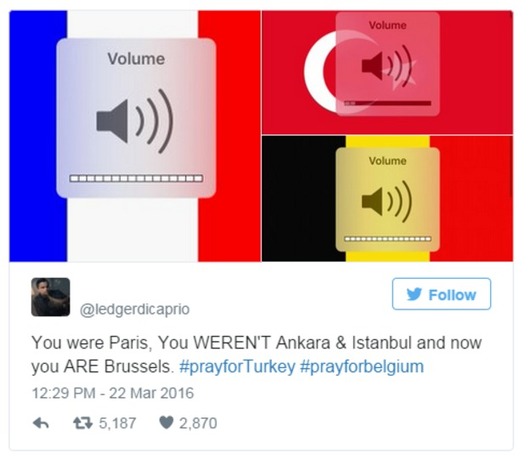
Reports of bombings tend to get huge numbers of mentions on social media, but that doesn’t always mean a similar level of news coverage.
Source: www.bbc.com
The short answer is obviously “Yes.” Yet, this question brings up other questions about cultural empathy and how ‘connected’ we might feel to people of other places than our own global neighborhood. This political cartoon-ish map
has more truth in it than we might like to admit; it is subtitled ‘How terrible it is the the Western world when a tragedy happens in…?’
Questions to Ponder: Does the ‘where’ influence if we perceive the event as a true tragedy or not (or maybe just the magnitude or importance of the tradegy)? How come? What does this say about us as inidividuals, society, and the media? How can we teach our students in a way to foster more cultural empathy?
Tags: social media, place, culture, political, terrorism, media.
“The U.K. has been a member of the European Union for more than 40 years, but that partnership might come to an end amid British concerns over eurozone turmoil and the ongoing refugee crisis. British voters will soon hold a referendum to decide whether or not to exit the EU. Judy Woodruff talks to Steven Erlanger of the New York Times for the possible implications of a U.K.-EU split.”
Source: www.youtube.com
The European Union at one time seemed as though it would continue to further and further integrate European politics and economics. With talk of possibly leaving the EU and a referendum on whether the UK should stay in the EU or not, the EU offered some extra special exemptions for the UK. For a more shorter video on this topic, see this TestTube video.
Tags: Europe, supranationalism, economic, political.
Is the subject’s amalgam of a wide range of subject matter and methodologies a strength or a weakness? Five scholars have their say
Source: www.timeshighereducation.com
Spanish and Arabic have more in common than you think, and it’s not a coincidence.
Source: www.youtube.com
These two languages are not in the same language family yet there are many similiarities (article with more connections that in the video). I would like to challenge you educators to not just say to your students “these similarities are neat!” Make the geographic connections to explain the ‘why’ behind this cultural pattern and the implications of it.
Questions to Ponder: What past political factors led to this cultural convergence? How were global regions different in the past? What are the were the impacts of this convergence, both in the past and lingering results today?
Tags: diffusion, language, toponyms, culture, colonialism, regions.
“Geography-related jobs—a sector that features high salaries and low unemployment—will grow rapidly over the next decade, according to the U.S. Bureau of Labor Statistics. Employment of geographers is projected to grow by 29 percent from 2012 to 2022, compared with an anticipated 11 percent increase for all occupations. Employment of geoscientists is projected to rise 16 percent from 2012 to 2022, and a 14 percent increase is expected for surveying and mapping technicians. Yet, the American Geosciences Institute’s ‘Status of the Geoscience Workforce 2014’ report predicts a shortage of around 135,000 geoscientists by the end of the decade. We are not preparing our young people to claim these jobs and advance innovative ways to use technology.”
Source: www.edweek.org
Long before the days of celebrity voices calling out directions while you drive, paper-based attempts at mobile mapping generated an intriguing array of proto-GPS systems, including this quirky pair of manual and automated moving map displays.
Source: 99percentinvisible.org
I typically really enjoy the thoughtful exploration of the untold stories that make up our world found in 99 Percent Invisible. Of course I would be especially drawn to this particular podcast–an historical glimpse at information overload in the analogy era, mapping technologies to aid navigation–this is just fascinating.
Tags: podcast, transportation, mapping, GPS, cartography, historical.
“The crop failure in Ireland affected only the potato—during the worst famine years, other food production was robust. Michael Pollan notes in The Botany of Desire, ‘Ireland’s was surely the biggest experiment in monoculture ever attempted and surely the most convincing proof of its folly.’ But if only this one variety of potato, the Lumper, failed, and other crops thrived, why did people starve? Thomas Gallagher points out in Paddy’s Lament, that during the first winter of famine, 1846-47, as perhaps 400,000 Irish peasants starved, landlords exported 17 million pounds sterling worth of grain, cattle, pigs, flour, eggs, and poultry—food that could have prevented those deaths. Throughout the famine, as Gallagher notes, there was an abundance of food produced in Ireland, yet the landlords exported it to markets abroad.”
Source: www.commondreams.org
I teach my students that famines reflect a lack of power (political and economic) more so than they are indicative of an absence of food in that region. The Irish potato famine exemplifies the three main causes of food insecurity:
1. Redirection of food
2. Destruction of capacity to grow food
3. neglect of the starving
Tags: Ireland, food, economic, food production, poverty.
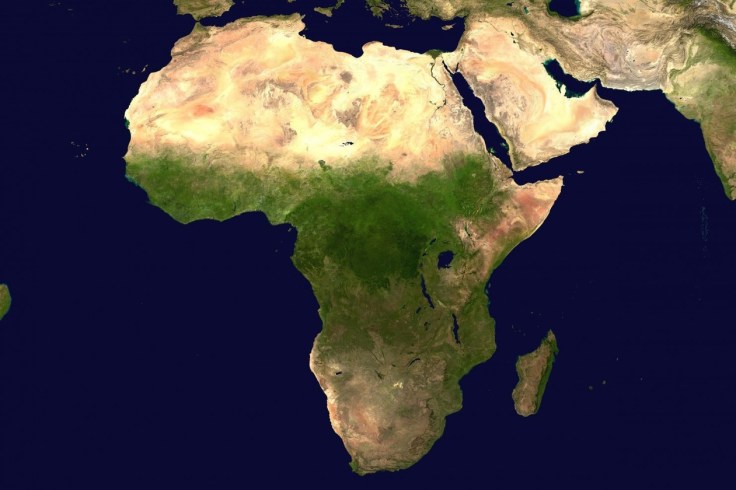
Bir Tawil is the last truly unclaimed land on earth: a tiny sliver of Africa ruled by no state, inhabited by no permanent residents and governed by no laws.
Source: www.theguardian.com
Both Sudan and Egypt claim the rightful border between their countries should include the Hala’ib Triangle on their side of the border. This leaves Bir Tawil unclaimed and it pops up in the news when those hoping to create a micronation claim it. This bizarre case exemplifies some important principles of political geography with a tangible example to test the limits of political sovereignty and what it take to be called a country. If discussing the elements necessary to create a state, this article would help fuel a discussion, especially when some people are eager to create their own micronation.
Tags: political, states, unit 4 political.