Search

GEOGRAPHY EDUCATION

Supporting geography educators everywhere with current digital resources.

Category

Uncategorized

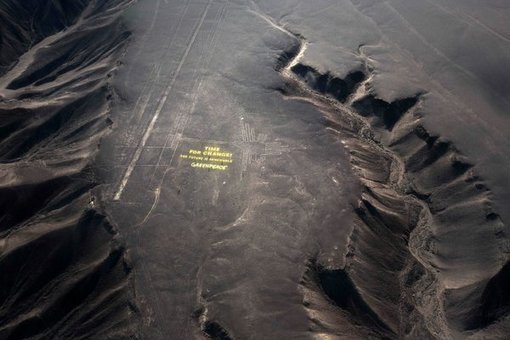
Peru Is Indignant After Greenpeace Makes Its Mark on Ancient Site

A sign urging environmental action during a United Nations summit meeting on climate change was placed near a 1,000-year-old geoglyph that is a cultural treasure in Peru. Officials are outraged over the trespassing and the disturbance of the ancient grounds.

Source: www.nytimes.com

Greenpeace is falling for some of the same social media fails as the selfie generation.  Peruvian authorities are angry that Greenpeace activists damaged a forbidden archeological site that is both a national symbol and sacred site.  UN climate talks are taking place in Peru right now, so this Greenpeace publicity stunt becomes all the more ironic.  The Peruvian government is accusing them of irrevocably damaging the environment at this site.  


TagsreligionSouth AmericaPeru, environment.

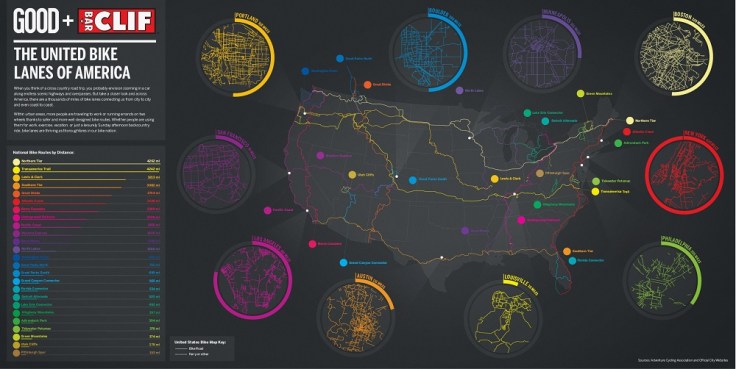
The United Bike Lanes of America

What do America’s bike paths look like from coast coast and how do bike lanes in cities stack up?

Tags: transportation, planning.

Source: magazine.good.is

The Historical Geography of Whaling

“Summer 2014 brought a sight that had not been seen since 1941: the Charles W. Morgan leaving the Mystic River for the Atlantic Ocean, stopping at several New England harbors before eventually arriving in New Bedford, Massachusetts where the ship was built in 1841. The Charles W. Morgan is the last remaining wooden whaling ship in the world, and a National Historic Landmark.”

Source: maps101blog.com

Only two countries today are stilling whaling (Japan and Norway), but the whaling industry was a critical component to the settling of New England.  Check out this Maps 101 podcast for short introduction to the historical geography of New England whaling.  

Tagspodcast, Maps 101, historicalbiogeography.

Product of Mexico – Harsh Harvest

“Farm exports to the U.S. from Mexico have tripled to $7.6 billion in the last decade, enriching agribusinesses, distributors and retailers.
American consumers get all the salsa, squash and melons they can eat at affordable prices. And top U.S. brands — Wal-Mart, Whole Foods, Subway and Safeway, among many others — profit from produce they have come to depend on.These corporations say their Mexican suppliers have committed to decent treatment and living conditions for workers.  But a Los Angeles Times investigation found that for thousands of farm laborers south of the border, the export boom is a story of exploitation and extreme hardship.”

This is a hard read, but it is important to understand that there is a dark underbelly to many of the economic systems that are reshaping the world today.  Sometimes we ask all the wrong questions, like “why is organic, local, or fair trade food so expensive?”  We should really be asking why the other options are so cheap. 

This, unfortunately is part of the answer.  The video above is a snippet from a 4-part series (I-camps, II-labor, III-Company Stores , IV-Child Labor) from the LA Times that has excellent pictures, videos, and interviews highlighting the working conditions of farm workers in Mexico.  For an audio version, here is an NPR podcast interviewing Richard Marosi, the investigator behind the story.    

Tagsfoodeconomic, laborglobalizationfood production, agribusiness, agriculture, unit 5 agriculture, indigenous.

The Data-Driven Farm

“Mr. Tom is as much a chief technology officer as he is a farmer. Where his great-great-grandfather hitched a mule, ‘we’ve got sensors on the combine, GPS data from satellites, cellular modems on self-driving tractors, apps for irrigation on iPhones,’ he said.

The demise of the small family farm has been a long time coming. But for farmers like Mr. Tom, technology offers a lifeline, a way to navigate the boom-and-bust cycles of making a living from the land. It is also helping them grow to compete with giant agribusinesses.”

Source: www.youtube.com

The New York Times article associated with the video above offers a great glimpse into the inner works of how agribusiness technologies have transformed the American family farm.  

Tags: agriculture, food production, agribusiness, unit 5 agriculture.

For the Love of Maps

I have a confession to make; I’m a map geek. Even as a kid watching Raiders of the Lost Ark, I was fascinated by the map they used to segue between scenes to show Indiana Jones’ travels.

Source: blog.education.nationalgeographic.com

I hope you enjoy this article; I enjoyed writing it.  I write about my map geekiness (does that surprise anyone out there?), share my place-based videos StoryMap with over 60 of my favorite classroom videos, and why teaching kids to appreciate the value of maps is important.  All of my future articles for National Geographic Education will be archived here at this link.

Tags: National Geographicmapping, edtech.

The surprising math of cities and corporations

“Physicist Geoffrey West has found that simple, mathematical laws govern the properties of cities — that wealth, crime rate, walking speed and many other aspects of a city can be deduced from a single number: the city’s population. In this mind-bending talk from TEDGlobal he shows how it works and how similar laws hold for organisms and corporations.”

Source: www.youtube.com

While corporations rise and fall, it is quite rare for a city to entirely fail as an economic system.  Huge cities have some negative consequences, but the networks that operate in the city function more efficiently on economies of scale in a way that offsets the negatives.  Increasing a city’s population will continue to improve the economies of scale (larger cities have higher wages per capita, more creative employment per capita, etc.).  However, this growth requires major technological innovations to sustain long-term growth.  


Tagsurban, planningmegacities, industry, economic, scaleTED, video.

Vote for your Favorite Image

“Please join us in voting for DigitalGlobe’s fourth annual Top Image contest. From the trillions of pixels captured by our satellites this year, we need your help to decide which image showcases DigitalGlobe’s unique ability to solve important problems from space. Just follow these three easy steps:
Step 1: To vote, simply go to DigitalGlobe’s Facebook page to see the Top Image 2014 album.
Step 2: Click through the images to learn about the different applications and industries we serve, and ‘like’ the images that you think best showcase the value of satellite imagery.”

Source: www.digitalglobeblog.com

Detroit by Air

The stark contrast between the haves and have-nots is apparent from above, so too is the city’s rebound.

Source: www.nytimes.com

In the 1950s, Detroit was the 4th largest city in the U.S. with a booming population around 2 million as seen in some vintage footage of Detroit.  As the de-industrialization process restructured the US economy, globalization restructured the world’s economy, and Detroit’s local economic strategy crumbledDetroit was $18-20 million in debt with a population around 700,000 and is unable to pull out of this nosedive. The tax base shrunk, city services were spread thin and in 2013, Detroit filed for bankruptcy.  Today, some parts of Detroit are rebounding well while others are in absolute disarray.  These differences can, in part, be understood by using aerial photography and a spatial perspective.  

Tags: urban, economic, industry, Detroit

Create a free website or blog at WordPress.com.

Up ↑