Search

GEOGRAPHY EDUCATION

Supporting geography educators everywhere with current digital resources.

Category

Uncategorized

That Map from The Washington Post About Female/Male Ratios Is Way Off. Here’s a New One…

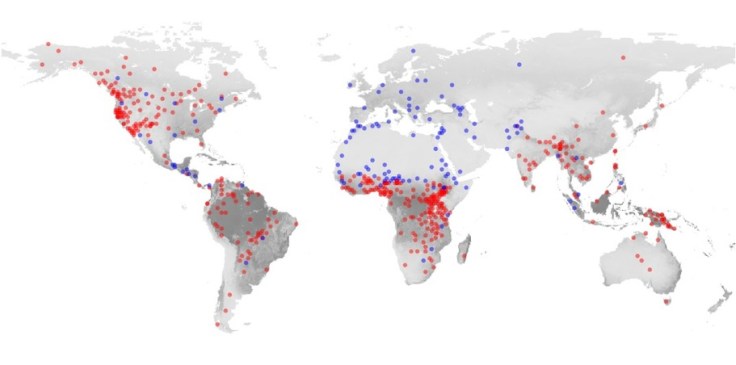
“While women comprise 49.6% of the global population, they have the majority in the United States, where 50.8% of the total population is female. But what do the numbers look like at the state level? The Washington Post put together a map yesterday purporting to show which states had more women than men and vice versa. Their map was widely circulated, jumping to the number one spot on the popular subreddit Data is Beautiful and was the most read story on the Washington Post for a while…”

Source: twentytwowords.com

Unfortunately the top map was pretty sloppy way to visually explain the census data…it’s wasn’t THAT wrong (sorry Alaska and Hawaii), but the symbols convey a greater degree of difference than actually exists.  Below is a map that shows the differences in the data in a much more informative matter. 

Tags: cartography, mapping, 201, visualization, gender, census, USA.

Geography of Europe Games

Source: www.toporopa.eu

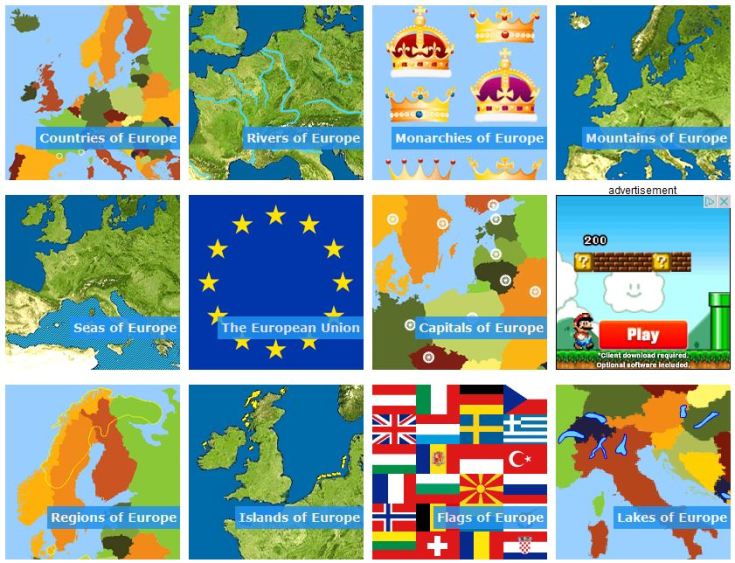
Toporopa is compilation of different games and app for secondary students to review their geographic knowledge of geography, and learn new concepts in a fun and entertaining way.  It does reinforce the ‘encyclopedic’ view of geography education, but the games are well-crafted and available in most of the major languages of the European Union.  See a Spanish-language review of the site here.   

Tags: Europe, regions, trivia, games.

A liter of acid can destroy someone’s life

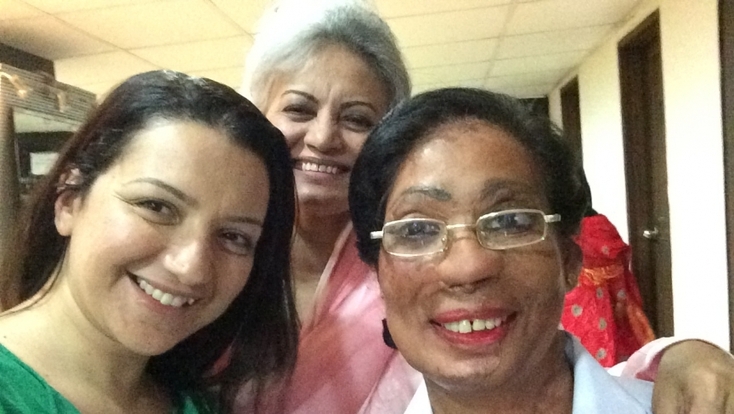
Almost 10 years ago, a young Pakistani woman was held down by her mother-in-law while her husband and father-in-law threw acid on her. Some 150 operations later, Bushra Shafi is working as a beautician in a hair salon in Lahore, started by a hairdresser who was moved to help victims of acid attacks when one of them came into her salon and asked simply: “Can you make me beautiful again?”

Source: www.pri.org

Like any form of violence against women, this is not entirely representative of the region in which this found.  But this type of crime is much more prevalent in South Asia than in any other region. 

Tags: South Asia, development, Pakistan,  gender, culture, podcast.

Using BatchGeo

“Quick 1 minute tutorial on using BatchGeo to create a map. This example shows copying data straight from Wikipedia and mapping, but you can also use spreadsheets, databases, or any other tab delimited dataset.”

Source: www.youtube.com

BatchGeo is incredibly easy to use mapping platform…think of it as GIS-lite.  If you have a spreadsheet full of point data, you can make a map with your own data.  

Tags:  mapping, 201, CSV, edtech.


Spatial Design

“How much does size really matter? Judging by this tiny home in France, not a whole lot — as long as the space is functional.

On the seventh floor of an apartment building in Paris, there’s an 86-square-foot apartment complete with a bed, kitchen, bathroom, table and chairs, closet, bathroom and storage space.” —HPost

Source: vimeo.com

Space in a home matters, but the functionality of that space is critical.  Geography is about spatial thinking, and this video promotes a different type of spatial thinking, but one that still will help geographic thought.  As our metropolitan areas get more and more crowded, planning of this type might become increasingly common.  What advantages to you see in interior design that seek s to maximize space?  What are some drawbacks to a design such as this?

Tags: spatial, density, urbanism, housing.

Cityscapes of Chicago

Cityscape Chicago II is a personal timelapse piece that I have worked on periodically over the past two years. The inspiration behind the project ties similarly with the original piece. As the city of Chicago continues to change, my fascination with it grows as well. The goal for me is always to capture the city in a unique way from new perspectives, and to continue exploring it.

Tags: Chicago, urban, place, landscape,  video.

Source: vimeo.com

How cultures around the world make decisions

Is the American obsession with individual freedom really such a great idea? What other cultures know about how to make good choices.

Source: ideas.ted.com

This article show three distinct cultural approaches to the concept of choice, showing how they shape people and communities and cultural systems.  The three models discussed are:

  • One American model: Give me personal autonomy or give me death.
  • The Amish model: Belonging, not choice, is crucial.
  • One Asian model: Focus on interdependence and harmony, not independence and self-expression.


Tags: culture, worldwide, TED.

Golden Temple of Amristar

“The Golden Temple is the holiest shrine of the Sikh religion. It is also home to one of the largest free eateries in the world. Read the related article.”

Source: www.youtube.com

This two-minute video clip is an effective portal to alternative religious traditions on the South Asian subcontinent.   While students might not at first relate to the theologies of diverse religious traditions, they connect with the underlying ethics of many world religions.  This video is an effective tool to help them gain greater cultural understanding and to demystify unfamiliar cultural practices. 


Tags: culture, India, South Asia, religion.

Why Indians love cricket

TO OUTSIDERS, the magnitude of Indians’ love for cricket is as incomprehensible as its feverish intensity. On February 4th India awarded the Bharat Ratna, its highest civilian honour, to Sachin Tendulkar, a recently retired batsman. Millions in India, a country of 1.3 billion people and only one nationally-popular game, celebrated wildly. When India’s national side plays a big game, an estimated 400m watch on television. Yet cricket’s take-off in India is a highly improbable development. The game is demanding to play properly, requiring space, a good turf pitch and expensive equipment—which only a relative handful of Indian cricketers have access to. Most will never strap on pads or bowl with a leather ball. So why do they so love the game?

Tags: sport, popular culture, culture, development, India, South Asia, globalization, empire.

Source: www.economist.com

Blog at WordPress.com.

Up ↑