Search

GEOGRAPHY EDUCATION

Supporting geography educators everywhere with current digital resources.

Category

Uncategorized

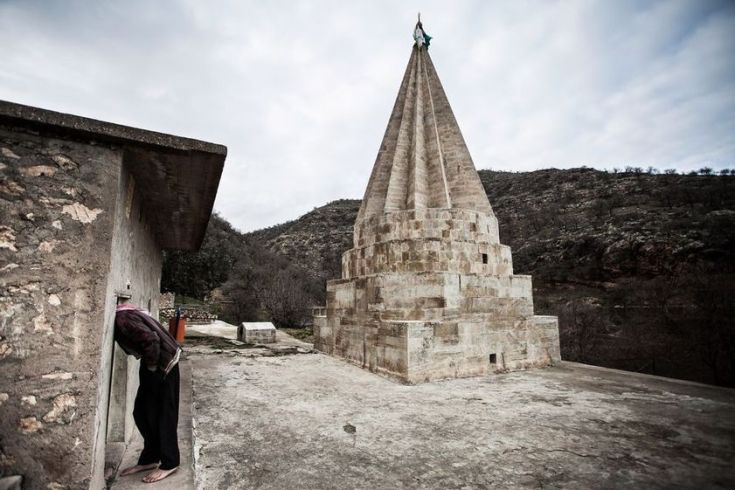
For Yazidis, Exile From Spiritual Homeland in Iraq Dilutes Ancient Culture

Some are contemplating migration, severing ties to their holy land. Others want to stay and protect their shrines.

Source: news.nationalgeographic.com

When we discuss the geography of religion, frequently we are discussing the distribution of particular religions.  However, some religions are deeply embedded in particular places and their spiritual rites, customs and traditions are intrinsically linked with sacred spaces and particular geographies.  The Yazidi are are religious group that is deeply connected to the mountains of northern Iraq–areas that are now being evacuated because of ISIS.  Some are contemplating migrating to safety, but severing their ties to their holy land. Others want to stay and protect their sacred spaces.

Tagsplace, culture religion, Middle East.

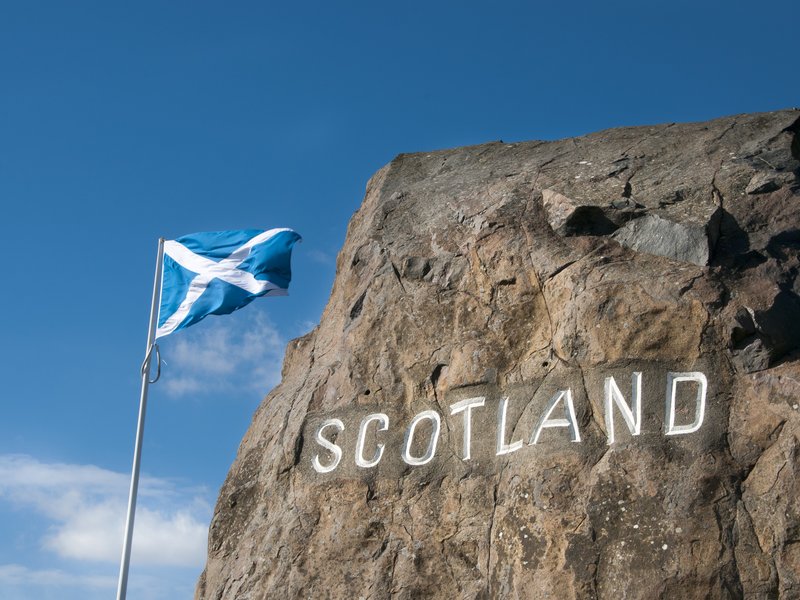
Scottish Independence: New flag for UK?

Members of the Flag Institute have created designs for what the Union Flag could look like in the event of independence

Source: www.telegraph.co.uk

I’ve already posted various links this week on Scottish independence and what it might mean, but I think these two are also worth considering.  Flags are the great icons of state identity, and a UK without Scotland might reconsider it iconography.  This links to an article from the Telegraph and a photogallery with 12 ‘candidate flags’ for a UK that does not include Scotland.  Why might some resist the idea of creating a new national symbol?

Tags: devolutionhistorical, political, states, sovereignty, autonomy, Europe, unit 4 political, UK.

Why Democrats Can’t Win the House

Thanks to demographics, the Republicans have a virtual stranglehold on the House of Representatives.

Source: www.nytimes.com

While the first reaction might be to blame partisan redistricting (a.k.a. gerrymandering) for the the political gridlock between the presidential results and House of Representatives.  Gerrymandering does play a role, but the spatial concentrations and distributions of voting constituencies explain why the Democrats have recently won the popular vote in 5 out of the last 6 presidential elections, but can’t control the House of Representatives.  Metro areas are highly left-leaning, currently creating a national majority for Democrats, but that high concentration is a drawback when trying to win a majority of the seats in the House.  This is a good article as a primer for electoral geography.  

Tags: political, regions, spatial, unit 4 political.

Burning Man and Ephemeral Geographies

“An aerial perspective on Burning Man 2013, in Black Rock Playa, NV”

This annual arts festival with a strong counter-cultural ethos literally is an experiment in producing alternative urban and cultural geographies that reject normative regulations embedded within societies. These geographies created last only about a week, as an escape from the regular strictures of society. Burning Man celebrates alternative spiritualities and creates monuments to impermanence while allowing people to wear zany costumes. Many feel that in leaving behind ‘the real world’ they find their true home at Burning Man. The ephemeral alternative geographies then fade back into the desert but not without creating a visually remarkable place. Some feel that the festival has become too popular and famous to be what it truly was intended to be as the rich and famous descend on the playa as well.

Questions to Ponder: Part of Burning Man’s success is due to its impermanence; if this community were created to exist year-round, would it still work? Why or why not? Why do festivals like this attract so many? What does it culturally say about the participants and the societies that they leave behind?

Tags: communityplace, architectureimages, art, landscape.

Scotland’s Decision

From Catalonia to Kurdistan, nationalist and separatist movements in Europe and beyond are watching the Scottish independence referendum closely.

Source: www.nytimes.com

This issue reverberates on many different scales.  As the video embedded in this article demonstrates,  Scotland’s choice on September 18th would obviously impact the local region as some seek to use Scottish history as a rationale to reshape the current political and cultural identity of the region.  Some of the votes are already in and Scottish independence would not only have the potential to reshape the UK and EU, but it could also add some fervor to the various other separatist movements around the world, such as Catalonia.  

Tags: devolutionhistorical, supranationalism, political, states, sovereignty, autonomy, Europe, unit 4 political.

Alexander von Humboldt

“Have you heard of Alexander von Humboldt? Not likely. The geologist turned geographer and South American explorer was a bit of an 18th century super scientist, traveling over 24,000 miles to understand the relationship between nature and habitat. George Mehler details Humboldt’s major accomplishments and why we should care about them today. See this TED ED lesson plan that accompanies the video.”

Source: www.youtube.com

Alexander von Humboldt has been described as the last great ancient geographer concerned with understanding an eclectic cosmography as well as the first modern geographer. He is honored far and wide throughout Latin America and Europe, but given that intellectually people are confused as how to categorize him and classify his contributions, today he is under-appreciated.  Geographers need to reclaim his memory and call his extensive, globetrotting work on a wide range of subjects ‘geography.’    


Tags:  historicalbiogeography, unit 1 Geoprinciples, TED.

Remembering the Real Violence in Ferguson

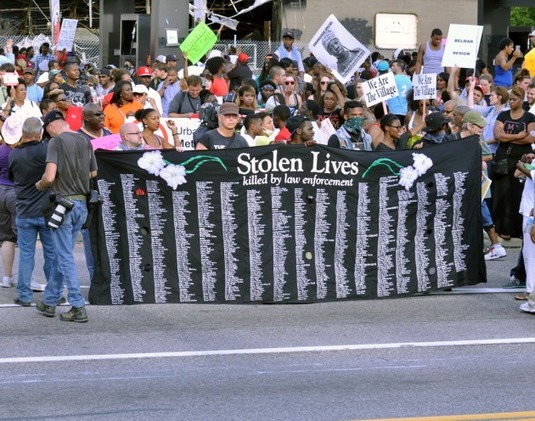
“Violence has a geography and for this reason, geography lies at the center of discussions of violence. Within the United States a myriad of taken for granted assumptions about identity, place, power, and memory undergird the nation’s psyche.  These normative interpretations intersect with a particular kind of geographic formulation that places persons of color in general, but black men most specifically, at the center of the violent structures of the nation.”

Source: societyandspace.com

This isn’t merely commentary about social upheaval or some musing about the social inequities (I think we’ve all read a ton of those articles).  This is a geographic analysis that discusses the interactions, interconnections and implications of a social and spatial conflict between citizens and the institutions of the state.  Ferguson, MO is undoubtedly a lightning rod today and some might prefer to avoid discussing it in a classroom setting; I find that as long as we put analysis before ideology, issues such as these show students the relevance and importance of geographic principles to their lives. 

Tags: race, class, gender, place, poverty, socioeconomic.

Teaching September 11th

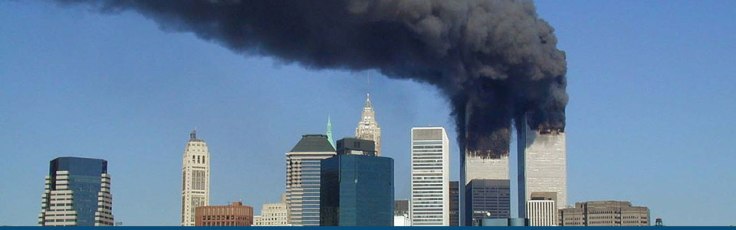
“In the years after the attacks of September 11, debates about how the United States should respond to the threat of terrorism remain of central importance. The death of Osama bin Laden, the rise of ‘homegrown’ terrorists, and the use of drones to kill suspected terrorists pose new questions and challenges for policy makers and citizens. Responding to Terrorism: Challenges for Democracy helps students consider the issues surrounding the 9.11.01 attacks and the U.S. response to terrorism in a constructive context that promotes dialogue about future policy directions.”

Source: www.choices.edu

This lesson plan from the Choices Program will help students explore the human dimension of the September 11 attacks as will this lesson from Teaching History. For a geospatial perspective on 9-11, this page from the Library of Congress, hosted by the Geography and Map Division is a visually rich resources (aerial photography, thermal imagery, LiDAR, etc.)  that show the extent of the damage and the physical change to the region that the terrorist attacks brought.  Also on global terrorism, the Choices Program has also produced some materials on how to teach about ISIS as a new emerging geopolitical threat. 

Teaching September 11th

“In the years after the attacks of September 11, debates about how the United States should respond to the threat of terrorism remain of central importance. The death of Osama bin Laden, the rise of ‘homegrown’ terrorists, and the use of drones to kill suspected terrorists pose new questions and challenges for policy makers and citizens. Responding to Terrorism: Challenges for Democracy helps students consider the issues surrounding the 9.11.01 attacks and the U.S. response to terrorism in a constructive context that promotes dialogue about future policy directions.”

Source: www.choices.edu

This lesson plan from the Choices Program will help students explore the human dimension of the September 11 attacks as will this lesson from Teaching History. For a geospatial perspective on 9-11, this page from the Library of Congress, hosted by the Geography and Map Division is a visually rich resources (aerial photography, thermal imagery, LiDAR, etc.)  that show the extent of the damage and the physical change to the region that the terrorist attacks brought.  The images from that day are a part of American memory and change how the event is remembered and memorialized in public spaces.  Also on global terrorism, the Choices Program has also produced some materials on how to teach about ISIS as a new emerging geopolitical threat. 

Create a free website or blog at WordPress.com.

Up ↑