Search

GEOGRAPHY EDUCATION

Supporting geography educators everywhere with current digital resources.

Category

Uncategorized

Analog GPS: Scrolling Wrist & Car-Mounted Maps of the Roaring 20s & 30s

Long before the days of celebrity voices calling out directions while you drive, paper-based attempts at mobile mapping generated an intriguing array of proto-GPS systems, including this quirky pair of manual and automated moving map displays.

Source: 99percentinvisible.org

I typically really enjoy the thoughtful exploration of the untold stories that make up our world found in  99 Percent Invisible.  Of course I would be especially drawn to this particular podcast–an historical glimpse at information overload in the analogy era, mapping technologies to aid navigation–this is just fascinating. 


Tagspodcasttransportationmapping, GPS, cartographyhistorical.

The Real Irish-American Story Not Taught in Schools

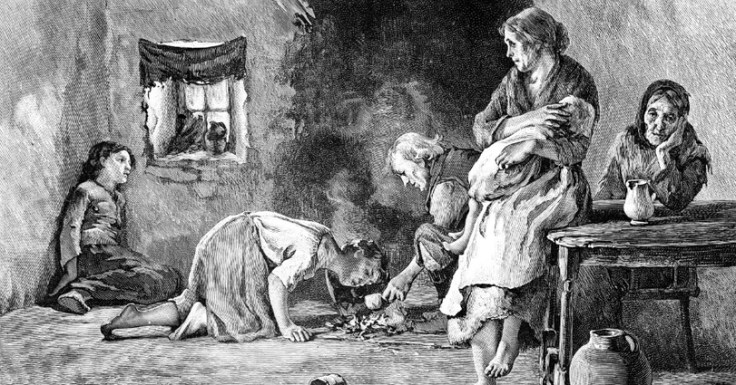
“The crop failure in Ireland affected only the potato—during the worst famine years, other food production was robust. Michael Pollan notes in The Botany of Desire, ‘Ireland’s was surely the biggest experiment in monoculture ever attempted and surely the most convincing proof of its folly.’ But if only this one variety of potato, the Lumper, failed, and other crops thrived, why did people starve?  Thomas Gallagher points out in Paddy’s Lament, that during the first winter of famine, 1846-47, as perhaps 400,000 Irish peasants starved, landlords exported 17 million pounds sterling worth of grain, cattle, pigs, flour, eggs, and poultry—food that could have prevented those deaths. Throughout the famine, as Gallagher notes, there was an abundance of food produced in Ireland, yet the landlords exported it to markets abroad.”

Source: www.commondreams.org

I teach my students that famines reflect a lack of power (political and economic) more so than they are indicative of an absence of food in that region.  The Irish potato famine exemplifies the three main causes of food insecurity

1. Redirection of food

2. Destruction of capacity to grow food

3. neglect of the starving


TagsIreland, foodeconomicfood production, poverty.

Welcome to the land that no country wants

Bir Tawil is the last truly unclaimed land on earth: a tiny sliver of Africa ruled by no state, inhabited by no permanent residents and governed by no laws.

Source: www.theguardian.com

Both Sudan and Egypt claim the rightful border between their countries should include the Hala’ib Triangle on their side of the border.  This leaves Bir Tawil unclaimed and it pops up in the news when those hoping to create a micronation claim it.  This bizarre case exemplifies some important principles of political geography with a tangible example to test the limits of political sovereignty and what it take to be called a country.  If discussing the elements necessary to create a state, this article would help fuel a discussion, especially when some people are eager to create their own micronation.    


Tagspolitical, states, unit 4 political.

This map should change the way you think about foreign aid

As you can see, the biggest recipient by a long way is Israel (this is fiscal year 2014 data, but nothing’s changing), and two other big ones are Egypt and Jordan, which both have aid packages that are tied up with their peace treaties with Israel. None of these are poor countries (indeed, Israel is downright rich), and the point of the money is to advance an American foreign policy agenda — not to help the poor. Pakistan and Afghanistan, which round out the top five, actually are pretty poor, but, again, the main American interest in them is clearly foreign policy rather than poverty.


Tags: political, geopolitics, development, economic.

Source: www.vox.com

Women secretly film inside ISIS stronghold

Two Syrian women took a hidden camera through the northern Syrian city of Raqqa to document their life under ISIS rule, according to CNN affiliate Expressen TV.

Source: www.cnn.com

This is a rare glimpse inside the heart of ISIS controlled territory.  If you have never considered this perspective, imagine that you were an ordinary citizen living in an area that was overrun by ISIS, and are hoping to keep your family alive.  What would you life be like? 


Tags:  political, terrorism, ISIS.

In The World’s ‘Sixth Extinction,’ Are Humans The Asteroid?

“Scientists think an asteroid killed the dinosaurs. In today’s extinction, humans are the culprit.  [In this podcast] our guest is Elizabeth Kolbert, author of the book The Sixth Extinction.  The book begins with a history of the big five extinctions of the past and goes on to explain how human behavior is creating this sixth, including our use of fossil fuels which has led to climate change.”

Source: www.npr.org

As stated in a JSTOR daily article, “New research confirms that the next mass extinction is in progress, and we’re the cause. There’s been little doubt that humans have been severely altering the planet and reducing biodiversity, but it has been unclear how many species go extinct under normal circumstances, without human influence.

This new research clarifies the rate of ‘background extinction’ (the rate of extinction during the point before humans became a primary contributor to extinction). The research confirms that human activity is driving species extinct at a rate far higher than the background rate. A look at previous events suggests cause for concern. Geologists recognize five previous mass extinction events— the end of the Ordovician, Devonian, Permian, Triassic, and Cretaceous periods, meaning that we’re now in the 6th.”


Tagsphysicalpodcast, biogeography, environment, ecology, environment modify, sustainability, geology.

How Things Spread

What makes an idea, a brand, or a behavior catch fire? This hour, TED speakers explore the mysteries behind the many things we spread: laughter and sadness, imagination, viruses and viral ideas.

Source: www.npr.org

What made the world the way it is?  The spread of people, ideas and goods–Geographers refer to this as diffusion and these 5 podcasts all center on what factors promote the spread of some phenomena, and what obstacles and barriers exist to the diffusion of others. 


Tagspodcast, medical, diffusion, culture, popular culture, globalization.

How well do you know the world? Play Geoguessr to find out!

Think you’re a geography expert? Test your knowledge with BBC Travel’s Geoguessr – the game that proves how well you know the world!

Source: www.bbc.com

I’ve shared GeoGuessr before but they now have country-specific quizzes (this is for the United States).  When I was a child I used to wonder if woke up somewhere far from home, would I be able to know where I was just by looking at the places around me (I was a geo-geek from way back when).  GeoGuessr is the closest thing to finding yourself lost in the world and needing to figure out where you are without being wisked away.  GeoGuessr will display 5 locations in GoogleMaps “StreetView” and you have to guess where the images are located.  You can pan and zoom in the StreetView to explore the landscape and find more context clues as to where that location is.  It is a fantastic exploration exercise.   


Tags: landscape, place, trivia.

xkcd: Orbiter

Source: xkcd.com

I’ve always enjoyed this comic strip…it highlights some of the difficulties in teaching about the Israeli/Palestinian conflict. 


Tags: Israel, Palestine, political, language, toponymsMiddle East.

Blog at WordPress.com.

Up ↑