Search

GEOGRAPHY EDUCATION

Supporting geography educators everywhere with current digital resources.

Category

Uncategorized

When an asteroid gets too close : ImaGeo

Seth Dixon, Ph.D.‘s insight:

Many of you have seen the YouTube video of the meteor in Russia this week (wondered why so many Russians have cameras on their dashboards?).  This show the geologic impact of the largest meteors.  Pictured above is Meteor Crater in Arizona.   

See on blogs.discovermagazine.com

How are satellite images different from photographs?

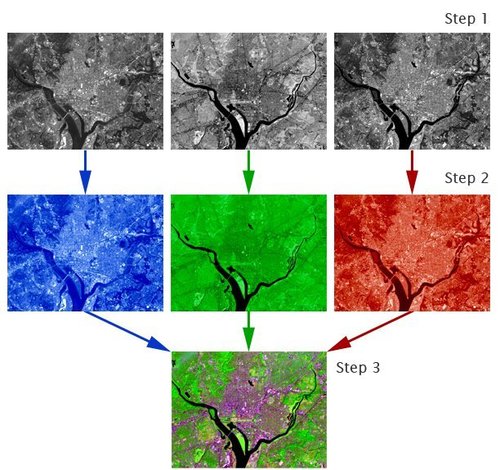
“Satellites acquire images in black and white, so how is it possible to create the beautiful color images that we see on television, in magazines, and on the internet? Computers provide us with the answer.

Images created using different bands (or wavelengths) have different contrast (light and dark areas). Computers make it possible to assign ‘false color’ to these black and white images. The three primary colors of light are red, green, and blue. Computer screens can display an image in three different bands at a time, by using a different primary color for each band. When we combine these three images we get a ‘false color image.’

Find tutorials and links to free compositing programs here.”

Seth Dixon, Ph.D.‘s insight:

See on landsat.gsfc.nasa.gov

A Satellite’s View of Ship Pollution

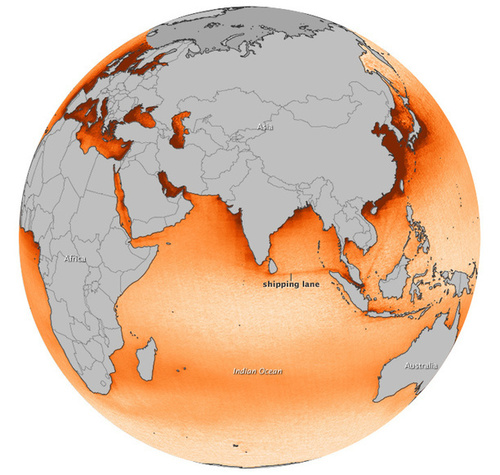
Elevated levels of nitrogen dioxide pop out over certain shipping lanes in observations made by the Aura satellite between 2005-2012. The signal was the strongest over the northeastern Indian Ocean.

See on earthobservatory.nasa.gov

Landlocked Countries Quiz

If your knowledge of geography is ‘locked in’, now’s the perfect time to show it off in our Landlocked Countries Geography Quiz! Play now!

See on www.quizfortune.com

The United States of YA

A while back, I posted in the forums asking for people to help me find a YA book for every single state in the US.

Seth Dixon, Ph.D.‘s insight:

While I can’t vouch for all of these books (I read more children’s literature than Young Adult), I absolutely love the idea of this project.  This is a great way to make geography a cross curricular activity, especially for an English class or just for fun. The geographic content of some of these books are minimal, but that’s not the worst thing that can happen if more students are reading.  What books are at the top of your reading list?

See on www.epicreads.com

Changing Ethnic patterns in London

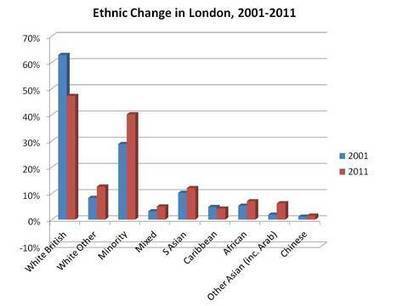
Of all the changes announced by the 2011 census, one of the most startling is the rapid change in the ethnic composition of London’s population.

Seth Dixon, Ph.D.‘s insight:

The fact the immigrants moving to the UK have flocked to London is not surprising (View a map of the census data).  Immigration isn’t the only component to this situation.  White Britons are also leaving London in large number, prompting some to refer to this as “White Flight.”  Today, white Britons are no longer the majority population within London (but still the largest ethnic group).  Some feel that this story has gone underreported and deserves more analysis.  What elements of human geography should an observer of this situation use in their analysis?  

Tags: ethnicity, London, migration, census, urban.

See on www.huffingtonpost.co.uk

Top 10 Countries That Disappeared In The 20th Century

New nations seem to pop up with alarming regularity. At the start of the 20th century, there were only a few dozen independent sovereign states on the planet; today, there are nearly 200!

Seth Dixon, Ph.D.‘s insight:

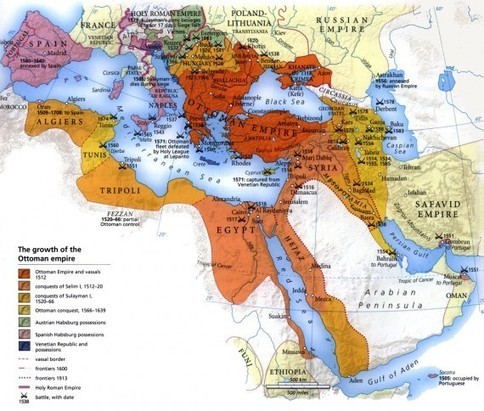
This list of countries that no longer exist in their current form include Czechoslovakia, Tibet, Sikkim, the Ottoman Empire and the Soviet Union. 


Tags: unit 4 political, historical, devolution.  

See on myscienceacademy.org

China’s demand for cotton is helping give the global market for the commodity a boost

See on twitpic.com

Why Vikings Abandoned Colony in Greenland

For years, researchers have puzzled over why Viking descendents abandoned Greenland in the late 15th century.

Seth Dixon, Ph.D.‘s insight:

As the climate began to cool the diet of the Greenland settlers changed dramatically.  Originally their diets consisted of about 20-30% seafood, but as farming became nearly impossible on this increasingly marginal land, it jumped up to about 80%.  The economic livelihood of the settlements was in danger and the solution lay in a cultural transition, but one that they didn’t want to make.  “They saw themselves as farmers and ranchers rather than fishermen and hunters...[and were] worried about the increasing loss of their Scandinavian identity.”  In essence they abandoned Greenland in part because they chose not abandon their Viking heritage to embrace a culture that would have be more like that of the Inuits.  Cultural factors may have mattered more than economic limitations.


Tags: Greenland, folk culture, historical.

See on www.spiegel.de

Create a free website or blog at WordPress.com.

Up ↑