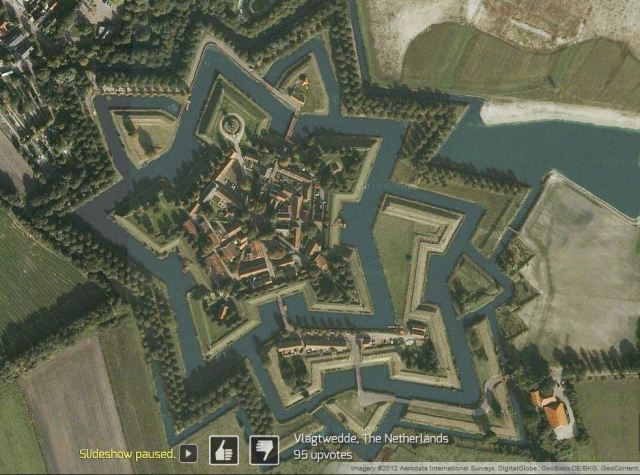
Explore and vote on the best Google Maps satellite imagery around the world.
Much like sites that you can rate items up or down, you can rate the best aerial photography via Google Earth screen shots. There are some beautiful images and places to be discovered through this site. The physical and human landscapes are both intermingled in this fantastic collection of images…be careful, it can be amazingly addictive. For more from the producer of this site, see: http://paulrademacher.com or follow on twitter @paulrademacher.
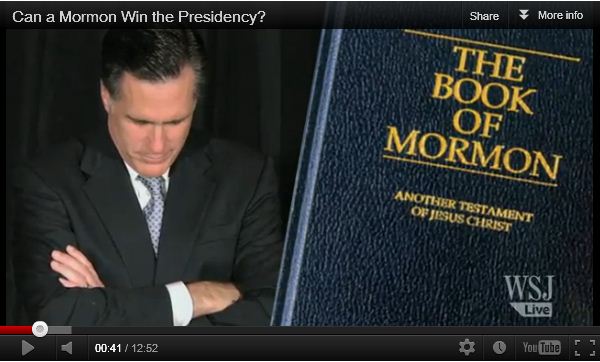
For the first time in U.S. history, a Mormon is on a major-party presidential ticket. The Wall Street Journal examines the changing role of religion in America…
Aren’t religion and politics supposed to be the two things we are counseled not to discuss to avoid controversy? This video hits on something that plays a role for both candidates in the 2012 presidential campaign in the United States: their faith and how voters perceive their faith. This video discusses Mitt Romney, Barack Obama and some past presidents’ religious beliefs. I feel this video handles very controversial topics in a thoughtful and fair manner given that it treats various religious traditions and political ideologies in a non-partisan manner. The geography of religion might play an significant role in the outcome of the 2012 election.
The natural landscapes shown as captured by satellite imagery is as beautiful as anything artists have ever created. Some of the colors shown in the video may seem otherworldy. Most of those color anomalies are due to the fact that remotely sensed images have more information in them than just what we see in the visible portion of the electromagnetic spectrum. Some of these images are processed to show different bands so we can visually interpret data such as what is in the near infra-red band, skewing the color palette.
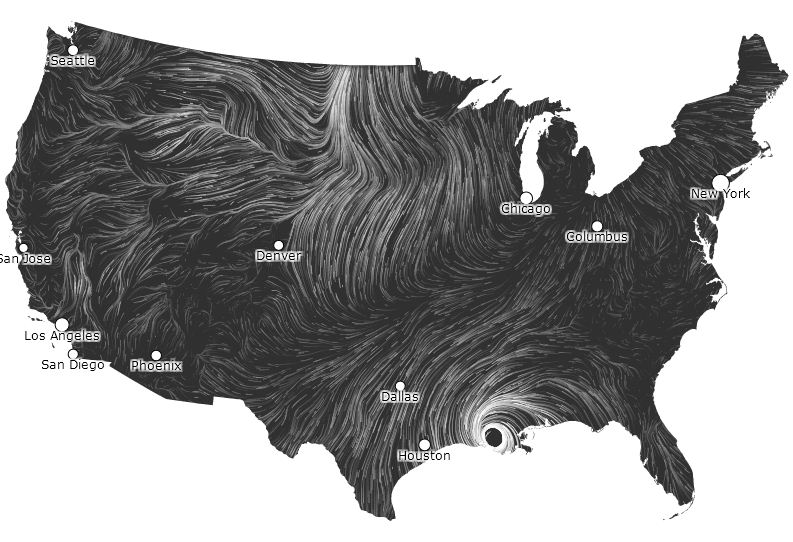
This is a repeat, but you simply MUST check out Louisiana right now on this map as Hurricane Isaac has made landfall.
“This interactive map is a ‘nearly live’ dynamic display of United States winds patterns (speed, direction and broad spatial context). Click on the image to see the animated, large version.”
This is a primer on how to use online resources for geography students so they can learn more about the world by participating in global conversations (not just hearing about them).