Search

GEOGRAPHY EDUCATION

Supporting geography educators everywhere with current digital resources.

Category

Uncategorized

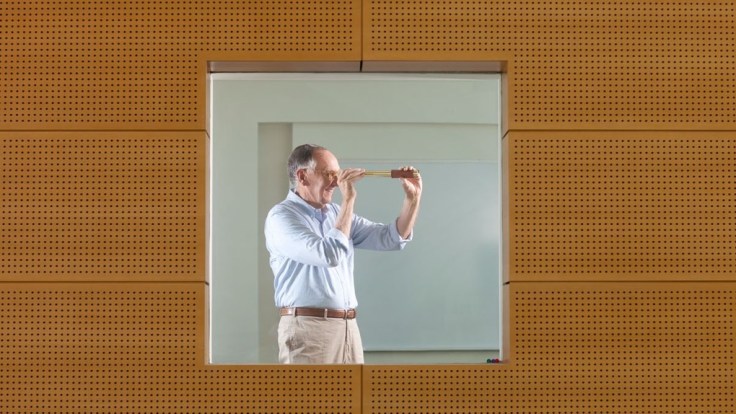
The Godfather of Digital Maps

Nearly 50 years ago, Jack Dangermond started digital mapping pioneer Esri, and its work made Google Maps and Google Earth possible.

Source: www.forbes.com

This is a nice article on the beginnings of ESRI and Jack Dangermond’s impact on digital mapping. 


Tags: GIS, ESRI, mapping, cartography, geospatial.

The Role of Rural Women in Agriculture

“Women are the backbone of the development of rural and national economies. They comprise 43% of the world’s agricultural labor force, which rises to 70% in some countries. In Africa, 80% of the agricultural production comes from small farmers, who are mostly rural women. Women comprise the largest percentage of the workforce in the agricultural sector, but do not have access and control over all land and productive resources. Realizing the importance of rural women in agriculture is an important aspect of gender relations. In many countries, the role of women in agriculture is considered just to be a ‘help’ and not an important economic contribution to agricultural production. Giving support to rural women is a way of breaking the vicious cycle that leads to rural poverty and to the expansion of slums in the cities, where the poor get poorer. Development strategies should consider rural women as the epicenter, paying special attention to their social skills both within and without agriculture sector.”

Source: www.wfo-oma.com

While rural women play a substantial role in agriculture around the world, it is often not in positions of ownership, regional influence, and agency.  This is an article discussing how empowering rural women in the agricultural sector by changed the cultural and economic institutions that shape their work can truly change the world we live in.  


Tags: gender in agriculture, developmentgender, agriculture, labor. 

The Danger Of GMOs: Is It All In Your Mind?

Genetically modified foods are often regarded as “unnatural” and approached with distrust. Commentator Tania Lombrozo considers the psychology behind these reactions.


Why do so many people oppose genetically modified organisms, or GMOs? According to a new paper forthcoming in the journal Trends in Plant Science, it’s because opposition to GMOs taps into deep cognitive biases. These biases conspire to make arguments against GMOs intuitive and compelling, whether or not they’re backed by strong evidence.

The authors of the paper — a mix of philosophers and biologists — turn to research in the cognitive sciences to shed light on the mismatch between the public’s perception of GMOs (which is fairly negative, especially in Europe) and the state of the evidence about their safety (which is fairly positive).


Tags: GMOstechnology, agriculture.

Source: www.npr.org

Glaciology in Greenland

“Sharyn Alfonsi goes to the top of the world to report on scientists trying to get to the bottom of climate change and sea level rise by studying one of the largest glaciers in the Arctic Circle.”

Source: www.cbsnews.com

The 13 minute video clip from the show “60 Minutes” is a good introduction to the importance and difficulty of studying glacial melt, climate change, and the impacts of a receding ice sheet.  


Tags: physical, erosion, climate change, Greenland.

How well do you know the world’s countries?

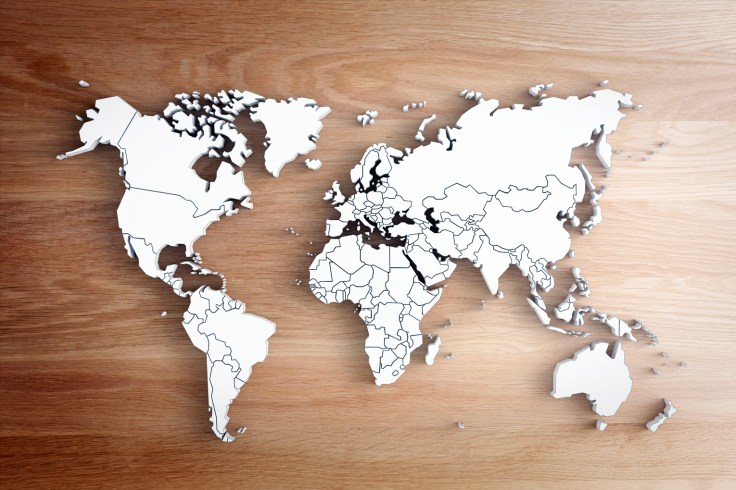
The average person’s geography skills are fairly poor beyond their region. Test your knowledge of the countries at HowStuffWorks.

Source: adventure.howstuffworks.com

The questions are more “recall” than “higher order thinking” questions, but this batch of 30 questions is still a fun break from the regular routine. 


Tags: trivia, games.

Historical Figures, Campus Controversies

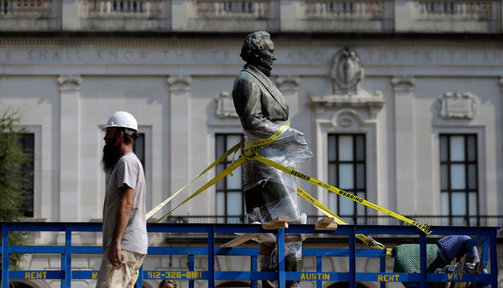
Around the world, student activists are demanding that building and statutes commemorating historically figures whose legacies are now seen as morally dubious.


A new wave of international student activism has targeted names, mascots, statues and other symbols of historical figures at colleges and universities. Activists argue that the symbols should be removed as offensive reminders of hatred and violence. Many school officials acknowledge the historical complexities, but they argue that a better approach would be to teach students about the morally questionable acts of the past. Still others defend the symbols as harmless traditions.

Source: www.nytimes.com

Everyone who was been on a road trip with me knows I love monuments and statues.  As markers of memory, history, and place, monuments both reflect regional identity and are simultaneouly used to reshape how we think about communal identities.  Consequently, they can be hotly contested or be seen as a great unifying symbol.  This article has some great examples from the news about how identity and heritage are being recontructed with some controversial monuments. 

  • Jefferson Davis at UTexas
  • Brown U and Slave Trade
  • Harvard and ‘Veritas’
  • Amherst and its namesake
  • John Calhoun and Clemson/Yale
  • Cecil Rhodes at Oxford and Cape Town

Tags: historical, monuments, landscape.

iScore5 now ready for Android devices


Game while you learn. It’s FUN!

•  100s and 100s of AP-style Questions from easy to hard.
•  A leaderboard to rank your scores against students around the world.
•  You can iScore5 anywhere – much easier to carry around than a book!
•  Tell your parents you ARE STUDYING when they see you on your phone!

Source: play.google.com

iScore5, everyone’s favorite app for AP Human Geography used to be only available through the Apple Store.  They now have explanations for answers since many many previous users requested that addition and have made their app open to be used on Android devices (available in the Google Play Store -$4.99). With five levels of questions at increasing difficulty, bonus and double bonus rounds and a study mode with extensive vocabulary, APHG students and teachers alike will find this a great test prep resource that is both fun and an intellectually stimulating way to get that score that they are looking for.   Closer to the APHG exam there will be a free trial related to FRQ practice which looks to be an exciting new addition to this great (and growing) product.

Tags: APHG, teacher training, edtech.

‘Sedated by software’: No one knows how to read maps anymore, experts say

The Royal Institute of Navigation are concerned about the nation’s cartographical know-how and have suggested schools start teaching basic navigation.

Source: mashable.com

Today, many are unable to navigate without GPS devices, but they still need to learn map reading skills. They are convinced that their apps can do all the work and that an old fashioned paper map is outdated technology, but their spatial thinking skills become atrophied. Spatial skills are crucial for understanding the world as a global citizen, to understand your local environs and for making scientific discoveries.  So teach a kid how to read a map…the sooner the better. 


Tagsmapping, K12, location.

Pope Francis, Russian Orthodox patriarch to meet in Cuba

“After a split of more than 1,000 years, the persecution of Christian by extremists in the Middle East and Africa have brought the two churches closer.”


Pope Francis and the leader of the Russian Orthodox Church will meet in Cuba next week in a first-ever encounter between the heads of the Catholic and Russian Orthodox churches since the Great Schism of 1054.


Tags: religionChristianity.

Source: www.usatoday.com

Blog at WordPress.com.

Up ↑