Search

GEOGRAPHY EDUCATION

Supporting geography educators everywhere with current digital resources.

Category

Uncategorized

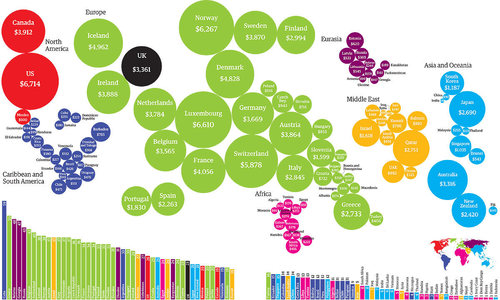
The world map of chocolate (made out of chocolate)

Via Scoop.itGeography Education

You may be focussing on chocolate over the weekend – but where does it come from? A global trade analysed. In chocolate (this is what maps are made for!


What is the geography of chocolate like?  There is a dark side (no pun intended) to the production of cocoa in many places such as West Africa. 

Via www.guardian.co.uk

Low-income countries are a cigarette’s best friend

Via Scoop.itGeography Education

Between 1990 and 2009, cigarette consumption in regions of the world like Western Europe dropped by more than 25% – but that is only one side of the coin.  Historically, cigarette consumtion has been a privilege to the rich and high-income countries. Now, with those countries understanding the risks of cancer and the dangers of smoking, the number of smokers decline. But in the past twenty years, for example, the use of cigarettes in the Middle East and Africe has increased by 60%: “Among the 14 countries where 50% or more of men smoke all but one country (Greece) are classified as low- or middle-income.”


“As consumption rates continue to increase in low- and middle-income countries,” the ACS report reads, “these countries will experience a disproportionate amount of tobacco-related illness and death.”  In 2009, China consumed 40% of the world’s cigarettes.

Via io9.com

Are the Richest Americans Also the Best Educated?

Via Scoop.itGeography Education

The latest data from the U.S. Census´s American Community Survey paints a fascinating picture of the United States at the county level. What are the connections between place, education and earning power?  What patterns are what you would imagine? Why?  Any shocking patterns that emerge from this dataset?

Via awesome.good.is

The Carolinas Work to Clarify Their Borders

Via Scoop.itGeography Education

As a team works to restore the North Carolina-South Carolina border to the original 1772 lines, some worry about the consequences.


Old maps and borders where often determined by local landmarks like trees, rivers, roads, fences, etc.  Trees get uprooted and over time, rivers will wend their way down slightly different paths and the informal old borders get called into question.  The border between North and South Carolina, traversing through swampy forested area was imperfect and now that they are trying to rectify it, some South Carolina residents face the prospect of needing to be North Carolina residents…not a small thing when you consider the utilities, government documents, taxes and voting. 

Via www.nytimes.com

50 Pictures Of Chernobyl 25 Years After The Nuclear Disaster

Via Scoop.itGeography Education

50 Pictures Of Chernobyl 25 Years After The Nuclear Disaster: Today marks the 25th anniversary of the Chernobyl nuclear disaster. …


A haunting gallery that displays the effects of environmental and political mismanagement. 

Via www.buzzfeed.com

Two Decades After Siege, Sarajevo Still Divided

Via Scoop.itGeography Education

Twenty years ago this week, the Bosnian war began with the siege of Sarajevo, the longest in the history of modern warfare. The siege ended more than three years later, leaving 100,000 dead — the worst atrocities in Europe since World War II.


Ethnic and political conflict led to the disintegration of Yugoslavia in the 1990s.  This NPR podcast is a good recap that shows the devolutionary forces of ethnic, religious, cultural and political differences that led to tragic violence and ethnic cleansing. 

Via www.npr.org

Turn This Parking Lot Into a Village

Via Scoop.itGeography Education

If we built village of small streets today, where would we locate it?

One great candidate would be a park-and-ride lot, which is parking located next to a subway or commuter rail station. Such parking gets some to use public transit who wouldn’t ordinarily…

But that’s just the problem: the people who use park-and-ride lots don’t ordinarily take transit. The reason they have to drive to a train station is that they don’t live near it. That’s why building new neighborhoods next to transit (called transit-oriented development in planner lingo) has become popular in the last 10 years.

If we built a small streets village next to transit station, then we’d have a whole village of people who could use transit for all of their trips longer than a walk or bicycle ride away.
There are countless park-and-ride lots to consider, but we’ll look at just a couple. Greenbelt Station is located in Maryland at one end of Metro’s Green Line, which goes through Washington, DC and back out to Maryland. If you’ve ever hopped a ride on the Bolt Bus from New York City or the bus from BWI Airport, you may have visited this station…

Via blog.smallstreets.org

Food Machine

Via Scoop.itGeography Education

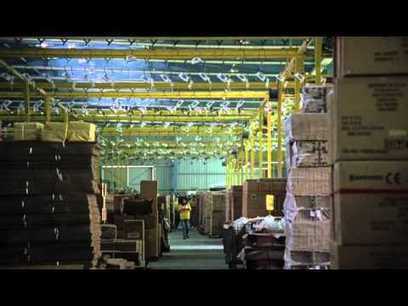
PBS will premiere the episode “Food Machine” on April 11th, 2012.  Check local listings, since this should be a great feature for an agricultural/rural land use unit. 


“Over the past century, an American industrial revolution has given rise to the biggest, most productive food machine the world has ever known.

In this episode, host Yul Kwon explores how this machine feeds nearly 300 million Americans every day. He discovers engineering marvels we’ve created by putting nature to work and takes a look at the costs of our insatiable appetite on our health and environment.  For the first time in human history, less than 2% of the population can feed the other 98%.” 

Via www.pbs.org

What can you do with geography?

Via Scoop.itGeography Education

We all know that geography is important; but what can you do with it? As students across the country prepare for the 2012 National Geographic Bee, we’ve expl…


This is essentially a commerical for Google Earth, but don’t let that overshadow the overriding message of the essential nature of geography in education and the usefulness of geographic and spatial analysis on the job market. 

Via www.youtube.com

Blog at WordPress.com.

Up ↑