Search

GEOGRAPHY EDUCATION

Supporting geography educators everywhere with current digital resources.

Category

Uncategorized

Lawn Order

“In communities across America, lawns that are brown or overgrown are considered especially heinous. Elite squads of dedicated individuals have been deputized by their local governments or homeowners’ associations to take action against those whose lawns fail to meet community standards.”

Source: 99percentinvisible.org

This is a great podcast that shows not only the environmental aspects of America’s obsession with well-manicured lawns, it also nicely explored the cultural norms that police our behavior to create the stereotypical suburban landscape.  This is my favorite quote from the podcast: “There’s a paradox to the lawn. On the one hand, it is the pedestal on which sits the greatest symbol of the American Dream: the home, which people can ostensibly govern however they wish. And yet—homeowners often have almost no control over how they should maintain their lawn. Grass may be a plant, but a lawn is a designed object.”


Tags: housingneighborhood, cultural norms, consumption, water, environmenturban ecology, culture.

“When the well’s dry, we know the worth of water.” ~Benjamin Franklin
Amsterdam Canals

It was busy today on the Canals in Amsterdam. Especially at the junction Prinsengracht/Leidsegracht.

TagsNetherlands, transportationplace, neighborhood, landscape, time lapsevideo.

Source: www.youtube.com

Could this transportation network and system work everywhere?  If not, geography and place are critical factors to shaping the human landscape. 

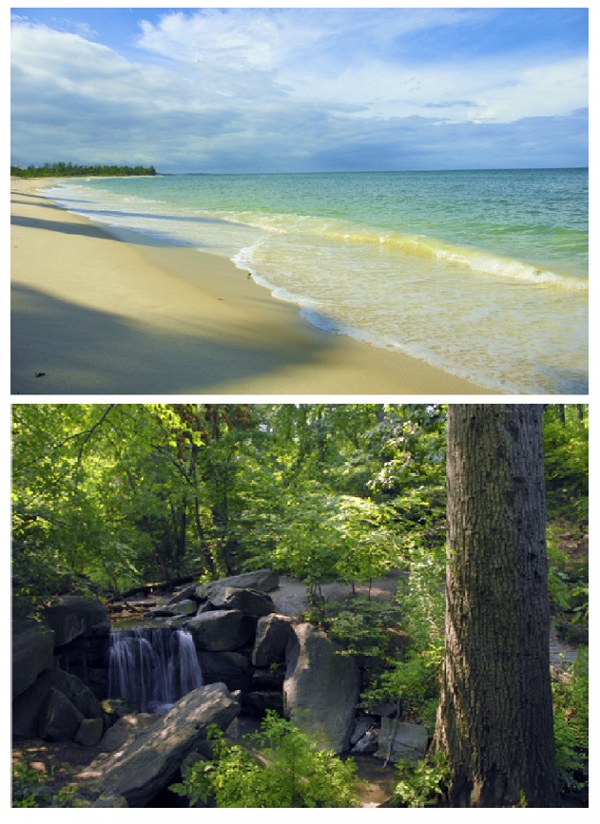
A simple choice between two gorgeous photos reveals your personality

Introvert or extrovert? A quick photo quiz could reveal it all.

Source: www.washingtonpost.com

This psychology study found that introverts and extroverts prefer different landscapes for their vacations, and they may even seek out different environments for a home. There are many geographic implications to this idea, and I’m still chewing on them.

Even When You Go Off the Grid, You Might Still Be On It

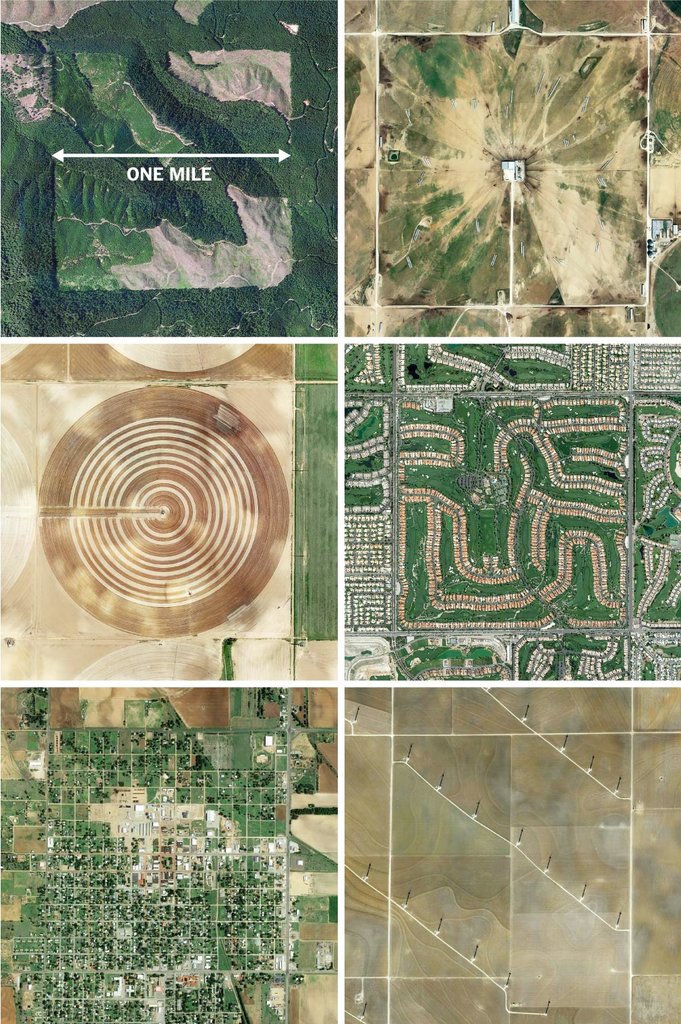
“The images here, taken from the Instagram account @the.jefferson.grid show just a few of the landscapes that can be squeezed into the one-mile squares. The idea behind this sprawling checkerboard emerged after the Revolutionary War. As the United States expanded westward, the country needed a systematic way to divide its newly acquired lands. The original colonies were surveyed using the British system of ‘metes and bounds,’ with parcels delineated using local geography.  

That approach doesn’t scale very well, and Jefferson proposed to slice the young United States into gridded plots of land.  Jefferson’s idea became a reality in 1785 when it was enacted as the Public Land Survey System. Today his grid covers much of the country, and it is still used to survey federal lands — an idea that shaped the physical landscape of half a continent.”

Tags: images, land use, landscape, social media, planningspatial, scale, historical.

Source: www.nytimes.com

The threat to France’s Jews

Official figures indicate that over the last two decades the number of antisemitic acts has tripled. Between January and July 2014 official figures show that there were 527 violent antisemitic acts in France as opposed to 276 for the same period in 2013. Meanwhile half of all racist attacks in France take Jews as their target, even though they number less than 1% of the population.

Source: www.theguardian.com

This great, but sobering article was written in January 2015, and unfortunately, the situation has not improved.  There is a lot of demographic changes and migration happening in the Western World right now, and this is but one component to larger forces reshaping the Europe.  Today many in the French Jewish community are now asking the uncomfortable question: is it time to leave France for good?  Antisemitism is not a thing of the past relegated to the World War II chapter of our history textbooks; many French Jewish families were originally from North Africa before they fled in the 1950s and 60s.  Now, France is Israel’s largest source of migrants and Europe as a whole has a rapidly declining Jewish population.  


Tags: Judaism, religion, Europe, migration, Israel,  France, racism, conflict.

Geography just keeps getting more popular – so what’s the subject’s secret?

As geography teachers return to school they will see their subject continuing to expand at all stages of education. For the fifth year running, GCSE entries have risen. At A-level, geography had the largest percentage increase of all the major subjects in 2015, with candidate numbers rising sharply by 13 per cent, following on from the 19 per cent increase in GCSE in 2013. Enrolment on undergraduate courses is running higher than national averages, and graduating geographers experience some of the lowest unemployment levels of any degree subject. Such positive news is welcome and provides a firm foundation for the introduction of the new GCSE and A-levels from September 2016.

So, what has happened to boost geography over the past 10 years? In short, it’s a powerful mix of sustained advocacy, support from successive governments, independent evaluation and the slow trickle of messages getting through.

Source: www.tes.com

Good news about the state of geography in the United Kingdom.  This can serve as a a strategic plan and a vision for revitalizing geography in the United States. 

Just making sure you were paying attention…

Source: www.youtube.com

Because it’s funny; that’s why. 

Cities with the widest gap between rich, poor

Based on the Gini coefficient, a measure that captures the level of income distribution in a given area, 24/7 Wall St. reviewed the 20 metropolitan areas with the most uneven income distribution, or the highest Gini coefficients. A Gini coefficient of 1 means all income belongs to a single individual, while a coefficient of 0 reflects a perfectly even distribution. The Bridgeport-Stamford-Norwalk, Connecticut, metro area leads the nation with the worst income distribution.With only a few exceptions, the metro areas with the widest gaps between rich and poor residents tend to have lower median household incomes. The majority of the 20 metro areas with the highest Gini coefficients have median household incomes more than $10,000 below the national median of $52,250.Average incomes, however, tell a different story. Because of the uneven income distribution, the average income is much higher in most of these metro areas.

Source: www.usatoday.com

The Gini index which measures the degree of economic inequality (the Gini coefficient was added to the APHG course content for the Industrialization and Economic Development unit in 2013).  This article explains the value of the Gini coefficient without delving much into the statistics.  


Tagsstatistics, APHG, poverty, socioeconomic, development, economic.

History Revisited, Heritage Reshaped

Notes on an Imagined Plaque to be Added to the Statue of General Nathan Bedford Forrest, Upon Hearing that the Memphis City Counci has Voted to Move it and the Exhumed Remains of General Forrest and his Wife, Mary Ann Montgomery Forrest, from their Current Location in a Park Downtown, to the Nearby Elmwood Cemetery

Source: thememorypalace.us

This is a very insightful podcast that explores some of the many ways that the South is remembered.  History happened, but heritage is carefully crafted, remolded and contested–geographers are especially interested in seeing how these competing visions of heritage are inscribed in the landscape.     


Tags: historical, monuments, the Southlandscape, podcast.

Blog at WordPress.com.

Up ↑