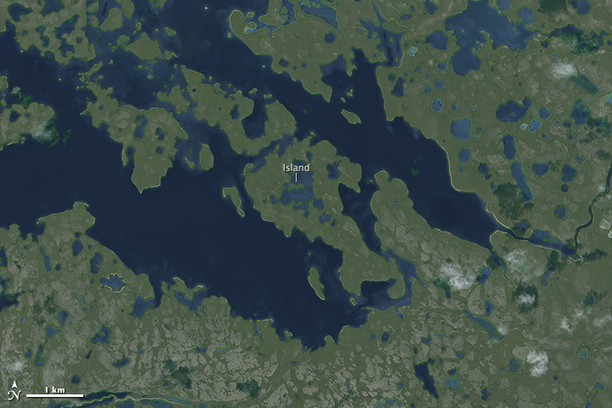
“A nice flood rolled down Johnson Canyon (southern Utah) on July 6th, 2015.”
Source: www.youtube.com
The raw power of Earth’s natural forces can be truly amazing.
Tags: physical, geomorphology, erosion, landforms, Utah, water, disasters.
“A nice flood rolled down Johnson Canyon (southern Utah) on July 6th, 2015.”
Source: www.youtube.com
The raw power of Earth’s natural forces can be truly amazing.
Tags: physical, geomorphology, erosion, landforms, Utah, water, disasters.

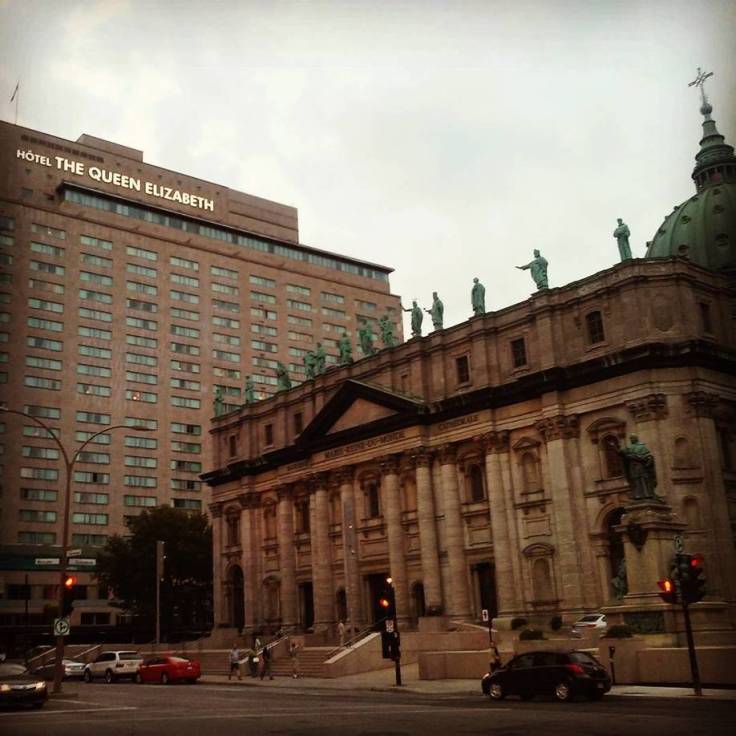
This is a great juxtaposition of communal identities. Before becoming a part of Canada, this was the Cathedral of St. James. As a part of the British Empire, places such as Victoria Square became a part of the Montreal landscape. In what appears to me as a symbolic strike back against the British Monarchy’s supremacy, this Cathedral is renamed Marie-Reine-du-Monde (Mary, Queen of the World). The fact that the Hotel Queen Elizabeth is looming overhead only heightens the tensions regarding whose queen reigns supreme; this isn’t the real issue. The dueling queens served as a proxy for tensions between British political control and French cultural identity in Quebec several generations ago.
Source: instagram.com
I was recently in Montreal; my last few Instagram posts aren’t the prettiest pictures of my time in Canada. I tried to select images that represented geographic concepts and would be the things I’d mention if we were on a walking tour of the city.
Tags: Canada, social media, urban, economic, images, place, culture, landscape, tourism.
With the drama and urgency of a sportscaster, statistics guru Hans Rosling uses an amazing new presentation tool, Gapminder, to present data that debunks several myths about world development. Rosling is professor of international health at Sweden’s Karolinska Institute, and founder of Gapminder, a nonprofit that brings vital global data to life.
Source: www.youtube.com
It is never a bad time to hear from Hans Rosling. In this TED talk he shares data that shows how popular myths about the less developed world (especially fertility rates and life expectancy) have radically changed in the last 40 years.
Tags: gapminder, development, TED.
“In 2006, Panamanians approved a referendum to expand the Panama Canal, doubling its capacity and allowing far larger ships to transit the 100-year-old waterway between the Atlantic and Pacific. Work began in 2007 to raise the capacity of Gatun Lake and build two new sets of locks, which would accommodate ships carrying up to 14,000 containers of freight, tripling the size limit. Sixteen massive steel gates, weighing an average of 3,100 tons each, were built in Italy and shipped to Panama to be installed in the new locks. Eight years and $5.2 billion later, the expansion project is nearing completion. The initial stages of flooding the canals have begun and the projected opening date has been set for April of 2016.”
Tag: Panama, images, transportation, globalization, diffusion, industry, economic.
Source: www.theatlantic.com
This gallery of 29 images is filled with great teaching images.
On July 31st India and Bangladesh will exchange 162 parcels of land, each of which happens to lie on the wrong side of the Indo-Bangladesh border. The end of these enclaves follows an agreement made between India and Bangladesh on June 6th. The territories along the world’s craziest border include the pièce de résistance of strange geography: the world’s only “counter-counter-enclave”: a patch of India surrounded by Bangladeshi territory, inside an Indian enclave within Bangladesh. How did the enclaves come into existence?The enclaves are invisible on most maps; most are invisible on the ground too. But they became an evident problem for their 50,000-odd inhabitants with the emergence of passport and visa controls. Independent India and Bangladesh—part of Pakistan until 1971—each refused to let the other administer its exclaves, leaving their people effectively stateless.According to Reece Jones, a political geographer, the plots were cut from larger territories by treaties signed in 1711 and 1713 between the maharaja of Cooch Behar and the Mughal emperor in Delhi, bringing to an end a series of minor wars.It was partition, the division of India and Pakistan, that turned the enclaves into a no-man’s-land. The Hindu maharaja of Cooch Behar chose to join India in 1949 and he brought with him the ex-Mughal, ex-British possessions he inherited. Enclaves on the other side of the new border were swallowed (but not digested) by East Pakistan, which later became Bangladesh.
Tags: borders, geopolitics, political, India, South Asia, Bangladesh.
Source: www.economist.com
I understand placeness to mean everything that has to do with place, so this website is intended to be a sort of place encyclopedia. I hope that it will in due course provide an overview of the myriad ideas and experiences of place and places. Places are directly experienced aspects of the world and are full with diverse meanings, objects, and ongoing activities.
Tags: neighborhood, landscape, place.
Source: www.placeness.com
Here are 10 facts about poverty in Africa that demonstrate the widespread consequences of poverty that affect education, health, food consumption and more.
Source: borgenproject.org
Poverty happens all over the world, in the United States, in Africa, South America, you name a region and there is poverty in that area. There are many myths about poverty though, and myths about regions where poverty defines the region in many people’s eyes. African economies are on the rise, but there is still many struggles ahead.
Tags: Africa, development, statistics, economic, globalization, poverty.
Despite economic growth in Central and Eastern Europe, the continent is still migrating to the Northwest.
Source: www.citylab.com
The four maps in this article highlight many of the demographic issues that are currently impacting Europe. See also this article showing where in Europe populations are declining and where they are growing.
Tags: Europe, map, declining populations, population, demographic transition model, map archives.
“Yesterday the United States Women’s Soccer Team defeated Japan 5-2 in the FIFA Women’s World Cup Final in Vancouver, claiming their third world title. The event was watched by soccer fans around the country, and was called a “ratings knockout” but couldn’t come close to those drawn by men’s soccer in Brazil last summer…while some states have made great strides in reducing this gender gap, others still have great inequity that needs to be addressed to effectively celebrate and give potential American female athletes the opportunities they deserve to succeed.”
Tags: sport, gender, popular culture, mapping, regions, the South, culture.
Source: americangeo.org