Search

GEOGRAPHY EDUCATION

Supporting geography educators everywhere with current digital resources.

Category

Uncategorized

Natural GMO? Sweet Potato Genetically Modified 8,000 Years Ago

People have been farming — and eating — a GMO for thousands of years without knowing it. Scientists have found genes from bacteria in sweet potatoes around the world. So who made the GMO?

Source: www.npr.org

Yes, the title is somewhat misleading (isn’t that almost expected these days?), since humanity has been selectively breeding crops since the first agricultural revolution and genetic alteration can occur independent of human intervention.  Humanity has always been using the best technologies available to improve agricultural practices.  The term GMO though, is usually reserved for scientific, technological modifications that were unimaginable 100 years ago.  

Tags: GMOstechnology, agriculture.

Eye in the Sky

“Ross McNutt has a superpower — he can zoom in on everyday life, then rewind and fast-forward to solve crimes in a shutter-flash. But should he?

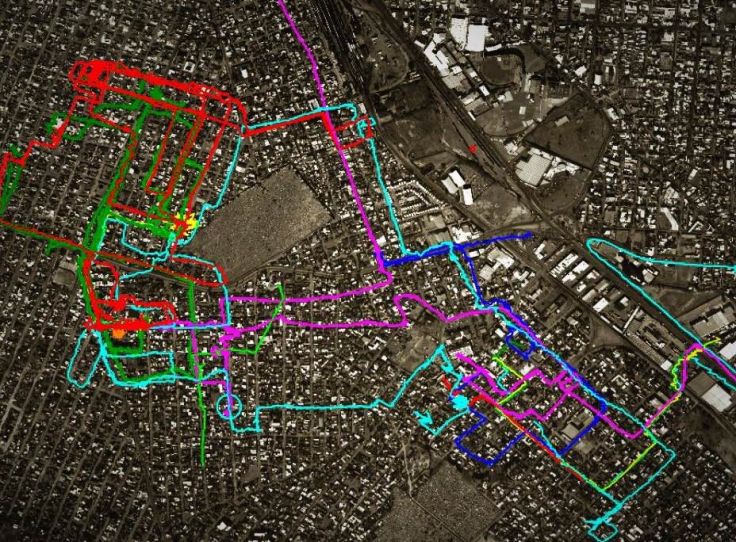
In 2004, when casualties in Iraq were rising due to roadside bombs, Ross McNutt and his team came up with an idea. With a small plane and a 44 mega-pixel camera, they figured out how to watch an entire city all at once, all day long. Whenever a bomb detonated, they could zoom onto that spot and then, because this eye in the sky had been there all along, they could scroll back in time and see – literally see – who planted it. After the war, Ross McNutt retired from the airforce, and brought this technology back home with him. Manoush Zomorodi and Alex Goldmark from the podcast ‘Note to Self’ give us the low-down on Ross’s unique brand of persistent surveillance, from Juarez, Mexico to Dayton, Ohio. Then, once we realize what we can do, we wonder whether we should.”

Tagsgovernance, remote sensing, geospatial.

Source: www.radiolab.org

This is a great podcast to show the ethical ramifications of using advanced geospatial technologies.  This shows the amazing potential as well as some of the privacy issues that wide-scale surveillance can raise.

40 Ways The World Makes Awesome Hot Dogs

“It’s not just a sausage in a bun; it’s a beautiful blank canvas. It’s a hot dog, which is a foodstuff eaten worldwide. Here are 40 distinctive varieties from around the globe — from iconic NYC ‘dirty water dogs’ to fully loaded South American street-cart dogs to Japanese octo-dogs. There is a tubesteak out there for every craving that ever was.”

Source: www.foodrepublic.com

The 4th of July is the day of Coney Island’s Hot Dog eating contest and the quintessential day to have a barbeque in the United States.  Some see the hot dog as a mere symbol of the uniformity of globalized culture in the 21st century that diffused out from the United States.  There is much more to be seen in the globalization of food.  Yes, the global goes to the whole world, but distinct places make this global cultural trait intensely local.  For example the hot dogs in Cincinnati are famous for being topped with chili and an obscene quantity of cheese, but in Costa Rica, I learned to love eating hot dogs deep fried, topped with cabbage, mayo and ketchup, just like the Ticos.  Food is but one example of this phenomena known as glocalization, where diffusion and divergence keep the world both global and local. 

Tagsfoodculturediffusion, globalization, consumption.

‘Geography Education’ is 4 years old…

“Today my Geography Education scoop.it page will hit a million views and I want to appreciate those that have viewed, supported and promoted my site.  I’ve enjoyed sharing global news articles, videos and podcasts with a spatial perspective.  So Julie said I should over the millionth visitor something special—an inflatable globe or a world map are on the line.  Four years of geo-nerdiness and counting.” 

Source: www.scoop.it

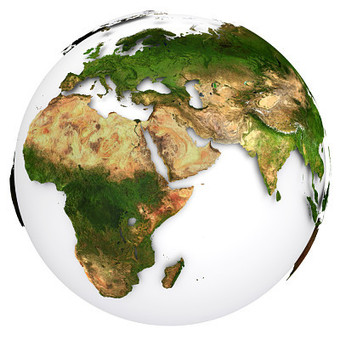
The Orange Globe

Creative Clever Objects by Martin Roler

Source: awesomeideas.eu

I have used an “apple globe” is the past to symbolize geography education and enjoy this play playful artistic work.  Oranges have been used to help students understand map distortion and well as map projections, so I thought this artistic rendering would be a nice fun addition to the set.   

Tagsfunart.

Which country has the biggest economy?

An animated infographic showing the top three economies throughout history. Does China have the world’s largest economy? Is China’s economy bigger than America’s?

Tags: economic, China, development, India.

Source: www.youtube.com

Why do people believe myths about the Confederacy? Because our textbooks and monuments are wrong.

False history marginalizes African Americans and makes us all dumber.

Tags: raceconflict, racism, historical, the Southlandscape, monuments.

Source: www.washingtonpost.com

Admittedly, I’ve got a thing for monuments in the cultural landscape.  This is a very nice article for a historical geographer on how memory and heritage are enshrined in the landscape; this process politicizes history in ways that shape the national narrative, and that shapes how we think in past.   Using historical geography to understand the debates on the news?  No way!!

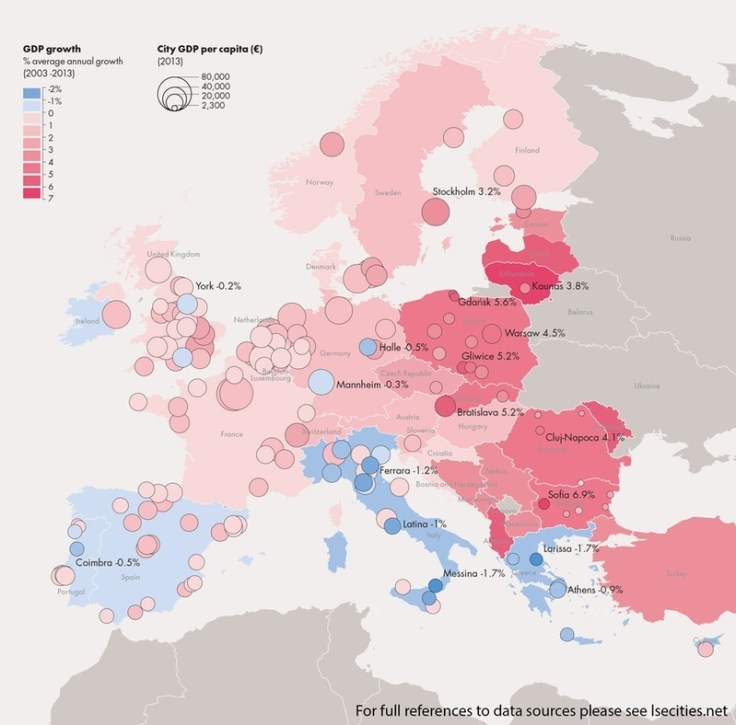
Pressed by Debt Crisis, Doctors Leave Greece in Droves

Greece is losing professionals as they flee for more stable employment elsewhere, and the health care sector has been particularly hard hit.

Tags: Greece, Europemigration, supranationalism, currency, economic, podcast.

Source: www.nytimes.com

Ring of Fire

The Ring of Fire is a string of volcanoes and sites of seismic activity, or earthquakes, around the edges of the Pacific Ocean.

Source: education.nationalgeographic.com

The Ring of Fire is a series of plate boundaries where earthquakes and volcanic activity are commonplace.  Surrounding the edge of the Pacific Ocean, the Ring of Fire consists of a string of 452 volcanoes.

Tags physical, tectonics, disasters, K12.

Blog at WordPress.com.

Up ↑