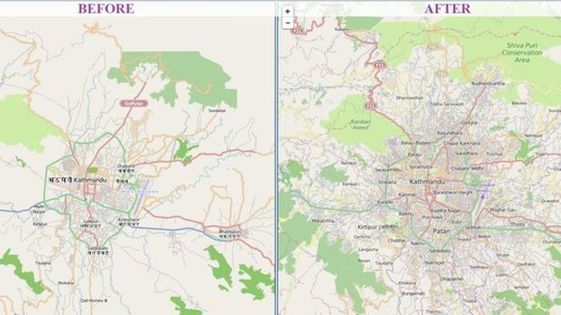
A team of Nepalis, backed by groups around the world, are helping guide what aid is needed where by “crisis mapping” Nepal, reports Saira Asher.
Tags: Nepal, disasters, physical, tectonics, mapping, geospatial.
Source: www.bbc.com
A team of Nepalis, backed by groups around the world, are helping guide what aid is needed where by “crisis mapping” Nepal, reports Saira Asher.
Tags: Nepal, disasters, physical, tectonics, mapping, geospatial.
Source: www.bbc.com
The more we slap concrete down all over the state, the more we trigger devestating consequences, like the million-dollar flooding in Cranston last September.
Source: www.rimonthly.com
We often ignore the environmental impact of the cities we build. When we build a road, building or sidewalk, we usually cover the ecosystem’s natural mechanisms for absorbing rainfall with impervious surfaces. This award-winning environmental article in RI Monthly was written by a geography professor with an eye on the human and environmental interactions between community land use choices and watershed quality. The RI governor announced for Earth Day that it will be investing funds to tackle the storm water pollution problem.
Tags: urban, water, coastal, urban ecology, Rhode Island.

The entire population of Heimdal, North Dakota has been evacuated Wednesday morning after a train carrying crude oil derailed and exploded. A BNSF Railway oil train derailed around 7:30 am, setting at least 10 oil tanker cars on fire. The Bismarck Tribune spoke with emergency responders who “said the the sky was black with smoke near the derailment site.”
Source: www.commondreams.org
Many hoping to stop environmental degradation of Canada’s Tar Sands and the Dakotas “Kuwait on the Prairie” have opposed the construction of the Keystone XL pipeline. It’s been decades since crude oil has been shipped by rail in the United States but fracking technologies have opened up areas without oil pipelines to become major producers. As demonstrated in this NPR podcast, the railroad industry has seized on this vacuum and since 2009 has been supplying the oil industry the means to get their product to the market. Trains, however, are not the safest way to transport oil, even if they are efficient in the short run.
Tags: transportation, pollution, industry, economic, energy, resources, environment, environment modify.
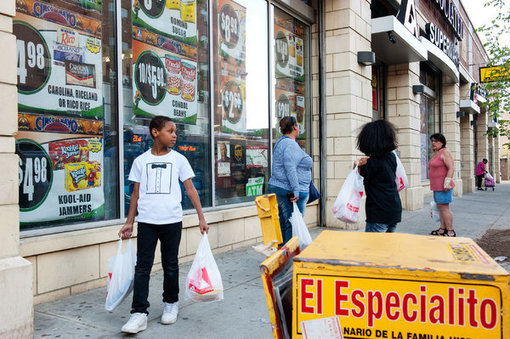
Jamaal Allan is a high school teacher in Des Moines, Iowa. People make assumptions based on his name alone, and that’s taken him on a lifelong odyssey of racial encounters.
Source: www.npr.org
“London completely dominates the political, cultural and economic life of the U.K. to an extent rarely seen elsewhere. That imbalance has been an issue in the run-up to Thursday’s election.”
The problems with primate cities are hardly unique to London (see here resources for teaching about primate cities using the example of Mexico City). The lack of a balanced urban hierarchy that we would see in countries where the rank-size rule applies is a political problem as stated in this NPR podcast. This additional BBC article bemoans Britain’s lack of a true second city, arguing that London’s shadow looms too large for sustained national development outside of the primate city.
Tags: APHG, urban, unit 7 cities, megacities.
“A decades-old effort found that moving poor families to better neighborhoods did little to help them. A large new study is about to overturn the findings of Moving to Opportunity. Based on the earnings records of millions of families that moved with children, it finds that poor children who grow up in some cities and towns have sharply better odds of escaping poverty than similar poor children elsewhere.”
Tags: housing, economic, poverty, place, socioeconomic, neighborhood.
Source: www.nytimes.com
Source: prezi.com
Over 166,000 students are preparing to take the AP Human Geography test on May 15th. With that in mind, I went looking for resources so here’s what I found.
Best of luck on the exam! Have something to add to the list? Let me know.
Tags: APHG.

“When a terrible earthquake hit Nepal on April 25, our correspondents quickly began to report from the battered capital, Katmandu. By the beginning of this week, we were still reporting on the quake’s aftermath, but under a slightly different dateline: Kathmandu. Why the switch?
There are many examples of foreign place names with more than one English rendering, especially if the local language uses a different alphabet, requiring the name to be transliterated for English. For Nepal’s capital, the ‘Katmandu’ spelling has long been widely used in English-language publications, and may still be more familiar to some American readers. But ‘Kathmandu,’ with an ‘h’ in the middle, has become more widespread in recent years, reflecting the preferred local usage.”
Tags: place, language, toponyms, Nepal.
Source: www.nytimes.com
“In 2013, China replaced Mexico as the top sending country for immigrants to the United States. This followed a decade where immigration from China and India increased while immigration from Mexico decreased.”
Source: researchmatters.blogs.census.gov
While the Wall Street Journal is declaring this news, it is nothing new to the Census Bureau and those that look at the data rather than listen to the news media. Some in the media would have you imagine that there is a flood of Mexican migrants entering the United States when the recent history shows that narrative simply doesn’t line up with data. Would you have guessed that both India and China were sending more migrants to the U.S. than Mexico? This is one of those examples where our preconceived notions interfere with actually ‘getting it right.’ This is why Hans Rosling started the Ignorance Project.