Search

GEOGRAPHY EDUCATION

Supporting geography educators everywhere with current digital resources.

Category

Uncategorized

Using Humor to Break Stereotypes

“A founding member of the Axis of Evil Comedy Tour, standup comic Maz Jobrani riffs on the challenges and conflicts of being Iranian-American — ‘like, part of me thinks I should have a nuclear program; the other part thinks I can’t be trusted …'”

Source: www.youtube.com

This comedian doesn’t just get laughs; he uses stand-up as a platform for discussing important social issues and to foster greater cultural understanding.  His big goal is to break stereotypical perspectives of Muslims and Middle Easterners by showing that “there are good people everywhere.”  Here is another of his entertaining and educational TED talks.  

Tags: Middle East, TEDglobalization, culture, Islam.

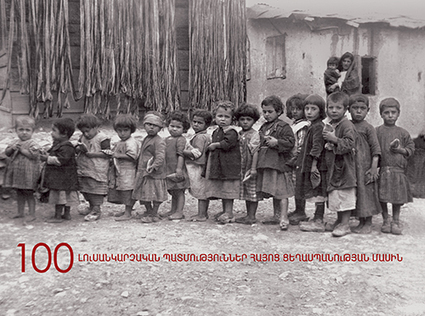
The Armenian Genocide-100 years

“For most of the world, the Armenian Genocide is the slaughter you know next to nothing about. But every year on April 24, Genocide Remembrance Day, we Armenians remember the injustice of a crime that is rarely acknowledged and often flatly denied. It was April 24, 1915, when the Armenian intellectuals, professionals, editors and religious leaders in Constantinople were rounded up by the Ottoman authorities — and almost all of them executed. During World War I, the Ottoman Empire killed three of every four of its Armenian citizens. The majority of Armenians alive today are descendants of the few survivors.”

Source: www.genocide-museum.am

2.5 million Armenians lived in the Ottoman Empire–1.5 million were killed. Not just killed, but horrifically slaughtered–beheaded, crucified, burned alive in their churches, loaded like cattle onto freight trains and sent to concentration camps, raped, assaulted, sold as slaves, herded into the DerAzor desert and left to die.  

The United Nations recognizes the massacres and the systematic destruction of two-thirds of the Armenian population as the first genocide of the 20th century, and has stated that the mishandling of its aftermath set the stage for future genocides, from the Holocaust to Rwanda and Sudan and everything in between. Hitler studied what happened and borrowed many of the Ottoman Empire’s techniques to use against the Jews.

And even though some countries in the world recognize and agree with the UN assessment of the fact, Turkey denies it, and the US still stands silent and refuses to officially state that what happened was genocide…because to do so would offend Turkey, and Turkey is a US political ally.  Many are calling on Israel, a country founded in large part because of a genocide, to acknowledge the first genocide of the 20th century.   

Learn about genocide and teach genocide–what causes it, what perpetuates it, what the cost of denial can be. Don’t remain silent. Be a peaceful person in your own life, and in all your relations with others–and speak up about any wrong or injustice. 

*Most of this post is courtesy of Janet Rith-Najarian, professional geographer and member of the Minnesota Alliance for Geographic Education.


TagsArmenia, genocidepolitical, conflict, refugees, empirecolonialism, historical.


Gentrification as Adoption?

“OTR A.D.O.P.T. transfers abandoned buildings to qualified new owners at reduced cost.  The catch? You must commit to rehabilitating the property and returning it to productive use. You must also demonstrate an ability to successfully complete such a project.  A.D.O.P.T.-Advancing Derelict and Obsolete Properties Through Transfer.”

Source: otradopt.com

This banner was spotted by Laura Spess, an urban geographer in Cincinnati in during the 2014 APHG reading.   The Over-The-Rhine neighborhood is very close to the reading, and the urban renewal here is quite controversial.  Many point to the economic positives and infusion of investments, while other see social displacement of the poor.  After the reading we were discussing the messages embedded the sign (and the urban landscape).  The OTR ADOPT organization conceptually thought of poorer neighborhoods as orphans and that the gentrification process should be likened to adoption.  While the merits and problems of gentrification can be debated, I find that particular analogy painfully tone deaf and wasn’t surprised to find the organizations website, well, derelict and obsolete.  


Questions to Ponder: Why might this analogy be problematic?  How might current residents of the community feel about the message? 

Tags: neighborhoodlandscape, gentrificationurban, place, culture, economicAPHG, Cincinnati

France Wins Battle Against Belgium’s Plan For A Waterloo Coin

A two-euro coin commemorating the bicentennial of Napoleon Bonaparte’s defeat will not be widely released, after France objected to what it called a “negative symbol.”

Source: www.npr.org

Celebrating national history is great…but if your moment of greatest triumph comes at the expense of a country that is now in an supranational organization with you…well, then it can get awkward.

One Place, Two Names

The government of the People’s Republic of China calls the country’s westernmost region Xinjiang, but the people who have lived there for centuries refer to their home as Eastern Turkistan. Many times when two groups do not refer to a place by the same name, it points to a cultural or political conflict, as is the case here.

Source: blog.education.nationalgeographic.com

Multiple names on the map can hint at bigger cultural and political fault lines.  Is it Londonderry or just Derry?  The Sea of Japan or the East Sea?  This article I wrote for the National Geographic Education Blog is on the always simmering tensions in the China’s westernmost province.  


TagsCentral Asia, toponyms, culture, political, conflictgovernance, China, East Asia, religionIslam, landscape.

Cultural Meaning in Moving Monuments

“Ever since I researched the meanings of monuments in the cultural landscape in Mexico City, I’ve been fascinated by the cultural politics of memory and heritage. The removal of a statue is a cultural 180, acknowledging what was once honored and revered is now something that is not worthy of that distinction. This sort of change is not without protests on both sides and a cultural rearticulation of who ‘we’ are when ‘we’ make a public memorial.”

Source: geographyeducation.org

Cecil Rhodes was the namesake for the Rhodes scholarship at Oxford University and the colonial names of Zambia (Northern Rhodesia) and Zimbabwe (Southern Rhodesia).  He was deeply connected to British colonialism and was one of the most ambitious colonizers that expanded the British Empire.  This week a statue of Cecil Rhodes on the University of Cape Town campus was removed.  See the BBC article, Yahoo News!, and PRI podcastfor more details

Questions to Ponder: Why do you think this monument to Cecil Rhodes was established in 1934?  Why was it removed in 2015?  What does this say about South African politics and culture?  How might we characterize the supporters and opponents of the statue?

Tags: South Africa, Africa, historical, colonialism, political, landscape.

We’re all gonna die!

“Yes. It’s true. In the meantime, I’d also like to live. Except, nobody wants to let me live–they all want to remind me of how I’m going to die, or how I’m going to cause my children to die. I was packing my kid’s lunch the other day, and tossed in a Twinkie with a smile and stroke of endearment, when I happened to glance at my kid’s class newsletter on the table. It informed me that if I feed my child Twinkies, I might as well be feeding him rocket fuel.”

Source: www.insideoutminds.com

I can’t agree with everything mentioned in this article, but the overall message something that I do think is worth discussing.  Our society can be swayed by fear and a few statistics to wildly overreact to a situation (Ebola, Y2K, etc.).  So many movies tap into the our societal fears that an over dependence on technology or chemical alterations will destroy humanity (like Terminator, the Matrix, the Net, etc.).  The anti-GMO movement successfully taps into that cultural zeitgeist, and some like ‘the Food Babe’ stir up fear to the chagrin of many scientists.     


Tags: GMOstechnology, agriculture, agribusiness.

50 Reasons to #LoveTheWorld

We asked a range of people, from writers and chefs to musicians and photographers, to share one experience from the last year that truly inspired them – something that, in no uncertain terms, reminded them why they love the world. Madly. Here’s what they told us.

Source: www.bbc.com

Most geographers have more than a little bit of wanderlust.  This BBC article is filled with images, quotes and insights into places all around the globe that fill me will a sense of awe and wonder.  For students that have the curiosity, it our mission as educators to cultivate that and help them frame information about the world into a geographic perspective.  I’ve always felt that window-seat flyers are have the seed of a geographer embedded within them…let’s make sure those seeds can grow. 


Tags: place, tourism.

Table Mountain, Cape Town – National Geographic Photo of the Day

Fog envelops Table Mountain in Cape Town, South Africa, in this National Geographic Photo of the Day from our Your Shot community.

Source: photography.nationalgeographic.com

Create a free website or blog at WordPress.com.

Up ↑