Search

GEOGRAPHY EDUCATION

Supporting geography educators everywhere with current digital resources.

Category

Uncategorized

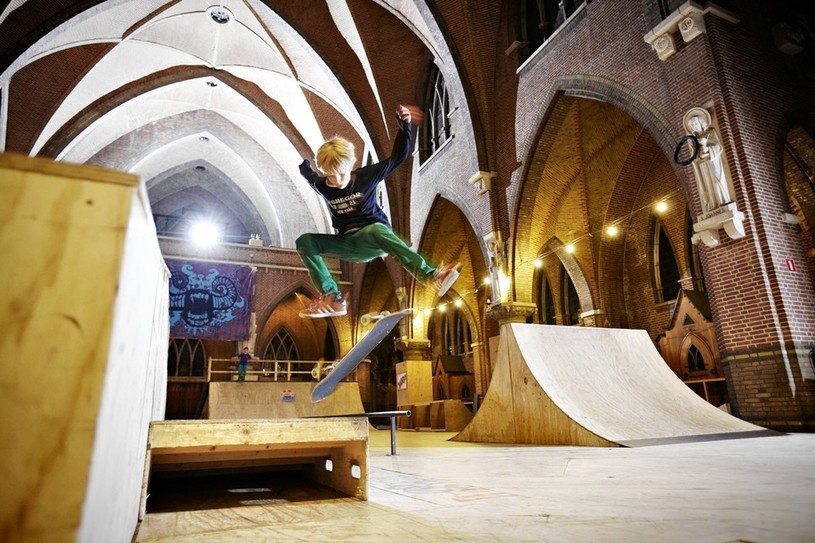
Europe’s Empty Churches Go on Sale

 Hundreds of churches around Europe have closed or are threatened by plunging membership, posing a question for communities: What to do with the once-holy, now-empty buildings?

Source: www.wsj.com

Europe, the most developed region in the world, is also the most secular region today.  During colonial times, Europeans were spreading Christianity across the globe, but now Christianity is becoming more a part of Europe’s historical landscape.  Secularization can be seen as either the cause or the effect of several other European trends such as declining fertility rates.  Today Europe is filled with historic cathedrals, but there is no one to fill them.

Questions to Ponder: What are other signs of secularization on the cultural landscape?  What would you do with a former sacred site (and an architectural treasure) that is can’t be maintained?

Tags: culturereligion, Christianity, regions, landscape, Europe.

A Geographical Oddity

Source: www.youtube.com

Partly just because I love this highly quotable movie with an incredible soundtrack, but this short clip from O Brother Where Art Thou? can start be a good conversation starter.  I’m hoping to use it when discussing relative location (or isolation) as well as the time-space compression.  Frequently, I ask my student how far away they live from campus and invariably they answer with a unit of time (even though distance was implied in the question). 


Questions to Ponder: Why do we often answer with a measurement of time when discussing distance?  What technologies are dependent on our temporal analysis of distance? How would our perception of distance change based on our access to transportation and communication technologies?


Tags: Time-Space Compression, location.

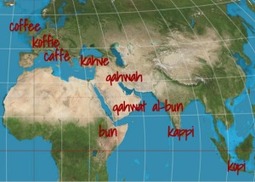
Why the ‘Coffee’ Words Are Not Cognates

“A former student of mine drew my attention to a recent article in Slate written by Alyssa Pelish and titled ‘The Stimulating History of Coffee: Why You Hear This Word Around the World’.”

Tagslanguage, culturediffusion.

Source: languagesoftheworld.info

The ‘Quiet Chernobyl’: The Aral Sea

“Prior to the 1960’s, the Aral Sea was the fourth largest lake and approximately the size of Ireland. Fed by both the Amu Darya and Syr Darya rivers carrying snowmelt from the mountains to the southeast, the Aral Sea moderated the climate and provided a robust fishing industry that straddled the present-day border between Kazakhstan and Uzbekistan. For the map savvy, that Aral Sea would be almost unrecognizable—it has long appeared as two basins known as the North and the South Aral Sea since the rivers were diverted for crops, leading to the Aral Sea’s alarming shrinkage. Recent NASA satellite imagery shows the decline that the Aral Sea has undergone since 2000, leaving the South Aral Sea completely dried up in 2014. “

Tagspodcast, Maps 101, historicalenvironment, Central Asia, environment modify, Aral Sea.

Source: maps101blog.com

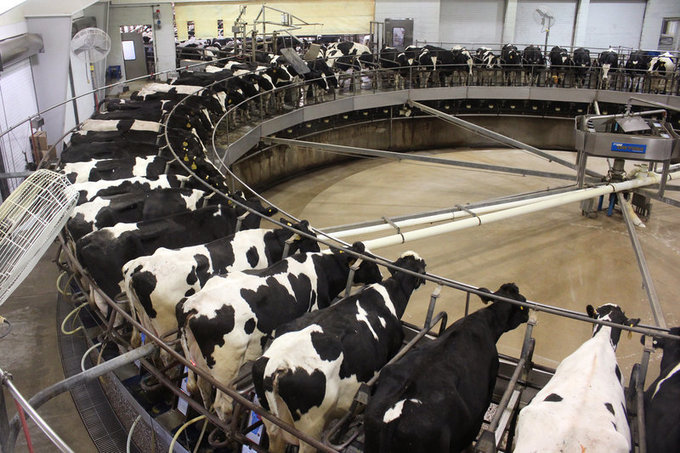
Inside The Indiana Megadairy Making Coca-Cola’s New Milk

Coca-Cola got a lot of attention in November when it announced it was going into the milk business. In fact, its extra-nutritious milk product was invented by some dairy farmers in Indiana.

Source: www.npr.org

-stan by your land

Central Asia is full of lands whose names end in -stan. A certain powerful North American country has a related name. How? It’s not your standard explanation…

Source: www.youtube.com

This video (with a similar style to CGP Grey’s videos) charts the cultural and geographic impact of one of the most important toponyms, -stan.  It also alludes to the fascinating history behind the name of Pakistan.  

TagsCentral Asia, language, toponyms, historicalPakistan, culturediffusion.

Using ‘Geography Education’

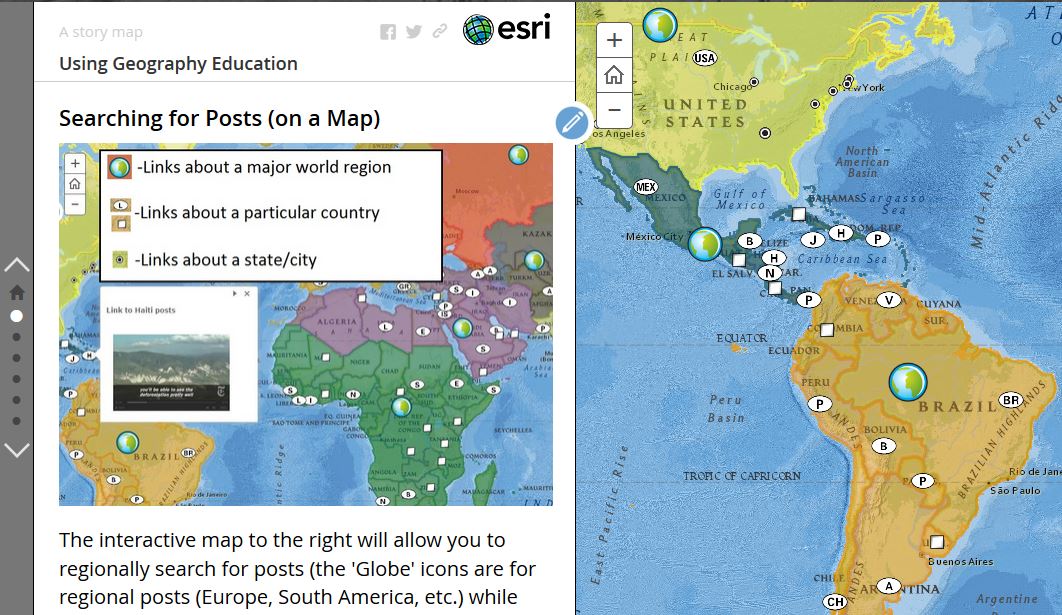
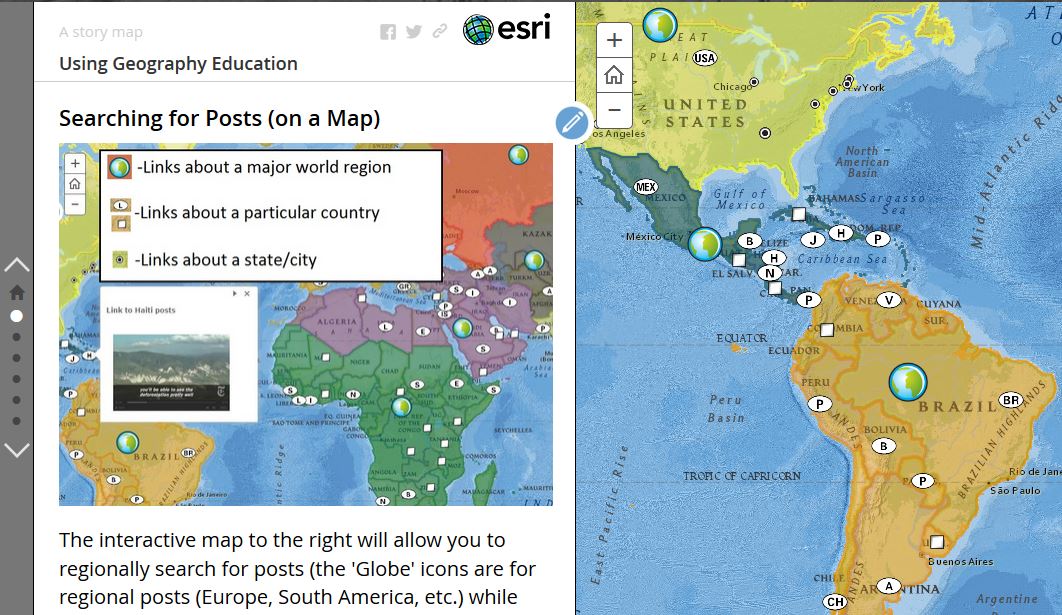
Looking for Regional Geography Readings? Simply click on the link that corresponds to your module.  When you see the first 10-ish posts, if you are still looking for more options, you can click on “OLDER POSTS” to find more possible readings.

Middle East, Africa, South Asia, East Asia, Southeast Asia, Oceania, Russia and Central Asia, Europe, Latin America, and North America.

If you want thematic tags or some country-specific resources, scroll to the bottom of the site for an alphabetical list of pertinent geographic topics and countries.


Featured post

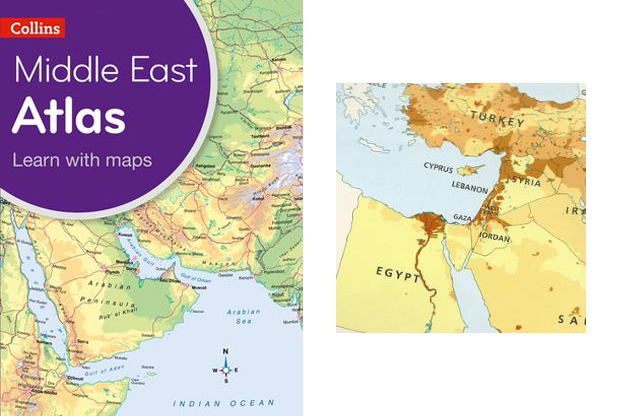
HarperCollins omits Israel from maps for Mideast schools, citing ‘local preferences’

“For months, publishing giant HarperCollins has been selling an atlas it says was developed specifically for schools in the Middle East. It trumpets the work as providing students an ‘in-depth coverage of the region and its issues.  Its stated goals include helping kids understand the ‘relationship between the social and physical environment, the region’s challenges [and] its socio-economic development.’ Nice goals. But there’s one problem: Israel is missing.”

Source: www.washingtonpost.com

In other words, Israel got eliminated from this atlas that was designed to cater to Middle Eastern countries that take umbrage with the fact that Israel…exists.  Making maps always has political overtones and the company is now realizing that you can’t please everyone with different versions for distinct audiences.  Now, HarperCollins has pulled the book and will pulp all remaining versions of the atlas.  


Tags: Israelsocial media, political, mapping, cartography.

Dramatic Confluences

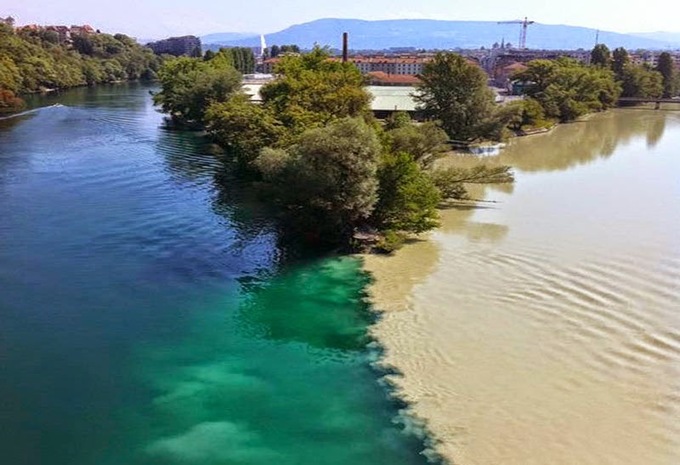
“Confluences occur wherever two streams come together. If the gradient is low (i.e., nearly level) and the properties of the two streams are very different, the confluences may be characterized by a dramatic visible distinction as the mixing occurs only slowly.”

Tagsphysical, fluvial, geomorphology, erosion, landscape.

Source: bsu-earthview.blogspot.com

Create a free website or blog at WordPress.com.

Up ↑