Search

GEOGRAPHY EDUCATION

Supporting geography educators everywhere with current digital resources.

Rust Belt Rebirth Through Gentrification?

It’s become difficult to afford urban living in places like San Francisco, New York or even Portland, but there is an alternative. In Rust Belt cities like Pittsburgh, Buffalo and Cincinnati, you can buy or rent for about 1/10th the price.

Source: www.youtube.com

I’ve discussed Cincinnati’s gentrification several times here, but this video adds the personal touch where you can see into the mind, ethos and motives of those moving in to poorer neighborhoods with hopes to renovate a community where the logic of ‘disinvestment’ has prevailed for decades.  Gentrification is often criticized for displacing the urban poor, but this shows how some are eager to tie themselves into the fabric of the neighborhood as the neighborhood is changing; they aren’t just wealthy people buying out the poor. 

Tags: neighborhood, landscape, gentrification, urban, place, culture, economic, APHG, Cincinnati. 
Do The Right Thing

It is that time of the year again. I hear the scurry of my colleagues sorting through old folders, re-organizing class notes.Alas, for too many of my fellow geographers the start of the teaching season is greeted with groans. It means less time for research.

Source: news.aag.org

This is some great commentary about the importance of undergraduate teaching for geography professors and the health of the discipline from the AAG president in this newsletter. 


Tags: AAG, geography education. 


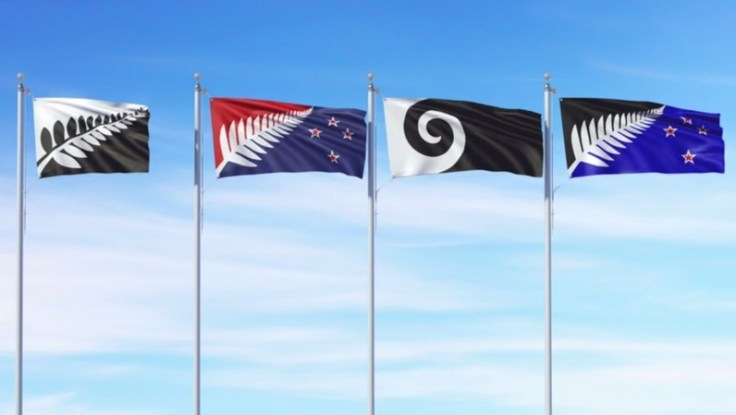
New Zealand panel unveils four alternate flag options, to a largely negative reaction.

Kiwis aren’t showing their enthusiasm toward the final four alternate flags they’ll be allowed to choose between. We analyze the results.

Source: www.pri.org

What is in a flag?  A flag is intended to represent a people and government while portraying a common heritage and a sense on timelessness.  This may seem like a small decision, but symbols can be incredibly potent political and cultural forces; New Zealand better get this right.


Tags: Flags, New Zealand.

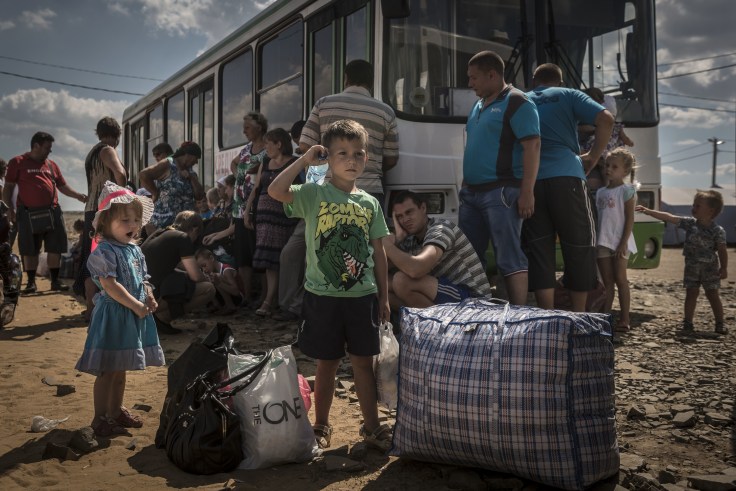
Why Are Migrants Surging Into Europe Now?

The steady stream of migrants in past years has turned into a torrent this year. Here’s a primer on the main forces at work.

Source: www.npr.org

I’ve recently shared some news articles about the global refugee crisis, especially as the so many are surging towards Europe.  I’ve realized though, that many students are unsure what to make of the situation because they don’t understand how we got here in the first place.  This article is organized to answer these basic questions: 

  • What’s behind this crisis?
  • Why are they going to Europe?
  • How risky is the journey?
  • How are Europe and the international community responding?

Tags: migration, political, refugees, regions.

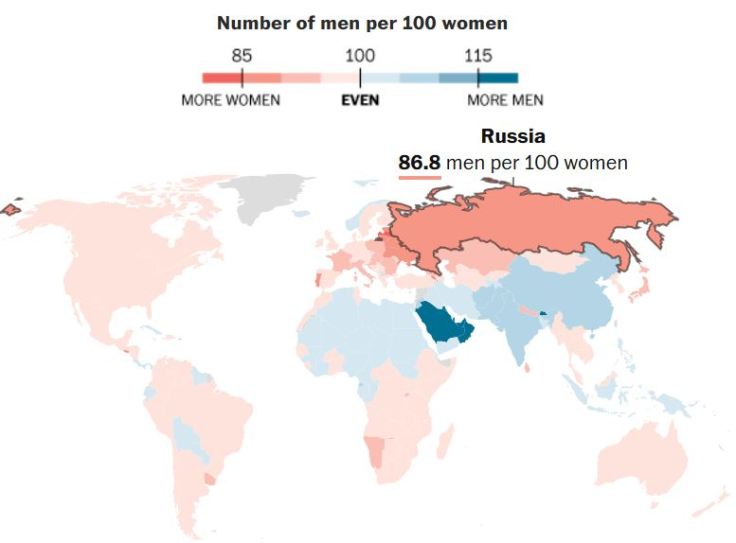
See where women outnumber men around the world (and why)

“A new study maps the population gaps between men and women around the world.”

Source: www.washingtonpost.com

This interactive map is a great way to show how the 3 questions of geography make statistical analysis become more meaningful (where, why there and why care?). There are plenty of reason to care about these spatial patterns and their far-reaching implications.  

Tags: gender, population, mapping, regions.

Massive landslides caught on camera

“A complete collection of the biggest mudslides and rockslides from around the world.”

This is a terrifying and mesmerizing compliation that shows the raw power of the Earth.  

Tags: physical, geomorphology, erosion, landforms.

Source: www.youtube.com

The Global Refugee Crisis, Region by Region

In the latest crisis, tens of thousands are racing to Hungary before a border fence is finished.

Source: www.nytimes.com

Today there are refugees seeking safety throughout the world.  There are several regional hot spots of political, ethnic and religious turmoil; many are now asking how the global community should response to the worst refugee crisis in generations (Related article: Migrant or Refugee?  There is a difference with legal implications).


Tags: migration, political, refugees, regions.

Mount McKinley officially renamed Denali

To hear the White House describe Alaska, the state has become the canary in the climate change coal mine, complete with raging wildfires, accelerating ice melt in the arctic, vanishing glaciers and whole villages forced to relocate away from rising seas.

Source: www.cnn.com

Most Alaskans already have shed the Mount McKinley name for over a generation, but as this National Geographic article points out, naming conventions matter and are filled with meaning.  Some of you might be wondering how it ever got called Mt. McKinley in the first place, but this action is still causing some political commotion.    


Tags: place, language, toponyms, indigenous.

Lawn Order

“In communities across America, lawns that are brown or overgrown are considered especially heinous. Elite squads of dedicated individuals have been deputized by their local governments or homeowners’ associations to take action against those whose lawns fail to meet community standards.”

Source: 99percentinvisible.org

This is a great podcast that shows not only the environmental aspects of America’s obsession with well-manicured lawns, it also nicely explored the cultural norms that police our behavior to create the stereotypical suburban landscape.  This is my favorite quote from the podcast: “There’s a paradox to the lawn. On the one hand, it is the pedestal on which sits the greatest symbol of the American Dream: the home, which people can ostensibly govern however they wish. And yet—homeowners often have almost no control over how they should maintain their lawn. Grass may be a plant, but a lawn is a designed object.”


Tags: housing, neighborhood, cultural norms, consumption, water, environment, urban ecology, culture.

“When the well’s dry, we know the worth of water.” ~Benjamin Franklin

Blog at WordPress.com.

Up ↑