Search

GEOGRAPHY EDUCATION

Supporting geography educators everywhere with current digital resources.

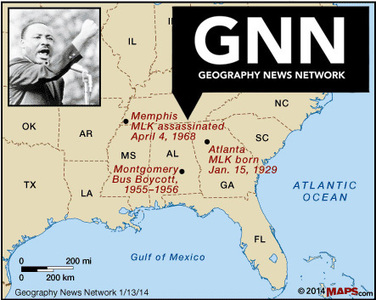
Why We Celebrate Martin Luther King Day

Source: maps101blog.com

Last year, Julie and I wrote this article for Maps 101 (which was also created into a podcast) about the historical and geographic significance of Dr. Martin Luther King and the Civil Rights movement.  Martin Luther King fought racial segregation, which, if you think about it, is a geographic system of oppression that uses space and place to control populations. Derek Alderman and Jerry Mitchell, excellent educators and researchers, produced lesson plans to help students investigate the politics behind place naming, specifically using the case study of the many streets named after Martin Luther King.  


Questions to Ponder: Why are streets named after Martin Luther King found in certain places and not in others? What forces and decisions likely drive these patterns? What is the historical legacy of Martin Luther King and how is it a part of certain cultural landscapes? 

Tags: seasonal, race, historical, the South, political, toponyms, landscape.
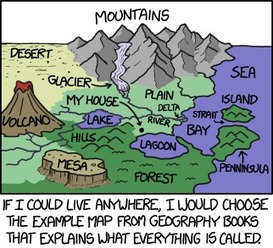
In an Ideal World…

Tagsart, fun.

Source: xkcd.com

The Globemaker

“A short film about Peter Bellerby, artisan globemaker and founder of Bellerby and Co. Globemakers.  Directed by Charles Arran Busk & Jamie McGregor Smith.”

Source: vimeo.com

Yes, these globes are precise archives filled with geospatial data and locational information–however, that pales in comparison to the artistic brilliance of the globes. These hand-crafted globes are truly works of art.  Marvel at the merger of mathematical precision and artistic design that makes a globe such as these a cartographic gem.  If anybody want to get me a Christmas present, you know that I love cartographic gifts.   

Tags: cartography, visualization, mapping, artgeo-inspiration.

GLOBE

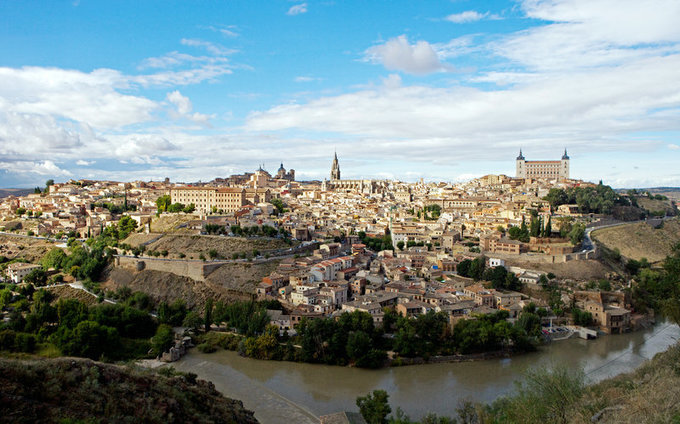
After 522 Years, Spain Seeks To Make Amends For Expulsion Of Jews

Spain’s monarchy decimated the Jewish population by expelling, killing or forcibly converting Jews in 1492. Now the country may offer their descendants Spanish citizenship.

TagsEurope, migration, Israel, Spain.

Source: www.npr.org

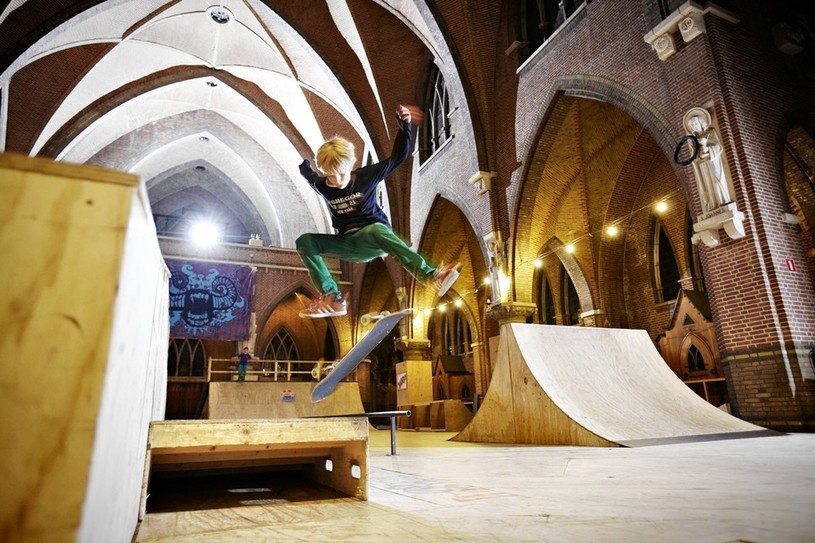
Europe’s Empty Churches Go on Sale

 Hundreds of churches around Europe have closed or are threatened by plunging membership, posing a question for communities: What to do with the once-holy, now-empty buildings?

Source: www.wsj.com

Europe, the most developed region in the world, is also the most secular region today.  During colonial times, Europeans were spreading Christianity across the globe, but now Christianity is becoming more a part of Europe’s historical landscape.  Secularization can be seen as either the cause or the effect of several other European trends such as declining fertility rates.  Today Europe is filled with historic cathedrals, but there is no one to fill them.

Questions to Ponder: What are other signs of secularization on the cultural landscape?  What would you do with a former sacred site (and an architectural treasure) that is can’t be maintained?

Tags: culturereligion, Christianity, regions, landscape, Europe.

A Geographical Oddity

Source: www.youtube.com

Partly just because I love this highly quotable movie with an incredible soundtrack, but this short clip from O Brother Where Art Thou? can start be a good conversation starter.  I’m hoping to use it when discussing relative location (or isolation) as well as the time-space compression.  Frequently, I ask my student how far away they live from campus and invariably they answer with a unit of time (even though distance was implied in the question). 


Questions to Ponder: Why do we often answer with a measurement of time when discussing distance?  What technologies are dependent on our temporal analysis of distance? How would our perception of distance change based on our access to transportation and communication technologies?


Tags: Time-Space Compression, location.

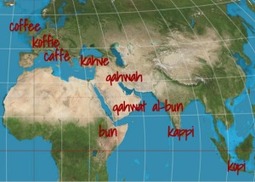
Why the ‘Coffee’ Words Are Not Cognates

“A former student of mine drew my attention to a recent article in Slate written by Alyssa Pelish and titled ‘The Stimulating History of Coffee: Why You Hear This Word Around the World’.”

Tagslanguage, culturediffusion.

Source: languagesoftheworld.info

The ‘Quiet Chernobyl’: The Aral Sea

“Prior to the 1960’s, the Aral Sea was the fourth largest lake and approximately the size of Ireland. Fed by both the Amu Darya and Syr Darya rivers carrying snowmelt from the mountains to the southeast, the Aral Sea moderated the climate and provided a robust fishing industry that straddled the present-day border between Kazakhstan and Uzbekistan. For the map savvy, that Aral Sea would be almost unrecognizable—it has long appeared as two basins known as the North and the South Aral Sea since the rivers were diverted for crops, leading to the Aral Sea’s alarming shrinkage. Recent NASA satellite imagery shows the decline that the Aral Sea has undergone since 2000, leaving the South Aral Sea completely dried up in 2014. “

Tagspodcast, Maps 101, historicalenvironment, Central Asia, environment modify, Aral Sea.

Source: maps101blog.com

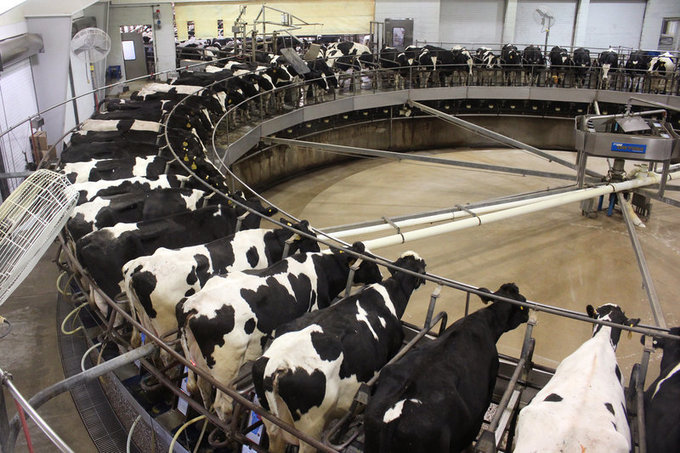
Inside The Indiana Megadairy Making Coca-Cola’s New Milk

Coca-Cola got a lot of attention in November when it announced it was going into the milk business. In fact, its extra-nutritious milk product was invented by some dairy farmers in Indiana.

Source: www.npr.org

Create a free website or blog at WordPress.com.

Up ↑