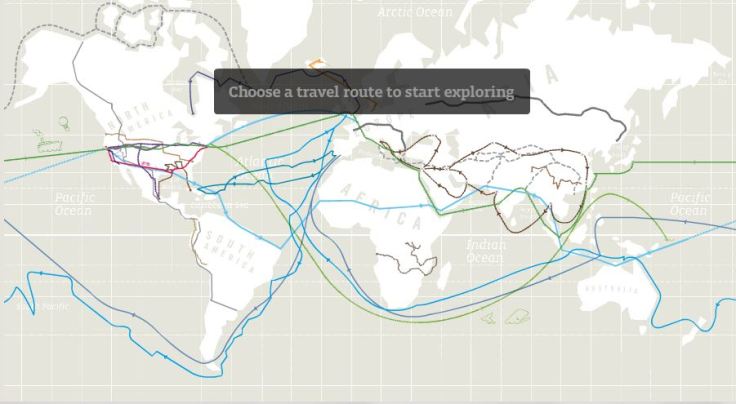
This use-to-use interactive map let’s users digitally walk in the footsteps of some of the greatest explorers ever. Some of the pivotal moments in history was when geographers sought out lands that were unknown to them.
“Louise Fresco argues that a smart approach to large-scale, industrial farming and food production will feed our planet’s incoming population of nine billion. Only foods like (the scorned) supermarket white bread, she says, will nourish on a global scale.”
Many advocates of local foods favor a small-scale approach to farming and are opposed to large-scale agribusiness. It might be easy for those disconnected from the food production system (like me) to romanticize and mythologize the farmers of yesteryear and yearn to return to this past. This talk highlights how essential large-scale farming is absolutely critical to feeding the global population; this other TED talk discusses many of the hunger problems especially the uneven access to food. Here are some other pro-agribusiness resources.
For more than 50 years, the Jondahl family raised horses, sheep and chickens, grew corn, beans and berries on their farm in Minnetonka — all the while watching as Hwy
This video is a great example of cross-cultural interactions in the era of globalization. Urban youth culture of the United States is spread to Cambodia through a former refugee (with a personally complex political geography). What geographic themes are evident in this video? How is geography being reshaped and by what forces?
“By 2050, the world’s population will likely increase 35 percent. But is growing more food the only option—or even the best? National Geographic investigates the challenges and solutions to feeding everyone on our planet, based on an eight-month series in National Geographic magazine. Visit http://natgeofood.com for ongoing coverage of food issues as we investigate the Future of Food today on World Food Day.”
“Watch along with Expedition 38 crew members Mike Hopkins and Rick Mastracchio as they look at various cities across the globe from the vantage point of the cupola on board the International Space Station.”
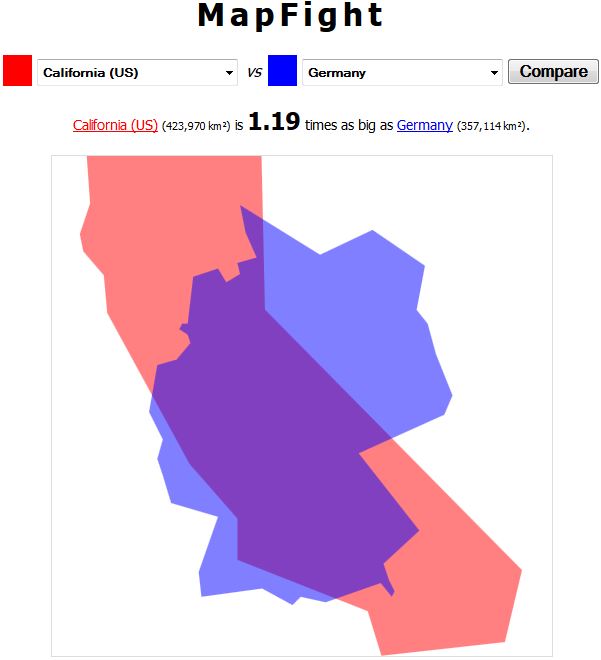
This simple WebApp allows the user to compare areas that are hard to compare on a map or globe because of distance or the map projection. Competitive students love to hypothesize and then verify. This helps strengthen student’s mental maps and their ability to make regional comparisons.
What would Earth be like if all humans suddenly disappeared? This question posed on the YouTube series Earth Unplugged, has many intriguing ecological and biogeographic ramifications that are worth considering to explore how systems are interconnected.