Search

GEOGRAPHY EDUCATION

Supporting geography educators everywhere with current digital resources.

Flooding Risk From Climate Change, Country by Country

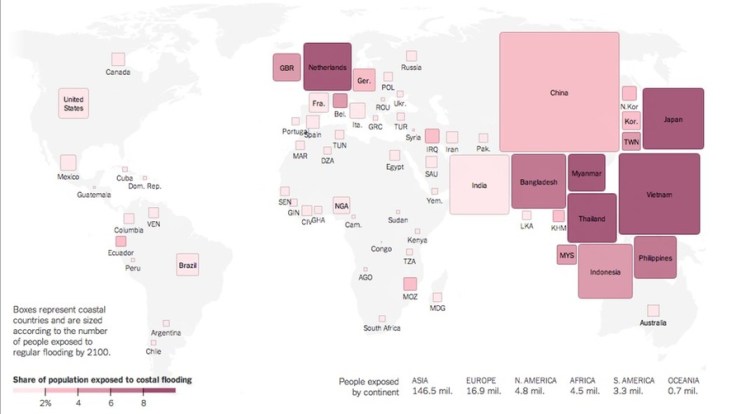
A new analysis of sea levels and flood risk around the world offers more evidence that the brunt of climate change will not be borne equally.

More than a quarter of Vietnam’s residents live in areas likely to be subject to regular floods by the end of the century.  Globally, eight of the 10 large countries most at risk are in Asia.  These figures are the result of a new analysis of sea levels and flood risk around the world, conducted by Climate Central and based on more detailed sea-level data than has previously been available.  The analysis offers more evidence that the countries emitting the most carbon aren’t necessarily the ones that will bear the brunt of climate change.  

Tags: Southeast Asia, water, disasters, urban ecology, coastalclimate change

Source: www.nytimes.com

World Record Mapping Event

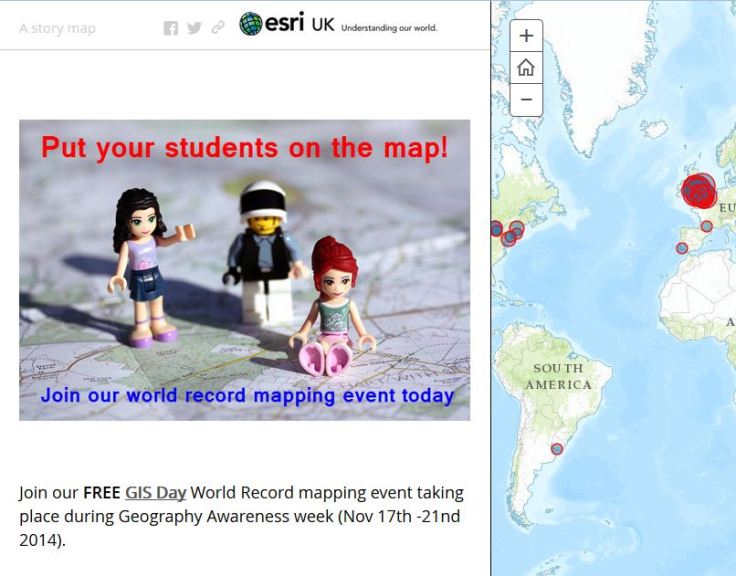
Join our FREE GIS Day World Record mapping event taking place during Geography Awareness week (Nov 17th -21nd 2014, video with more details).  With a local to global perspective, we want students to map their thoughts and feeling about their local area.


They can add their data to a global map that is shared with the world. Help us achieve our goal of having 100,000 students take part globally.  The event will provide great opportunities for:


  • Using the latest GIS technology
  • Spatial thinking
  • Data analysis with GIS
  • Map design
  • Connecting students with their peers worldwide

Tagsmapping, GIS K12, ESRI, geospatial, edtech.


Source: esriukeducation.maps.arcgis.com

World’s Largest Dam Removal Unleashes U.S. River After Century of Electric Production

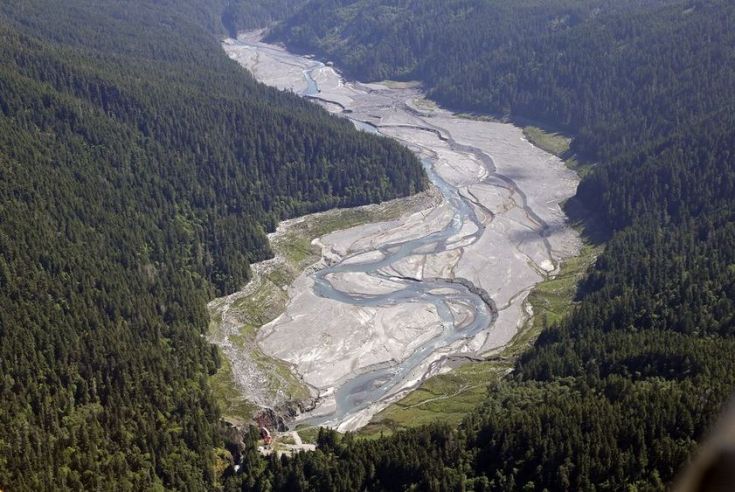
The last section of dam is being blasted from the Elwha River on Washington’s Olympic Peninsula on Tuesday.

For almost half a century, the two dams were widely applauded for powering the growth of the peninsula and its primary industry. But the dams blocked salmon migration up the Elwha, devastating its fish and shellfish—and the livelihood of the Lower Elwha Klallam tribe. As the tribe slowly gained political power—it won federal recognition in 1968—it and other tribes began to protest the loss of the fishing rights promised to them by federal treaty in the mid-1800s. In 1979, the U.S. Supreme Court ruled that Washington tribes, including the Elwha Klallam, were entitled to half the salmon catch in the state.

Source: news.nationalgeographic.com

See also this video to see the rapid changes on the nearby White Salmon River when they removed the dam. 

Tags: biogeography, environment, land use, sustainability, environment adapt.

Beautiful Physical Landscapes

“#TheRidge is the brand new film from Danny Macaskill… For the first time in one of his films Danny climbs aboard a mountain bike and returns to his native home of the Isle of Skye in Scotland to take on a death-defying ride along the notorious Cuillin Ridgeline.”

Source: www.youtube.com

I loved Danny Macaskill’s earlier video in Scotland’s cultural landscapes, and this extreme sports clip is infused with gorgeous physical landscapes.


Tag: Scotland, sport, landscape.

Media and Culture–Perspective and Bias

“Religious scholar Reza Aslan took some serious issue on CNN Monday night with Bill Maher‘s commentary about Islamic violence and oppression. Maher ended his show last Friday by going after liberals for being silent about the violence and oppression that goes on in Muslim nations. Aslan said on CNN that Maher’s arguments are just very unsophisticated.  He said these ‘facile arguments’ might sound good, but not all Muslim nations are the same. Aslan explained that female mutilation is an African problem, not a Muslim one, and there are Muslim-majority nations where women are treated better and there are even female leaders.”

Source: www.youtube.com

Question to Ponder: How does the media play a role in shaping the conversations we have in society about different cultures and places?  How can ‘painting with a broad brush’ lead to stereotypes and inaccurate conclusions?  

Tagsplaceregions, culture religion, Middle East, media.

The Most Complex International Borders in the World

“In this video I look at some of the most complex international border. Of course, there are more complex borders in the world, but this video looks at some of my favourites.”

Source: www.youtube.com

This video shows some great examples of how the political organization of space and administration of borders can get complicated.  Here are the examples (and time in the video when they are covered in the video):


Tags: borders, political, territoriality, sovereignty, video.


50 Years Ago, A Fluid Border Made The U.S. 1 Square Mile Smaller

Since Texas became a state, the Rio Grande has marked the border between the U.S. and Mexico. But, like rivers do, it moved. In 1964, the U.S. finally gave back 437 acres of land.

Ever since Texas became a state, the river has been the border between the two countries. But rivers can move — and that’s exactly what happened in 1864, when torrential rains caused it to jump its banks and go south. Suddenly the border was in a different place, and Texas had gained 700 acres of land called the Chamizal (pronounced chah-mee-ZAHL), so named for a type of plant that grew there.

Tags: Mexico, migration, borders, political, place, podcast.   

Source: www.npr.org

The Political Geography of Hong Kong’s Protests

The territory’s residents are demanding democracy in city intersections, not central squares.

The significance of the protests, which have brought tens of thousands into the streets, lies not only in what protesters are demanding but also in where they’re demanding it—and where they’re not. Consider that pro-democracy demonstrations in Hong Kong typically happen in Victoria Park, which is about two and a half miles from Central District and which hosts the annual June 4 candlelight vigil commemorating the 1989 Tiananmen Square crackdown in Beijing. This time around, however, few police or protesters have ventured there.

The unpredictable, spontaneous geography of the protests is important precisely because it transcends the status quo. It is a testament to how serious these demonstrations are that they refuse to be contained.

Tags: political, conflictgovernance, China, East Asia.

Source: www.citylab.com

Brazil’s ethanol revolution

“United Nations, June 2008 – The bio-fuel, ethanol, is generating a revolution in renewable energy that could help reduce the world’s thirst for oil. In Brazil, the production of ethanol from sugarcane is booming, but what is not clear is the impact it is having on the industry’s sugarcane cutters.”  Transcript of video available here.

Source: www.youtube.com

Although ethanol is working well for Brazil, there is a growing literature supporting the idea that wide-scale ethanol production is not sustainable or environmentally beneficial.  This is a great example to demonstrate that economic and environmental policies are locally dependent on geographic factors and are not universally transferable.  Click here for a simple explanation of the differences in the economic and environmental differences in the production of sugar and corn-based ethanol.  


Tagsenergy, resourcespolitical ecologyagriculture, food production, land use, Brazil, South America.

Blog at WordPress.com.

Up ↑