Search

GEOGRAPHY EDUCATION

Supporting geography educators everywhere with current digital resources.

Thoughts on Geographic Integration

“This 18-stanza poem by Kit Salter, beautifully captures the importance of geographic thinking in any history/social studies curriculum.  This was shared by Dr. Vernon Domingo and the slides of his keynote address titled, Integrating Geography and History are available here.”  

Source: rigea.org

It was my privilege to hear my good friend and fellow geo-evangelist, Dr. Vernon Domingo share ideas on the importance of integrating geographic analysis in historical inquiry.  He shared a fabulous poem by Kit Salter, one of the pioneers in the Network of Geographic Alliances.  I’ll only share the first stanza here:


    How can there be a separate scene,
    For history without place
    How can there be events in time,
    For which there is no space?

Tags: geo-inspiration, geography education, spatial, historical.
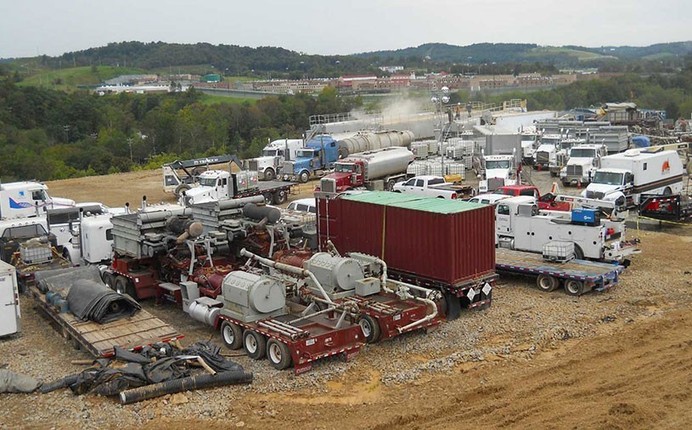
Natural gas leaking from faulty wells, not fracked shale

“A new study adds to growing evidence that the risk of fracking contaminating drinking water wells is to due to problems with the lining of the gas wells, not the high-pressure fracturing of deep shale to release natural gas. In a new study, scientists examined isotopes of helium and two other noble gases to identify the source of methane found in drinking water wells in the Marcellus Shale of Pennsylvania and the Barnett Shale of Texas, areas where a lot of fracking has taken place. The pattern of isotopes suggested that the stray gas had leaked out of the well casing near the surface, rather than escaping from the fracked deep shale, according to a story in The Dallas Morning News. The findings will be published online this week in the Proceedings of the National Academy of Sciences.”

Tags: energy, pollution, resources, environment, environment modify, ecology.

Source: news.sciencemag.org

The myth of religious violence

The popular belief that religion is the cause of the world’s bloodiest conflicts is central to our modern conviction that faith and politics should never mix. But, Karen Armstrong writes, the messy history of their separation suggests it was never so simple

After a bumpy beginning, secularism has undoubtedly been valuable to the west, but we would be wrong to regard it as a universal law. It emerged as a particular and unique feature of the historical process in Europe; it was an evolutionary adaptation to a very specific set of circumstances. In a different environment, modernity may well take other forms. Many secular thinkers now regard “religion” as inherently belligerent and intolerant, and an irrational, backward and violent “other” to the peaceable and humane liberal state – an attitude with an unfortunate echo of the colonialist view of indigenous peoples as hopelessly “primitive”, mired in their benighted religious beliefs. There are consequences to our failure to understand that our secularism, and its understanding of the role of religion, is exceptional. When secularisation has been applied by force, it has provoked a fundamentalist reaction – and history shows that fundamentalist movements which come under attack invariably grow even more extreme. The fruits of this error are on display across the Middle East: when we look with horror upon the travesty of Isis, we would be wise to acknowledge that its barbaric violence may be, at least in part, the offspring of policies guided by our disdain.

Tags: religion, culture, conflict, political, geopolitics.

Source: www.theguardian.com

Which States Are in the Midwest?

Here’s a somewhat regular argument I get in: Which states make up which regions of the United States? Some of these regions — the West Coast, Mountain States, Southwest and Northeast are pretty cl…

Source: fivethirtyeight.com

Vernacular regions aren’t defined by a one particular trait, but are how we think about places.  These ‘regions of the mind’ are how we organize information about places, which is why these regions aren’t sharp or precise.  In a similar article, they investigate what we consider to be a part of the South using similar crowdsourcing data. 


Tags: USA. regions, mapping.

A World With 11 Billion People? New Population Projections Shatter Earlier Estimates

“In a paper published Thursday in Science, demographers from several universities and the United Nations Population Division conclude that instead of leveling off in the second half of the 21st century, as the UN predicted less than a decade ago, the world’s population will continue to grow beyond 2100.”

Source: news.nationalgeographic.com

These articles from the Guardian and National Geographic were the first I’d heard of the new population projections for the future.  For many years it was assumed that the global population would level out at around 9 billion; while that is still within the range of possibilities but these new projections indicate that it is much more likely that the total global population will be much higher than that.  The geographic implications of this are far reaching.

Tag: population, demographic transition model, unit 2 population.

How Breastfeeding Is Viewed Around the World

Breastfeeding can be a polarizing topic. Views vary not only from person to person, but also country to country, according to a new survey examining women’s opinions on breastfeeding.

Source: blogs.wsj.com

This is just one example of how our opinions, cultural values and sensibilities are shaped by the cultures and places in which we are immersed.  How do normative attitudes shape how people use public space?  How is the body (especially the female body) regulated in public space?   

Tags: perspective, culture, gender.

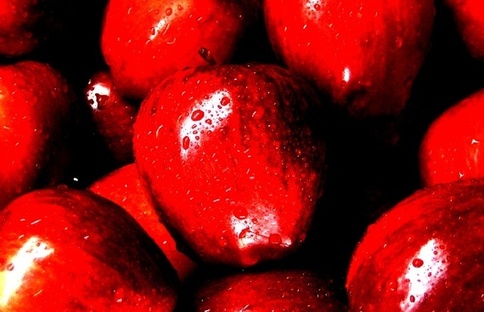
The Awful Reign of the Red Delicious

“For at least 70 years, the Red Delicious has dominated apple production in the United States. But since the turn of the 21st century, as the market has filled with competitors—the Gala, the Fuji, the Honeycrisp—its lead has been narrowing. Annual output has plunged.”

Source: www.theatlantic.com

The story of the Red Delicious is almost a perfect analogy for the food industry.  It was genetically selected for its marketable skin, an aesthetically sumptuous red.  The skin of the Red Delicious better covers bruises than other varieties and tastes more bitter.  Consumers were buying what the industry promoted and “eating with their eyes and not their mouths.”  But recently there has been a backlash in the United States and more American consumer are seeking out other varieties; meanwhile the apple producers are working on exporting this variety to around the world, but especially into Chinese markets.  


Tags: agriculture, food production, food distribution, agribusiness, USA. 

Cultural Patterns and Food

“Berlin Bureau Chief Michael Slackman looks into the obsession with currywurst, a popular street dish that combines sausage, ketchup and curry powder, and brings different Berliners together.”

Source: www.youtube.com

This short video has been added to the the interactive map, Place-Based Geography Videos.  This depiction of street foods in German cities is a rich, tangible example to show cultural patterns and processes.  Currywurst is a unifying force across socioeconomic classes in Germany, but it is also a product of globalization and cultural interactions across regions.  Culture is not static and this New York Times video can be used to teach the various concepts of culture; per the updated APHG outline, the initial concepts of culture are:  

  • Culture traits
  • Diffusion patterns
  • Acculturation, assimilation and multiculturalism
  • Culture region, vernacular region, cultural hearth
  • Globalization and the effects of technology on culture.


Question to Ponder: How are these 5 major elements of culture seen in this video?

Tags: food, migration, culture, diffusion, globalization, consumption, APHG.

Get Connected with Global Collaborative Projects

“Join us to learn how you can connect your students with students around the world through global collaborative projects. Register at: http://on.natgeo.com/1ymyZdC “

Source: www.youtube.com

The Geo-Educator Community is planning a Google + Hangout on Wednesday, October 1st (7-8pm EST) to help link educators and organizations so you can link your students with classes around the world and learning to think globally.    

Blog at WordPress.com.

Up ↑