Search

GEOGRAPHY EDUCATION

Supporting geography educators everywhere with current digital resources.

Political Bubbles and Hidden Diversity: Highlights From a Very Detailed Map of the 2016 Election

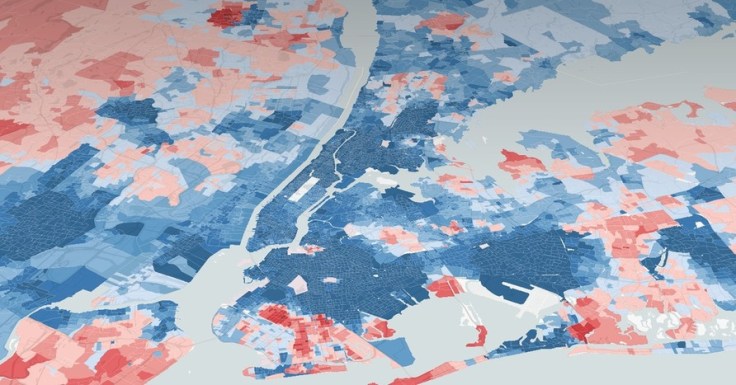
The Times’s interactive map of precinct results shows that even within partisan strongholds, there are contrary-voting enclaves.

Source: www.nytimes.com

This feature that shows the 2016 election results at the precinct level is astounding, revealing, and a testament to the difficulty of putting all this information together.  The built-in features in this interactive map to explore selected “voter islands” and one-sided places are especially helpful, but much like Google Earth, many people are eager to zoom in to their own neighborhoods.  The article that accompanies the interactive had some excellent case-studies at a variety of scales.  Geography always matters and the maps reveal so many telling patterns. 


Tags: electoral, politicaldensity, mapping.

Geo-economics of the Thai Canal

A group of influential Thai officials is promoting the construction of a long-envisioned megaproject, known as the Thai Canal. If built, it would transform the regional maritime dynamics and give Thailand a substantial stake in global trade. Yet, as ambitious as the project it, there are equally credible drawbacks that could reshape the geo-economic fortunes of Southeast Asia.

Source: www.youtube.com

The Straits of Malacca is an incredibly busy waterway.  Around 20% of global trade and 30% of the world’s crude oil travel through this tiny choke point.  At its narrowest, the Straits of Malacca is less than 2 miles wide and as Asian economies grow, alternative shipping lanes are becoming more attractive.  China is looking to bankroll a canal that would bisect the Malay Peninsula and reduce their dependency on the Straits of Malacca.  This is still uncertain, but would represent a major geo-engineering project that


Perspectives: What are the positives and negatives of this plan for Thailand?  China?  The United States? 


Tags: Thailand, Southeast Asiatransportation, globalization, diffusion, industry, economic.

Results of the 2018 APHG Reading

Summary of the 2018 APHG reading

Source: www.slideshare.net

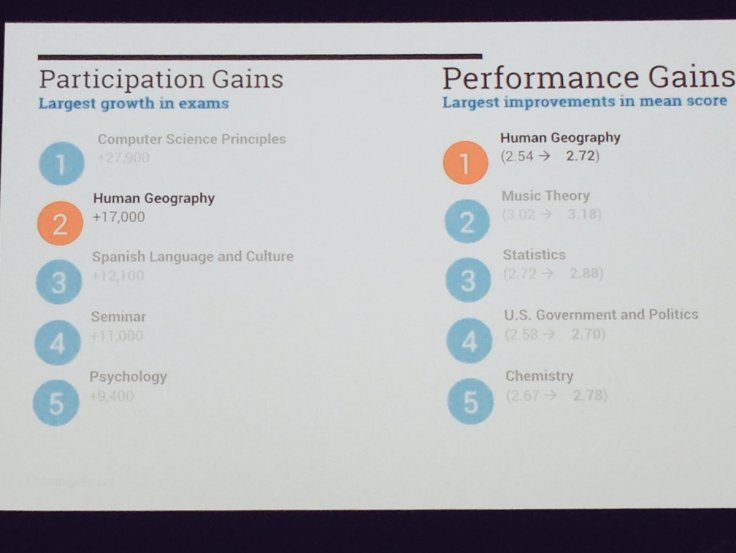
The Chief Reader report is not quite ready for distribution, but I gave this presentation at that AP Annual Conference in Houston this week based off of that report (PDF of slides is here).  Additionally, after the results, I discussed the importance of geographic skills that are important for our students to develop (and gave this handout on doing geography).   Overall, this slide shows that APHG, in terms of both growth and performance, did fantastic this year.

APAC

Tags: APHG, teacher training, geography education.

Peru gives landlocked Bolivia a piece of Pacific coast to call its own

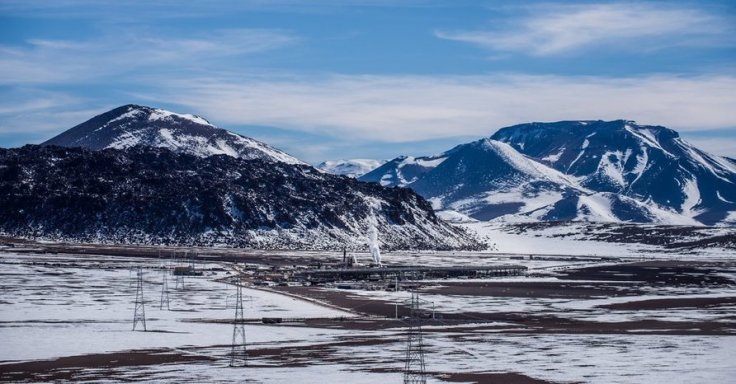
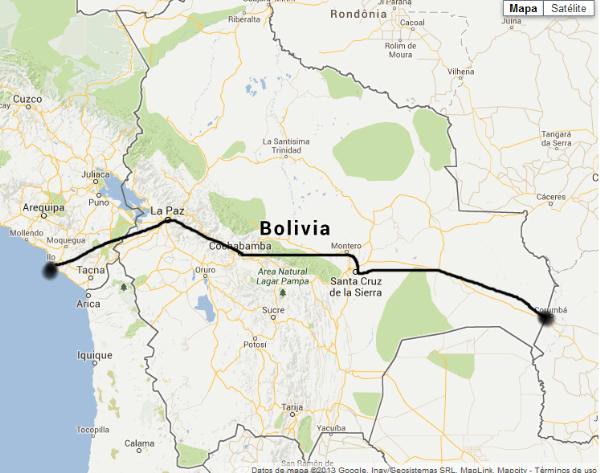
“It might be a strip of sand without even a jetty but a small stretch of the Pacific coast now harbors Bolivia’s dream of regaining a coast and becoming a maritime nation. The landlocked Andean country has won access to a desolate patch of Peru’s shoreline, fueling hopes that Bolivia will once again have a sea to call its own. President Evo Morales signed a deal yesterday with his Peruvian counterpart, Alan García, allowing Bolivia to build and operate a small port about 10 miles from Peru’s southern port of Ilo. The accord, sealed with declarations of South American brotherhood, was a diplomatic poke at Chile, the neighbor that seized Bolivia’s coast and a swath of Peruvian territory in the 1879-84 war of the Pacific.”

Source: www.theguardian.com

How important is a coastline to the economic viability of a country in the global market and to for the country’s geopolitical strengthen?  Ask the countries without one. 


TagsSouth America, Bolivia, economictransportation, political, coastal, borders.


Every Culture Appropriates

The question is less whether a dress or an idea is borrowed, than the uses to which it’s then put.

Source: www.theatlantic.com

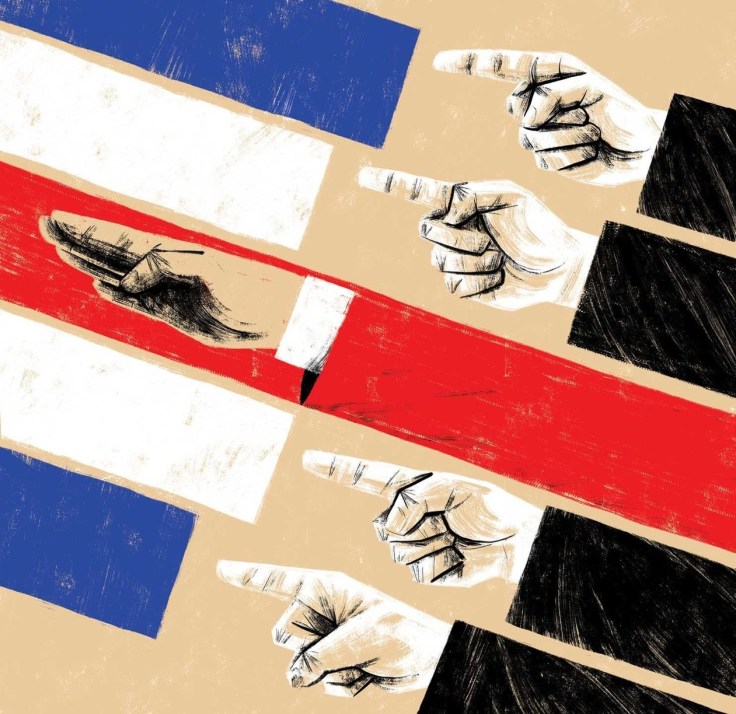
A while back a prom dress causes an uproar, and a backlash to the uproar (as you can imagine political leanings heavily influence the cultural perspectives as demonstrated by the difference between the New York Times , Fox News and the social media reactions on the same topic).  This article pulls pack from the immediate issues that fan the fans, but asks some of the broader questions about cultural diffusion and cultural appropriation.  


Tags: popular culturediffusion, culturecultural norms.


Pacific nation Tuvalu has grown by 73 hectares over 40 years

“The tiny Pacific nation of Tuvalu – once thought to be under threat from rising sea levels – has grown the size of California’s Disneyland over the past 40 years. It’s mostly thanks to waves dumping extra sediment, sand and gravel on shore lines, according to research by Auckland University scientists. The study, published in the Nature Communications journal on Friday, was the first in-depth look at how much each of Tuvalu’s 101 islands have changed over the decades.”


Tags: Oceaniawatercoastal, environment, physical, geomorphology, erosiongeology, landforms.

Source: www.stuff.co.nz

Bad TV Maps

“If you have been on social media this week, you have seen screenshots of this week’s CBS News broadcast on Syria, which in fact displayed a map of Iran. Many jokes were made, many tweets went viral. As connoisseurs of hilariously wrong TV news maps, this is nothing. Kids’ stuff. We have dug deep into our collection, gathered lovingly over the years, and now invite you to follow along on a tour of the world according to TV news.”

Source: static.nytimes.com

News organizations are in the business of prioritizing speed and accuracy, but sometimes those priorities come into conflict.  These are but a few of many examples of poor cartography in media.  While this isn’t all there is to geographic illiteracy, this is certainly one of the most obvious to the general public. If only there were the only element of geographic illiteracy in media coverage. 


Tagscartography, media

Italy’s Geographic Challenge

“Stratfor explains that Italy’s main geographic challenge is to preserve its unity despite strong regional identities.”  For more of these videos, visit http://arcg.is/1IeK3dT

Source: www.youtube.com

Italy’s a country that we may think of as monolithic, but (like so many other countries) it has some deep and persistent regional distinctions.  These videos are older, but the the divisions discussed are still pertinent.  Stratfor also added a video of Italy in their “Geographic Challenge” series.  I’ve updated my map which spatially indexes 70+ of their videos that are especially relevant to geography teachers to include this one.  These videos are great starting points for students that are researching a particular country.


Tagsvideogeography education, ItalyEurope, regions.

What Anthony Bourdain Understood About Cities

The work of the acclaimed chef and writer, who has died at 61, provides a model for a truly inclusive urbanism based on the creativity of all human beings.

Source: www.citylab.com

At the APHG reading last week, it felt as if everyone was in shock and mourning Anthony Bourdain’s passing.  I felt so amazingly thick, but I was dying to ask "who?"  Judging by everyone’s reaction, I think I’m the only geographer who has never watched any of his shows and was feeling the shame.  I quickly checked out Parts Unknown (on Netflix) and the appeal of his work was immediately evident; it is more about place than it is strictly about the food.  Food is simply his portal into understanding the people, culture, and politics of a given place.  Some say that his approach brings an anti-colonial flair to urbanism and travel, but as I’m a newbie to his work, I’m just going to start appreciating it now as we mourn his loss.


Tags: cultureworldwide, diffusion, urban, urbanism, place, food,

 colonialismvideo, media


Create a free website or blog at WordPress.com.

Up ↑