Search

GEOGRAPHY EDUCATION

Supporting geography educators everywhere with current digital resources.

Geography Awareness Week

Launched in 1987 by presidential proclamation, Geography Awareness Week is an annual opportunity for families and schools to engage in fun, educational experiences that draw attention to geo-literacy and the importance of geographic understanding.


Seth Dixon‘s insight:

Geography Awareness Week is right around the corner (Nov. 18-22)!  The Theme is GEOGRAPHY AND THE NEW AGE OF EXPLORATION.  Here are some resources that we are using in Rhode Island.  What is your local Geographic Alliance doing?  If you don’t know, now is a great time to join.  

See on education.nationalgeographic.com

The Philippines’ Geography Makes Aid Response Difficult

Seth Dixon‘s insight:

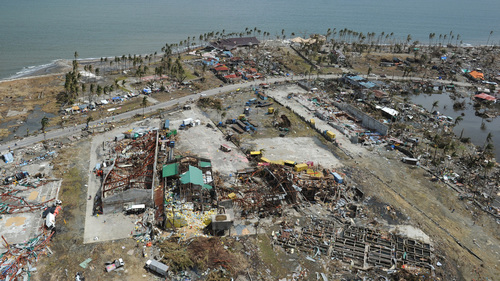
Typhoon Haiyan was enormous and hit a 400-mile swath on the Philippines.  The Philippines is a single country, but it is composed of over 7,000 islands; hundreds of islands are in need of relief aid, if not more.  The islands are in an archipelago which naturally fragments the land mass and isolates the residents making transportation, utilities and communications logistically difficult even in the best of times.  If the first few days after the typhoon, supply chains were cut off and many desperate people looted the sparse food resources available. The necessities to sustain life—food, water, shelter, medication and basic sanitation—are the all major concerns in the aftermath of the typhoon.      

While the police are saying that order is being restored, the effects of flooding pollute water resources and increase the spread of infectious diseases because of the poor sanitation.  The Philippines is gripping for an impending medical crisis from the spread of diseases in addition to the medical trauma that people suffered during the actual typhoon.  Richard Brennen of the World Health Organization (WHO) believes that these geographic difficulties make the relief efforts in the Philippines more difficult than the 2010 relief efforts to help Haiti after the massive earthquake.   

Tags: water, disasters, Philippines, medical, development, diffusion.

See on www.npr.org

Indian Independence and the Question of Partition

The partition of 1947, which led to the creation of India and Pakistan, was one of the most volatile events of the twentieth century. Partition coincided with the end of British colonial rule over the subcontinent, and Indian independence was overshadowed by violence, mass displacement, and uncertainty.

The scholars in this video were interviewed for the Choices Program curriculum, “Indian Independence and the Question of Partition”. For more information, visit the Choices Program.

See on vimeo.com

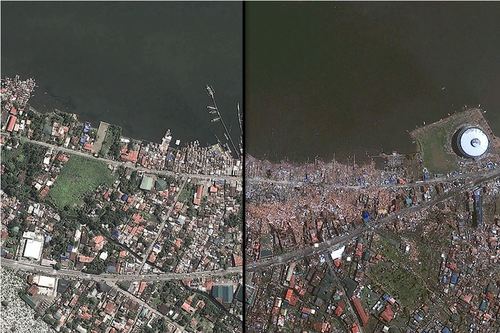
Typhoon Haiyan Before & After

View interactive before and after images showing the devastation Typhoon Haiyan has caused in Tacloban City, Philippines.

Seth Dixon‘s insight:

While the casualty counts may have been lowered, that does not lessen the devastation. 

See on www.abc.net.au

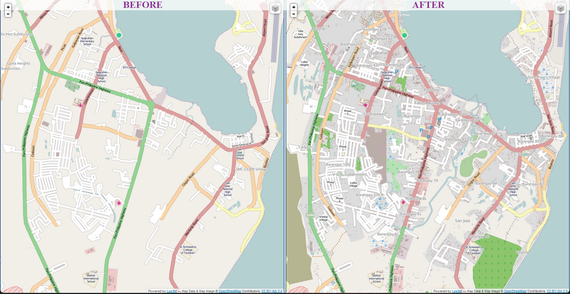
How Online Mapmakers Are Helping the Red Cross Save Lives in the Philippines

Volunteers across the world are building the digital infrastructure for the organization’s Typhoon Haiyan relief efforts

Seth Dixon‘s insight:

Crowd-sourced mapping is increasingly an important resource during an emergency.  Poorer places are often not as well mapped out by the commercial cartographic organizations and these are oftentimes the places that are hardest hit by natural disasters.  Relief agencies depend on mapping platforms to handle the logistics of administering aid and assessing the extent of the damage.  Can you join in and help?

Tags: disasters, mapping,  Philippines.

See on www.theatlantic.com

Philippines

Ruling On NYC Disaster Plans For Disabled May Have Far Reach

“A year after Superstorm Sandy stranded many New Yorkers without power for days, a federal judge has ruled that New York City’s emergency plans violate the Americans with Disabilities Act. Those shortcomings, the judge found, leave almost 900,000 residents in danger, and many say the ruling could have implications for local governments across the country.”

Seth Dixon‘s insight:

I have many more questions than answers after listening to this podcast.  Presumably, most governmental agencies during emergencies are seeking to assist the greatest number of people with limited time and resources; would this court ruling change that mandate?  How will this impact urban planning in the future?  Just how much can plans in times of emergency account for assisting the disabled?  Do you think the City of New York was negligent? 

Tags: disasters, NYC, transportation, urban, planning, podcast.

See on www.npr.org

‘Absolute Bedlam’ In The Philippines After Typhoon Haiyan

The news from the Philippines, where it’s feared that last week’s powerful Typhoon Haiyan killed more than 10,000 people, isn’t getting better as hundreds of thousands of people struggle to survive and authorities struggle to get help to them.

“Its absolute bedlam right now,” says Richard Gordon, head of the Philippine Red Cross.  “There’s an awful lot of casualties, a lot of people dead all over the place, a lot of destruction.”

According to the BBC, a huge international relief effort is underway, but rescue workers have struggled to reach some towns and villages cut off since the storm.

Tags: physical, environment, water, disasters, Philippines.

See on www.npr.org

National cemeteries create a ‘sacred grove’ of equality

In the end, rank falls away

Seth Dixon‘s insight:

This Veteran’s day many will go to cemeteries to remember fallen soldiers.  These are secular sites, but still sacred space to many.  The sanctity of these places are intentional and considerable planning goes into the spatial layout and design of the cemeteries.  Enjoy the day off for Veteran’s Day, but don’t forget to remember.

See on www.startribune.com

Why is Geography Education so Important?

Seth Dixon‘s insight:

This commencement speech from the President of the American Geographical Society highlights the importance of geographic thought and geo-literacy for college graduates.  I share this because (to quote Summer Howarth), “geo-literacy isn’t really optional.” 

See on www.amergeog.org

Blog at WordPress.com.

Up ↑