Search

GEOGRAPHY EDUCATION

Supporting geography educators everywhere with current digital resources.

South Africa Is Still Under Apartheid

“More than two decades after the end of apartheid in South Africa, Cape Town remains racially segregated, with many black residents living in substandard townships.”

Source: www.youtube.com

The title is a bit inflammatory–news agencies may pretend that they aren’t in the shock-and-awe, clickbait economy, but they invented the salacious headline to grab our attention.  Still, the racial inequities of a system as pervasive as apartheid aren’t going to be reversed in a generation and the racial differences in Capetown are coming under more international scrutiny as the they are in the midst of their current drought.


Tags: South Africa, Africarace, ethnicityneighborhood, urban, planning, drought, water, urban ecology.   

Why Is It So Hard for Clothing Manufacturers to Pay a Living Wage?

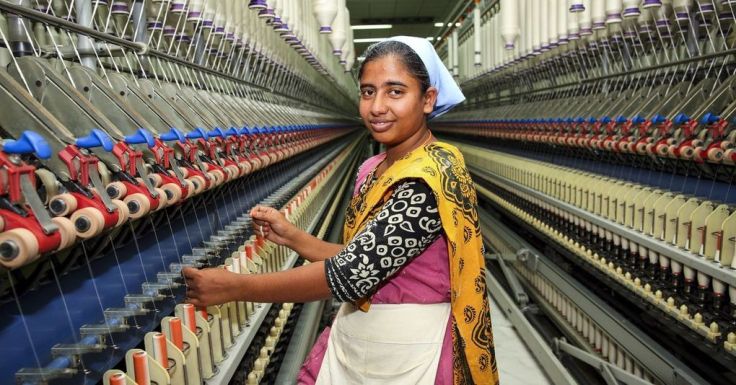
“In the garment industry, stories about workers who barely eke out an existence on ‘starvation wages’ are legion: Factory workers in New Delhi often describe living in makeshift hovels ‘barely fit for animals.’ A young woman from Myanmar might wrestle with the decision to feed her children or send them to school. In Bangladesh, sewing-machine operators frequently toil for 100 hours or more a week, only to run out of money before the end of the month. Workers have demanded higher pay in all those countries, of course, sometimes precipitating violence between protesters and police. Companies in general, however, have preferred to sidestep the issue altogether. In fact, no multinational brand or retailer currently claims to pay its garment workers a wage they can subsist on.”

Source: www.racked.com

In some ways this isn’t the right question to be asking.  While clothing brands don’t want the bad PR from low wages, like all businesses, they are incentivized to minimize their inputs and maximize their profits.  If capitalistic logic were completely unrestrained, this situation would never change as long as there are low-skill workers.

Questions to Ponder: What institutions have the ability to change this situation and what are effective ways to bring about change?  Where are textile industries located in the international division of labor?  How do sweatshops impact the places where they locate in the international division of labor? 

Tagsdevelopment, laborglobalization, economicindustry, poverty

The Democrats’ Gentrification Problem

Allies on Election Day, the two wings of the Democratic Party are growing further estranged in other aspects of their lives.

Source: www.nytimes.com

This is more partisan source/part of the topic than I’d want to share with my human geography classes, but the ideas, patterns, and impacts are all about principles discussed in the AP Human Geography course articulation. 


Tags: neighborhoodpolitical, gentrificationurban, place, economic.   

Why South Asia’s majorities act like persecuted minorities

“Mukul Kesavan, a perceptive Indian historian, sees this region-wide propensity for majoritarian nationalism as a sad if natural outcome of the awkward struggle to build new nation-states. The most egregious recent example is Myanmar, whose 90% Buddhist majority felt so threatened by a Rohingya Muslim minority of barely 1% that it sanctioned burning, pillage, murder, rape and enforced exile. Bangladesh chased non-Muslim tribes into India, and its once large and prosperous Hindu minority has dwindled alarmingly in the face of constant pressure. In the name of orthodoxy, extremists in Pakistan have viciously hounded not only Christians and Hindus but also Shia Muslims, Ahmadis and allegedly unorthodox Sufis. Sinhalese have historically dominated the island [of Sri Lanka], a fact forcefully reasserted in 2009 when the Sri Lankan army brought to a bloody end a 26-year-long insurgency by mostly Hindu ethnic Tamils, the largest minority group.”


Tags: religionethnicity, South Asiaregions, politicalconflict

Source: www.economist.com

Mapping Apps May Make Traffic Worse

Apps like Waze, Google Maps, and Apple Maps may make traffic conditions worse in some areas, new research suggests.


In the pre-mobile-app days, drivers’ selfishness was limited by their knowledge of the road network. In those conditions, both simulation and real-world experience showed that most people stuck to the freeways and arterial roads. When there are more app-using drivers, congestion builds up at off-ramps, creating more traffic on the freeway. While it’s clear that traffic on local roads gets worse with the use of these apps, Bayen said that nobody has managed to do a multi-scale analysis that can determine if the apps, even if they create local problems, are better or worse for whole traffic basins.


Tags: urbantechnology, transportation.

Source: www.theatlantic.com

How to Train Your Dragon Child

Every 12 years, there’s a spike in births among certain communities across the globe, including the U.S. Why? Because the Year of the Dragon, according to Chinese folk belief, confers power, fortune, and more. We look at what happens to Dragon babies when they grow up, and why timing your kid’s birth based on the zodiac isn’t as ridiculous it sounds.

Source: freakonomics.com

1976. 1988. 2000. 2012.  We often assume that births on a graph in any given year will follow a smooth linear pattern similar to the years around it, but the Chinese zodiac and the mythical standing of the dragon can create spikes in diasporic communities away from the mainland.  This economic podcast offers an interesting glimpse into the looks some of the communal impacts of a mini-baby boom and cultural reasons for these patterns. 


Tags: Taiwanpodcast, population, demographic transition model, modelsunit 2 population. 

How to Defeat Drought

Cape Town is running out of water. Israel offers some lessons on how to avoid that fate.

Source: foreignpolicy.com

Most droughts are caused by a combination of human and physical geographic factors. Cape Town is current in the midst of a 3 year long drought that is causing many officials to consider drastic measures such as cutting off all private water taps and rationing out 13 gallons per resident per day.  


I would like for us to also consider cases beyond South Africa, and think about the the broader issues of resource management, urbanization, resilience, and changing climatic conditions.  Resources Watch discusses critical water shortages in Morocco, India, Iraq and Spain with excellent maps, charts, and graphs. This article from Foreign Policy demonstrates how Israel has worked to maximize their minimal water resources (recycling grey water for agriculture and desalinization). The World Resources Institute discusses 3 things cities can glean from the South African crisis (1. Understand risks, 2. Manage the water budget, and 3. Invest in resilience).  


Tags: drought, water, environment, technologyenvironment modify, South AfricaIsrael, Spain, MoroccoIndiaIraq.

The Guardian view on geography: it’s the must-have A-level

“Geography, for so long a Cinderella subject, the easy option for students who found physics or chemistry too daunting, is soaring in popularity. According to the Royal Geographical Society, 13% more took the subject at A-level this year than last, up to 37,100 – the biggest jump of any of the major subjects.”

Source: www.theguardian.com

In a world that increasingly values people who can work across the physical and social sciences, geography’s all the rage…in the UK.  This editorial from the Guardian is a nice example of articles that demonstrate why geography matters in the world today.  


Tagseducation, K12geography education, geography matters. 

Welcome to Monowi, Nebraska: population 1

Eighty-four-year-old Elsie Eiler pays taxes to herself, grants her own alcohol licence and is the only remaining resident in Monowi, Nebraska.

Source: www.bbc.com

What is it like living in a town with a population of 1?  Would you stay as the last remnant of your withering town? This case study is absolutely fascinating since it defies what we consider the minimum threshold of what is required for a city or a town.  However, the other compelling geographic story is how a once, low-order central place in rural Nebraska, has been (almost) completely abandoned.  


Tag: rural, migration, USA.

Blog at WordPress.com.

Up ↑