Search

GEOGRAPHY EDUCATION

Supporting geography educators everywhere with current digital resources.

English–History and Connotations

“What is the difference between ‘a hearty welcome’ and ‘a cordial reception’? In a brief, action-packed history of the English language, Kate Gardoqui explains why these semantically equal phrases evoke such different images.”

Source: www.youtube.com

This TED-ED video (and lesson) shows how the connotations of English words often times depend on the linguistic root (sweat–Germanic, perspire–Latin). English has obviously changed much over the years, but this other TED-ED video (and lesson) also shows some good language family information and traces it back to proto-Indo-European roots.


Tags: languagecultureEnglishTED, video.

We’re creating cow islands

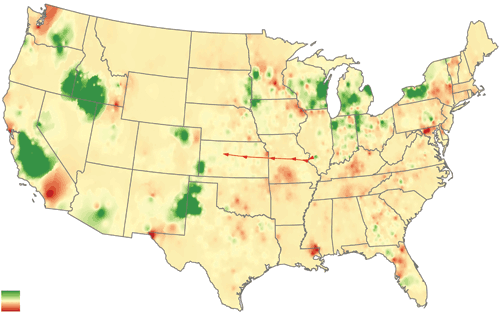
The parts of the United States that have higher populations of dairy cows are in the West and northern states.


Milk has moved away from cities between 2001 and 2011. Red areas indicate less milk in 2011 than 2001, green areas mean more and a buff color designates a neutral milk region.

Almost every region where you see a dark red area indicating a sharp decline in production has a large and growing population center nearby.

Source: hoards.com

As many of you will notice, this continues the reversal of some patterns that von Thünen observed and put in his famous agricultural model. 


Questions to Ponder: Why did milk used to need to be produced close to the cities?  Why is the old pattern changing now? How is this changing regions?


Tags: models, food production, agribusiness, agriculture.

The Real Threat to Hinduism: The Slow Death of India’s Rivers

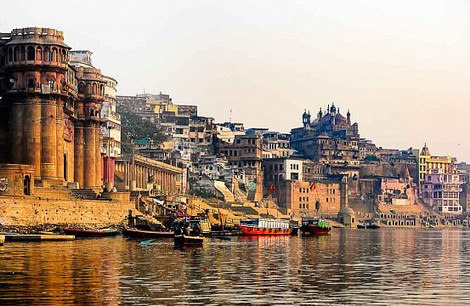
Hinduism shares an intricate, intimate relationship with the climate, geography, and biodiversity of South Asia; its festivals, deities, mythology, scriptures, calendar, rituals, and even superstitions are rooted in nature. There is a strong bond between Hinduism and South Asia’s forests, wildlife, rivers, seasons, mountains, soils, climate, and richly varied geography, which is manifest in the traditional layout of a typical Hindu household’s annual schedule. Hinduism’s existence is tied to all of these natural entities, and more prominently, to South Asia’s rivers.


Hinduism as a religion celebrates nature’s bounty, and what could be more representative of nature’s bounty than a river valley? South Asian rivers have sustained and nourished Hindu civilizations for centuries. They are responsible for our prosperous agriculture, timely monsoons, diverse aquatic ecosystems, riverine trade and commerce, and cultural richness.  Heavily dammed, drying in patches, infested by sand mafia and land grabbers, poisoned by untreated sewage and industrial waste, and hit by climate change — our rivers, the cradle of Hinduism, are in a sorry state.


If there is ever a threat to Hinduism, this is it. Destroy South Asia’s rivers and with it, Hinduism’s history and mythology will be destroyed. Rituals will turn into mockery, festivals, a farce, and Hinduism itself, a glaring example of man’s hypocritical relationship with nature. The fact that we worship our rivers as mothers and then choke them to death with all sorts of filth is already eminent.

Source: thediplomat.com

This might be a controversial op-ed because it has a strong perspective on the religious and environmental dimensions of modern Indian politics…that said, I think it is well worth the read.  The Ganges is both a holy river, and a polluted river; that juxtaposition leads to many issues confronting India today. 


Tagsculturereligion, India, South Asia, Hinduism, pollution, industry,   environment, sustainability, consumption, fluvial

As Venezuela Collapses, Children Are Dying of Hunger

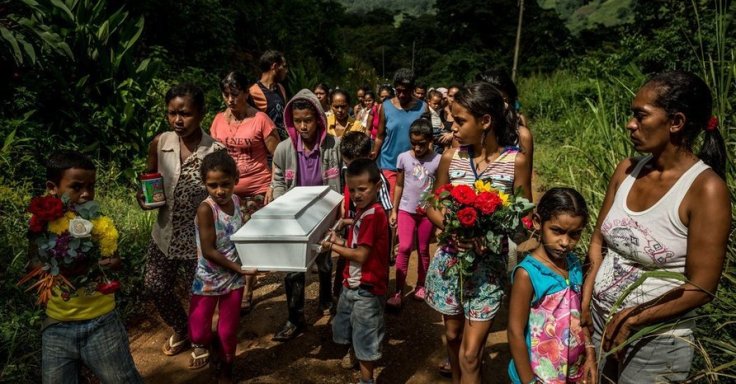
“Venezuela has the largest proven oil reserves in the world. But in the last three years its economy has collapsed. Hunger has gripped the nation for years. Now, it’s killing children. The Venezuelan government knows, but won’t admit it. Doctors are seeing record numbers of children with severe malnutrition. Before Venezuela’s economy started spiraling, doctors say, almost all of the child malnutrition cases they saw in public hospitals stemmed from neglect or abuse by parents. But as the economic crisis began to intensify in 2015 and 2016, the number of cases of severe malnutrition at the nation’s leading pediatric health center in the capital more than tripled, doctors say. 2017 was even worse.”


Tagsmortality, medical, developmentfood, poverty, Venezuela, South America.

Source: www.nytimes.com

How the letters of the alphabet got their names

There seems to be little predictability to the English names for the letters of the alphabet, to say nothing of the names of letters in other languages. Some begin with an e-as-in-egg sound (eff, ell); some end in an ee sound (tee, dee); and others have no obvious rhyme or reason to them at all. How did they get that way?


Tags: language, culturehistorical, English.

Source: www.economist.com

Walmart Nation: Mapping the Largest Employers in the U.S.

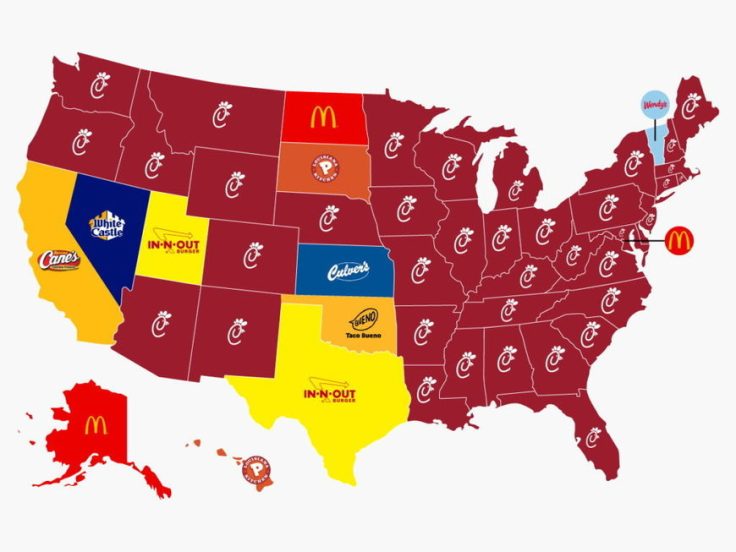
Walmart employs 1.5 million people across the country – and the retail behemoth is now the largest private employer in 22 states.


In an era where Amazon steals most of the headlines, it’s easy to forget about brick-and-mortar retailers like Walmart.

But, even though the market values the Bezos e-commerce juggernaut at about twice the sum of Walmart, the blue big-box store is very formidable in other ways. For example, revenue and earnings are two areas where Walmart still reigns supreme, and the stock just hit all-time highs yesterday on an earnings beat.


Tag: rural, retail, labor, economicindustry.

Source: www.visualcapitalist.com

Alluvial Fans

“When a mountain stream carries a lot of sediment (clay, silt, sand, gravel, cobbles, and boulders) and leaves the confines of the canyon, the sediment is deposited. Over time, this process creates a fan-shaped deposit. The sediment is deposited not because the gradient of the stream decreased, but because the power of the stream dissipates beyond the canyon mouth as the water is spread thin and infiitrates. Many cities are built on alluvium fans, often leading to hazards from flash floods and mudflows.”

Source: www.instagram.com

In mountainous, interior deserts, the largest settlements are usually not deep in the deserts or on top of the mountains but in that in between space.  Many settlements in Central Asia are built on these alluvial fans


Tags: environment, physical, geomorphology, erosiongeology, California, landforms.

Robots can pick strawberries. Now what?

“The robots have arrived. And they’ll be picking crops in Florida fields soon. Robots can do things humans can’t. They can pick all through the night. They can measure weight better. They can pack boxes more efficiently. They don’t take sick days, they don’t have visa problems.

Google ‘are robots taking our jobs?’ and you get millions of theories: Robots will take over most jobs within 30 years; yes, but it’s a good thing; yes, but they will create jobs, too; chill out, they won’t take them all. Truckers, surgeons, accountants and journalists have all been theoretically replaced by prognosticators.

But harvesting specialty crops is different: Plants vary in shape and size and determining ripeness is complex — experts have said there are too many variables for robots. Until now.”

Source: www.tampabay.com

Many industries have been, and will continue to be transformed by automation and robotics.  There is a great amount of uncertainty and anxiety in the labor pools as workers see many low skill jobs are being outsourced and other jobs are being automated.  Some economic organizations are preparing resources for workers to strengthen their skills for the era of automation. 


Questions to Ponder: How will a machine like this transform the agricultural business? How might it impact migration, food prices, or food waste?


Tags: economic, laboragribusiness, industry, food production, agriculture.

Za’atari Camp

“Spongebob Squarepants has been painted on the entire side of one caravan, and an Arabic phrase has been gracefully painted on another. This kind of incongruity I see throughout the camp. Two women are dressed in traditional full-length hijabs, for example, but the man behind them is wearing a Golden State Warriors t-shirt. A man in a robe encourages a donkey to pull a cart, yet right past him are young boys with smartphones huddled near a fence looking for better cell reception. A little further down the road and on my right I see a shoeless kid laughing and rolling a tire, but on my left, I spot a vast number of solar-powered panels. This constant juxtaposition is jarring and yet beautiful, and I am taken back by the energy of the place.”

Source: askmrlanguageperson.blogspot.com

This is from the other Professor Dixon, my brother Shane, an ESL professor at Arizona State who travels abroad frequently to train ESL teachers around the world (he’s taught MOOCs and is a rock star in the ESL world–trust me–he’s awesome).  I was thrilled to hear that he would not only be going to Jordan, but working within the Za’atari refugee camp.  He’s a keen observer of the cultural and urban landscapes. 


TagsMiddleEast, Jordan, political, refugees.

Create a free website or blog at WordPress.com.

Up ↑