Search

GEOGRAPHY EDUCATION

Supporting geography educators everywhere with current digital resources.

How the letters of the alphabet got their names

There seems to be little predictability to the English names for the letters of the alphabet, to say nothing of the names of letters in other languages. Some begin with an e-as-in-egg sound (eff, ell); some end in an ee sound (tee, dee); and others have no obvious rhyme or reason to them at all. How did they get that way?


Tags: language, culturehistorical, English.

Source: www.economist.com

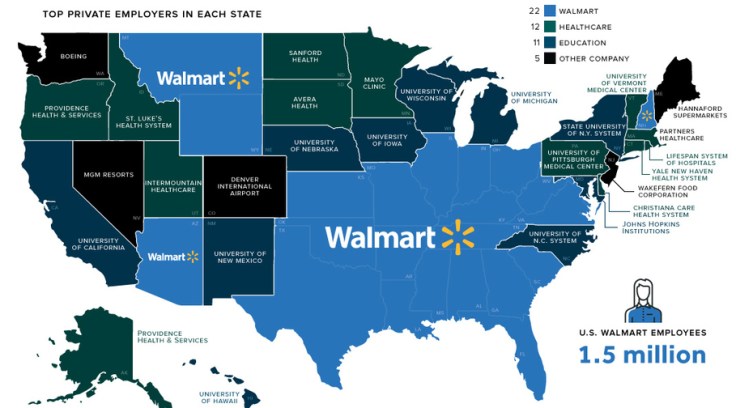
Walmart Nation: Mapping the Largest Employers in the U.S.

Walmart employs 1.5 million people across the country – and the retail behemoth is now the largest private employer in 22 states.


In an era where Amazon steals most of the headlines, it’s easy to forget about brick-and-mortar retailers like Walmart.

But, even though the market values the Bezos e-commerce juggernaut at about twice the sum of Walmart, the blue big-box store is very formidable in other ways. For example, revenue and earnings are two areas where Walmart still reigns supreme, and the stock just hit all-time highs yesterday on an earnings beat.


Tag: rural, retail, labor, economicindustry.

Source: www.visualcapitalist.com

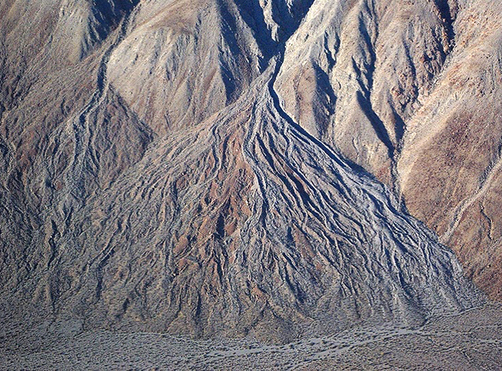
Alluvial Fans

“When a mountain stream carries a lot of sediment (clay, silt, sand, gravel, cobbles, and boulders) and leaves the confines of the canyon, the sediment is deposited. Over time, this process creates a fan-shaped deposit. The sediment is deposited not because the gradient of the stream decreased, but because the power of the stream dissipates beyond the canyon mouth as the water is spread thin and infiitrates. Many cities are built on alluvium fans, often leading to hazards from flash floods and mudflows.”

Source: www.instagram.com

In mountainous, interior deserts, the largest settlements are usually not deep in the deserts or on top of the mountains but in that in between space.  Many settlements in Central Asia are built on these alluvial fans


Tags: environment, physical, geomorphology, erosiongeology, California, landforms.

Robots can pick strawberries. Now what?

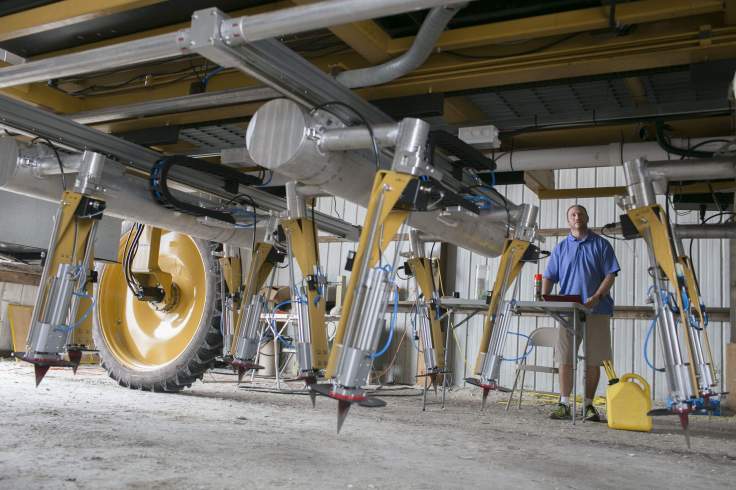
“The robots have arrived. And they’ll be picking crops in Florida fields soon. Robots can do things humans can’t. They can pick all through the night. They can measure weight better. They can pack boxes more efficiently. They don’t take sick days, they don’t have visa problems.

Google ‘are robots taking our jobs?’ and you get millions of theories: Robots will take over most jobs within 30 years; yes, but it’s a good thing; yes, but they will create jobs, too; chill out, they won’t take them all. Truckers, surgeons, accountants and journalists have all been theoretically replaced by prognosticators.

But harvesting specialty crops is different: Plants vary in shape and size and determining ripeness is complex — experts have said there are too many variables for robots. Until now.”

Source: www.tampabay.com

Many industries have been, and will continue to be transformed by automation and robotics.  There is a great amount of uncertainty and anxiety in the labor pools as workers see many low skill jobs are being outsourced and other jobs are being automated.  Some economic organizations are preparing resources for workers to strengthen their skills for the era of automation. 


Questions to Ponder: How will a machine like this transform the agricultural business? How might it impact migration, food prices, or food waste?


Tags: economic, laboragribusiness, industry, food production, agriculture.

Za’atari Camp

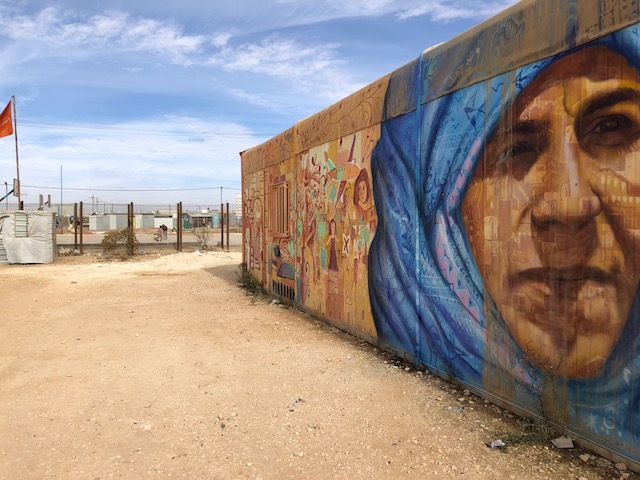
“Spongebob Squarepants has been painted on the entire side of one caravan, and an Arabic phrase has been gracefully painted on another. This kind of incongruity I see throughout the camp. Two women are dressed in traditional full-length hijabs, for example, but the man behind them is wearing a Golden State Warriors t-shirt. A man in a robe encourages a donkey to pull a cart, yet right past him are young boys with smartphones huddled near a fence looking for better cell reception. A little further down the road and on my right I see a shoeless kid laughing and rolling a tire, but on my left, I spot a vast number of solar-powered panels. This constant juxtaposition is jarring and yet beautiful, and I am taken back by the energy of the place.”

Source: askmrlanguageperson.blogspot.com

This is from the other Professor Dixon, my brother Shane, an ESL professor at Arizona State who travels abroad frequently to train ESL teachers around the world (he’s taught MOOCs and is a rock star in the ESL world–trust me–he’s awesome).  I was thrilled to hear that he would not only be going to Jordan, but working within the Za’atari refugee camp.  He’s a keen observer of the cultural and urban landscapes. 


TagsMiddleEast, Jordan, political, refugees.

The ‘War on Sitting’ Has a New Front

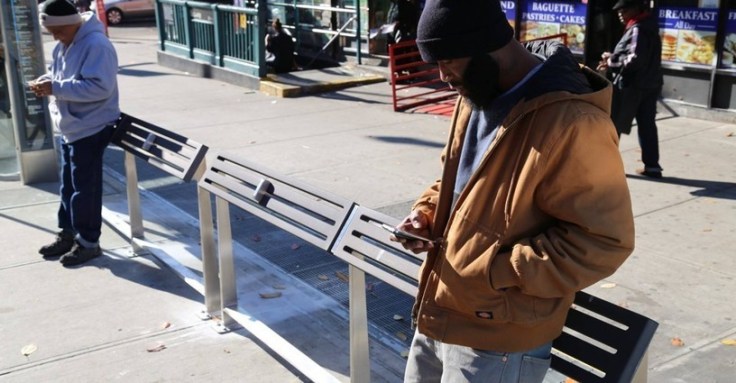
Cities are removing benches in an effort to counter vagrancy and crime—at the same time that they’re adding them to make the public realm more age-friendly.

Source: www.citylab.com

Geography explores more than just what countries control a certain territory and what landforms are there.  Geography explores the spatial manifestations of power and how place is crafted to fit a particular vision.  Homeless people are essentially always ‘out of place.’  These articles from the Society Pages, Atlas Obscura, the Atlantic and this one from the Guardian share similar things: that urban planners actively design places that will discourage loitering, skate boarding, and homelessness, which are all undesirable to local businesses.  This gallery shows various defensive architectural tactics to make certain people feel ‘out of place.’  Just to show that not all urban designs are anti-homeless, this bench is one that is designed to help the homeless (and here is an ingenious plan to curb public urination).  


Tags: urbanplanning, architecture, landscape, place, poverty.

The 10 Worst River Basins Contributing to Ocean Plastics

“[A new paper], published in the journal Environmental Science and Technology, calculates that rivers contribute between 410,000 and 4 million tonnes a year to oceanic plastic debris, with 88 to 95% [of that total] coming from only 10. Those rivers are the Yangtze, Yellow, Hai He, Pearl, Amur and Mekong in east Asia, the Indus and Ganges Delta in south Asia, and the Niger and Nile in Africa.”

Source: cosmosmagazine.com

Of river-based plastic pollution, these 10 rivers are responsible for 88%-95% of all the plastic gyrating in the world’s oceans.  Improvement in these key places could make a world of difference in improving marine ecosystems (NOTE: the map came from this alternative article on the same subject).


Tags: pollution, water, environmentsustainability, consumption, fluvial.

Pro-Israeli perspective in UNHRC

Source: www.youtube.com

Admittedly, this is not a neutral perspective on the Israeli-Palestinian conflict, but that doesn’t mean it isn’t worth sharing if you properly contextualize the statements.  UN Watch is “a non-governmental organization based in Geneva whose mandate is to monitor the performance of the United Nations by the yardstick of its own Charter.”  UN Watch works to oppose what they see as chronic anti-Israeli bias in the UN.   


Tags: Israel, PalestineNGOs, political, Middle East.

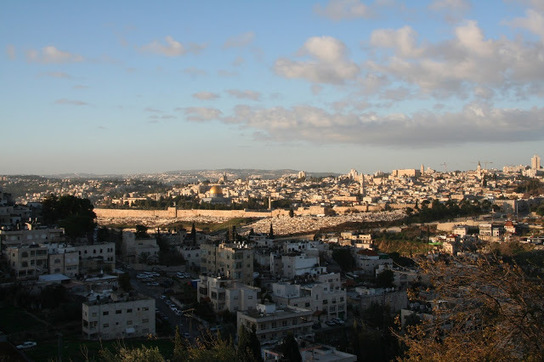
Capital Jerusalem

“Because Israel refused to recognize the U.N. plan for an internationalized Jerusalem and because of its annexation of occupied East Jerusalem in 1967, no country in the world has offered legal and diplomatic recognition of Jerusalem as the capital of Israel. Most states, however, have unofficially acknowledged Israel’s sovereignty and actual possession, without recognition of lawful title.”

Source: beitemmett.blogspot.com

That is, until now.  The United States is planning to move it’s embassy from Tel Aviv to Jerusalem, in a move that will have far more reaching implications than the relocation of just about any other embassy on Earth could have, given the geopolitical significance of Jerusalem to the Israeli-Palestinian conflict and the broader international ties.  Below are some resources to contextualize this shift: 


Questions to Ponder: How does this change the status quo at the local, national and international scales?  What might be some of the consequences of this move?  What would you recommend and why?  


Tags: Israel, Palestine, borders, political, Middle East, geopolitics, historical.

Create a free website or blog at WordPress.com.

Up ↑