Search

GEOGRAPHY EDUCATION

Supporting geography educators everywhere with current digital resources.

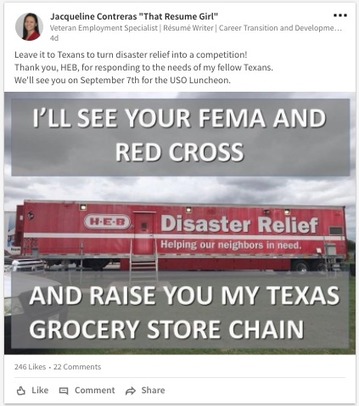
How a Texas grocery chain kept running after Hurricane Harvey

“One of my stores, we had 300 employees; 140 of them were displaced by the flooding. So how do you put your store back together quickly? We asked for volunteers in the rest of the company. We brought over 2,000 partners from Austin, San Antonio, the Rio Grande Valley. They hopped into cars and they just drove to Houston. They said, we’re here to help. For 18 hours a day, they’re going to help us restock and then they’ll go sleep on the couch at somebody’s house.”

Source: www.linkedin.com

Natural disasters complicate the logistics that make our modern economy run.  We take these flows for granted–until they are disrupted. This article is a excellent view into how to operate when disaster strikes. 


Tagseconomicindustry, laborglobalizationplace, transportation.

Announcing a New Feature to Build Students’ Geography Skills

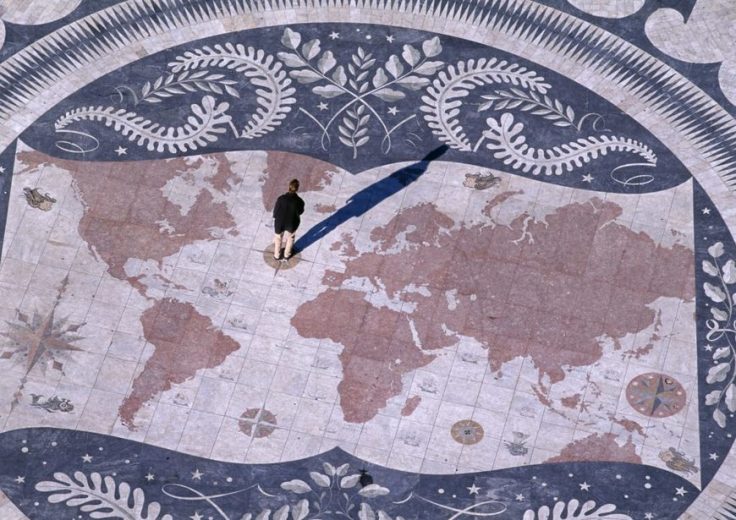
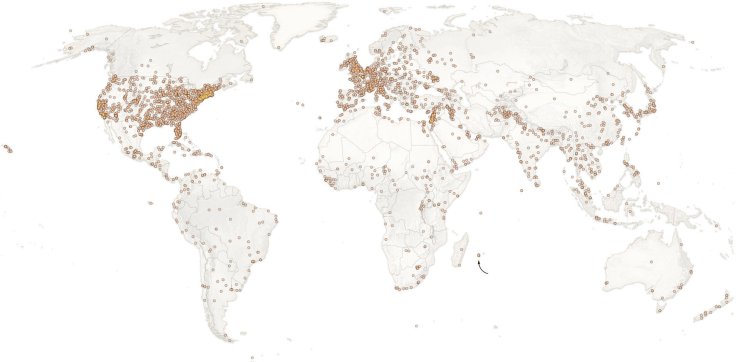
“As the image above shows, The Times reports from all over the globe. We have journalists in more than 30 international news bureaus worldwide, and every day we publish news, feature stories, videos, slide shows and more from dozens of countries around the world. Our new ‘Country of the Week’ feature celebrates this abundance to help build students’ geography skills. A weekly interactive quiz will first introduce students to a country via a recent video or photograph, then ask them to find that place on a map. Next, the quiz will focus on the demographics and culture of the country. Finally, we’ll include links to recent reporting from that place in case they, or you, would like to go further.

In ‘Why Geography Matters,’ Harm de Blij wrote that geography is ‘a superb antidote to isolationism and provincialism,’ and argued that ‘the American public is the geographically most illiterate society of consequence on the planet, at a time when United States power can affect countries and peoples around the world.’

This spatial illiteracy, geographers say, can leave citizens without a framework to think about foreign policy questions more substantively. ‘The paucity of geographical knowledge means there is no check on misleading public representations about international matters,’ said Alec Murphy, a professor of geography at the University of Oregon.”


Tagseducation, K12geography education, geography matters.

Source: www.nytimes.com
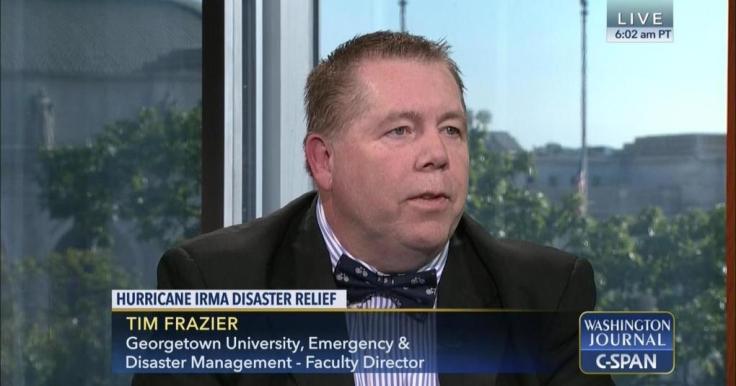
Why geography matters now more than ever

“Students need to know human geography; they need to understand the relationships that exist between cultures.”

Source: worldgeochat.wordpress.com

You might have seen this article on PBS’s Teacher’s Lounge, but here is a link to the original (and a good reason to give a shout-out to #worldgeochat on Twitter Tuesday nights at 9pm EST).  This might be seen as another example of me preaching to the choir, but I hope that this will arm you with resources to use in discussions with administrators and colleagues in the fight against geographic ignorance.  This is a great article to put into my new tag of article that discuss why geography matters.   


Tagseducation, K12geography education, geography matters.

10 countries that desperately want people to have more sex

Roughly half the countries around the world experience low fertility rates, and some get pretty creative in how they encourage procreation.

Source: www.businessinsider.com

While many countries have anti-natalist policies (policies to discourage more births), other countries with declining populations have pro-natalist policies in an attempt to increase fertility rates.  While not an exhaustive list, this list gives a few more examples that teachers can use to show how countries in stage 4 of the demographic transition are dealing with declining fertility rates.  


Tags: declining populations, population, demographic transition model, modelsunit 2 population. 

Amazon Is Building a Colossal Warehouse Where America’s Biggest Mall Once Stood

“The Seattle-based internet book seller Amazon just announced plans to open an enormous fulfillment center in the North Randall, Ohio. This is a big deal for the small community which has suffered greatly since the Randall Park Mall, once the largest in America, shut down due to retail sales moving online. Amazon is actually building its new warehouse on the same land where the mall once stood. The irony of this is lost on no one.”

Source: gizmodo.com

Questions to Ponder: Where is the geography in this new development?  What economic forces are shaping and reshaping places?


Tagseconomicindustry, laborglobalizationplace, transportation.

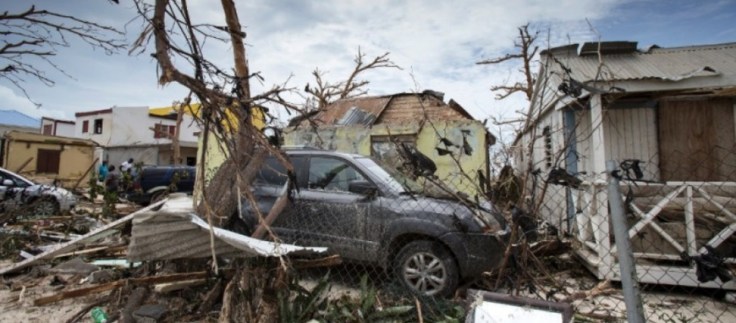
When Climate Change Meets Sprawl: Why Houston’s ‘Once-In-A-Lifetime’ Floods Keep Happening

But a local understanding of place is critical and this viral post–Things non-Houstonians Need to Understand–is pretty good.

“Unchecked development remains a priority in the famously un-zoned city, creating short-term economic gains for some, but long term flood risk for everyone.”

Source: projects.propublica.org

Houston’s development boom and reduction of wetlands leave region prone to more severe flooding.  Here is a great map of the change in impervious surfaces in the region from 1940 to 2017–when you combine that with record-breaking rainfall the results are catastrophic.  But a local understanding of place is critical and this viral post–Things non-Houstonians Need to Understand–is pretty good.   

Tagsphysical, fluvialwatercoastal, urban, planningtransportation, architecture.

The walkable city

How do we solve the problem of the suburbs? Urbanist Jeff Speck shows how we can free ourselves from dependence on the car — which he calls “a gas-belching, time-wasting, life-threatening prosthetic device” — by making our cities more walkable and more pleasant for more people.

Source: www.ted.com

In the 2017 APHG exam, there was a question that dealt with new urbanism and walkability.  This TED talk from Jeff Speck gives a good sense of what planners believe in new urbanism are trying to do (you can also watch his earlier TED talk, 4 ways to make a city more walkable). Here also is information on New Urbanism (dot org) from it’s practicioners, such as the Congress on New Urbanism.  Lastly, here is an academic article reviewing the critiques of new urbanism with rebuttals.    


Tagsplace, neighborhood, urban, planningtransportation, urbanism, scale, TED, video.

Bogotá’s weekly road closures for motorists are a boon for multi-use transportation activities

“Bogotá closes its roads every Sunday. Now everyone wants to do it. The Ciclovía is the world’s most successful mass recreation event.”

Source: www.vox.com

The amount of physical space in our urban environments that is exclusively dedicated to vehicular transportation is staggeringly high; there are efforts in many cities to return the streets to a multi-use space that it was historically.  Bogotá is one of the leading cities in this movement and the Ciclovía is the envy of cyclists and runners around the world.  


Questions to Ponder: What are the benefits and drawbacks to a weekly closure of the roads to vehicular traffic?  Would this make a city a more desirable or less desirable place for you?  What stakeholders would financially harmed by this and which groups might find this profitable?  


TagsSouth America, Colombia, urban, planningtransportation, urbanism, .

The American West, 150 Years Ago

In the 1860s and 70s, photographer Timothy O’Sullivan created some of the best-known images in American History. After covering the U.S. Civil War, (many of his photos appear in this earlier series), O’Sullivan joined a number of expeditions organized by the federal government to help document the new frontiers in the American West. The teams were composed of soldiers, scientists, artists, and photographers, and tasked with discovering the best ways to take advantage of the region’s untapped natural resources. O’Sullivan brought an amazing eye and work ethic, composing photographs that evoked the vastness of the West. He also documented the Native American population as well as the pioneers who were already altering the landscape. Above all, O’Sullivan captured — for the first time on film — the natural beauty of the American West in a way that would later influence Ansel Adams and thousands more photographers to come.


Tags: images, artlandscape, tourism, historicalUSA.

Source: www.theatlantic.com

Create a free website or blog at WordPress.com.

Up ↑