Search

GEOGRAPHY EDUCATION

Supporting geography educators everywhere with current digital resources.

URBAN EARTH

See on Scoop.itGeography Education

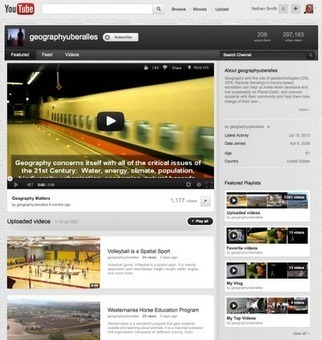
URBAN EARTH is a project to (re)present our habitat by walking across some of the largest urban areas on Earth. This video was shot by SUSO* and introduces t…

This is the introductory video to the Urban Earth youtube channel.  The goal of this “guerrilla geography” is to see and understand the city beyond the tourism guidebook.   Daniel Raven-Ellison, the creator of the project is one of National Geographic’s “Emerging Explorers” and in this video, demonstrates the methods behind his urban explorations.  You can see his influence in helping found http://www.missionexplore.net/ as a portal for alternative geographies to engage students.  For more about his projects, see http://ravenellison.com/ for more details.
Since I did my research in Mexico City, I’m partial to this Urban Earth video of that amazing city…I loved the feel of being in the city that this video creates.

See on www.youtube.com
Envisioning the Spatial University

See on Scoop.itGeography Education

If geospatial technology helped us understand the costs, would we make different decisions about the value of electric reliability?


This is an excellent article that shows this as an important moment for geography.  Geospatial technologies have been official listed as a growth sector in the economy: where will the workforce gain these skills?  This is the perfect time to put geographic analysis together more firmly into the curriculum with the STEM disciplines so that spatial thinking throughout the curriculum.  Geospatial technologies such as GIS are a are a common space where geography and STEM discipline can meet.

See on www.spatialroundtable.com

The 5 Stupidest Things Ever Done With Borders

See on Scoop.itGeography Education

Where you find a border, you usually find somebody pissed off about it.


Disclaimer: This article is more glib and crude in its language than I typically post, but there is some great insight in this article about the curiosities that can occur on the borders.  Enclaves, walls, roads, glaciers, and tables all play prominent roles in these 5 quirky borders. 

See on www.cracked.com

365 Reflections on Why Geography and GIS Matter

See on Scoop.itGeography Education

“In 2011, beginning on New Year’s Day, as president of the National Council for Geographic Education, I wrote one tweet everyday beginning with “What is Geography? 1 of 365” and posted them to my Twitter page. OK, I confess that I actually posted multiple posts every day, sometimes up to 10. There is just so much on this topic to write about! And I continue these efforts in 2012.


My goals in the series were several. First, I sought to point out as organization president how the NCGE serves the geography education community, and has been doing so since 1915. Through its webinars, book and journal publications, annual conference, curriculum, research, partnerships, and networking opportunities, the NCGE supports excellence in teaching and learning geography. Second, I wanted to provide evidence of the diversity of geography. Those outside the geographic community might have an incomplete or even erroneous view of geography as a discipline. I wanted to nudge people beyond thinking of geography only as the location of things, to provide an idea what geographers study and what they care about. I explored themes of scale, patterns, and relationships, topics such as watersheds, energy, ecoregions, climate, and population density, and discussed different regions while on work travel to Salzburg Austria, San Francisco, New York City, San Diego, Minneapolis, and elsewhere. Geography is diversity in people, landscapes, issues, skills, and themes…..”

See on teacherlinkyetc.blogspot.com.br

Mexicans Struggle to Kick Bottled-Water Habit

See on Scoop.itRegional Geography

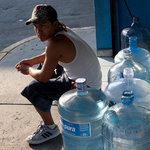
Despite efforts to improve the quality of tap water, Mexico is the world’s largest per capita consumer of bottled water, using it even for bathing babies.


People buy bottle water for one of two primary reasons.  First, they may feel that the bottled water is tastes better, is heathier or in some way superior to regular water.  The second reason is more of a sinister reason: they fear the quality of the tap water is so bad that it will infect them with diseases.  Although American tourists still joke about “Montezuma’s Revenge,” Mexico has greatly improved the quality of their tap water, but it is regionally contingent.  It may be safe in one neighborhood but not another, so most Mexican avoid public water sources altogether.  Public confidence in public utilities  and an more uniform track record of healthy water is the only thing that can change this cultural/economic habit.  

See on www.nytimes.com

Battle for Water

See on Scoop.itGeography Education

Many experts see water scarcity as a potential looming crisis.  Water scarcity, pollution and mismanagement are going to become increasingly important as the global population continues to rise farther above 7 billion.  AlertNet has put together a dynamic special feature on water with videos, infographics and interactive maps in addition to the following articles:

  •  Water scarcity – Conflicts of interests
  • How much “virtual water” do you use every day?
  • Water maps spark concern about “liquid gold rush”
  • Myanmar in the dark over hydropower for Asia
  • Thirsty South Asia’s river rifts threaten “water wars”
  • EXPERT VIEWS: New water policies are key to tackling scarcity

This is a must-see resource with multiple regional (South Asia, Middle East, Central Asia, Southeast Asia, etc.) applications and thematic (political, environmental, resource management, development, etc.) strands as well.

See on www.trust.org

Where is my Milk From?

See on Scoop.itGeography Education

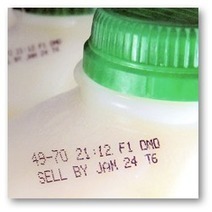
Find out which dairy your milk comes from!


Too often we have heard the answer “from the grocery store!”  With more thought, the farm would be the next answer, but what kind of farm?  Which farm? Where is it coming from?  All you need to arm your students to make the commodity chain more personal is the code on the carton and this link, and they are on their way to exploring the geography of industrial agriculture (more likely than not).  This site is designed to help consumer become more aware of the geography of diary production and to get to know where the products that we are putting in are body are coming from.  My milk (consumed in Cranston, RI) is from Guida’s Milk and Ice Cream from New Britain, CT.  So, where does your milk come from? 

See on www.whereismymilkfrom.com

The business of US food aid – interactive

See on Scoop.itGeography Education

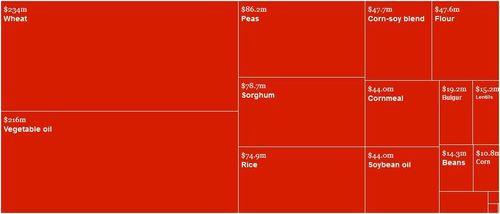
Nearly $1bn was spent last year buying wheat, sorghum and other products for the controversial US ‘in-kind’ food aid programmes.   Over 40 companies sold food aid last year

But big agribusinesses are not the only ones winning US food aid contracts. Over 40 companies sold nearly 1.8m tonnes, or $1bn worth, of food aid last year.

Some have developed entirely new product lines, specifically to sell as overseas food aid. Others have fought to get their products on the list of eligible commodities, which includes items such as canned pink salmon and dehydrated potato flakes.

Didion, a private, family-owned company headquartered in Wisconsin, has developed a special line of corn-based food aid products. Last year it was the government’s top supplier of corn-soy blend, a fortified food of choice for the UN’s World Food Programme.  What Crops are being donated?  To which countries?  From which companies?  The answers lie in this interactive feature.

See on www.guardian.co.uk

The business of US food aid – interactive

See on Scoop.itGeography Education

Nearly $1bn was spent last year buying wheat, sorghum and other products for the controversial US ‘in-kind’ food aid programmes.   Over 40 companies sold food aid last year

But big agribusinesses are not the only ones winning US food aid contracts. Over 40 companies sold nearly 1.8m tonnes, or $1bn worth, of food aid last year.

Some have developed entirely new product lines, specifically to sell as overseas food aid. Others have fought to get their products on the list of eligible commodities, which includes items such as canned pink salmon and dehydrated potato flakes.

Didion, a private, family-owned company headquartered in Wisconsin, has developed a special line of corn-based food aid products. Last year it was the government’s top supplier of corn-soy blend, a fortified food of choice for the UN’s World Food Programme.  What Crops are being donated?  To which countries?  From which companies?  The answers lie in this interactive feature.

See on www.guardian.co.uk

Create a free website or blog at WordPress.com.

Up ↑