Search

GEOGRAPHY EDUCATION

Supporting geography educators everywhere with current digital resources.

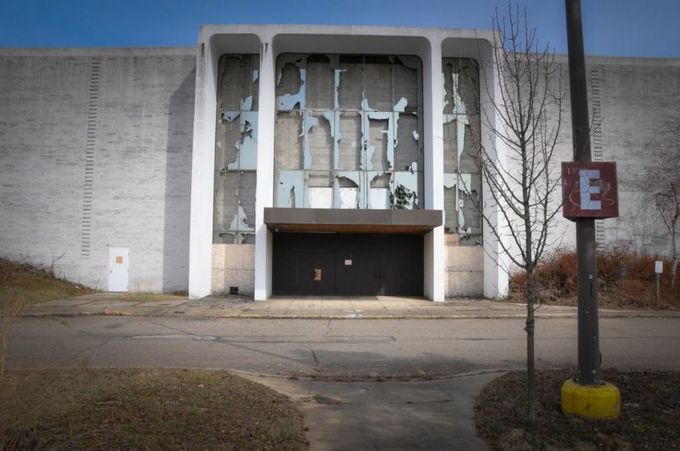
Amazon Is Building a Colossal Warehouse Where America’s Biggest Mall Once Stood

“The Seattle-based internet book seller Amazon just announced plans to open an enormous fulfillment center in the North Randall, Ohio. This is a big deal for the small community which has suffered greatly since the Randall Park Mall, once the largest in America, shut down due to retail sales moving online. Amazon is actually building its new warehouse on the same land where the mall once stood. The irony of this is lost on no one.”

Source: gizmodo.com

Questions to Ponder: Where is the geography in this new development?  What economic forces are shaping and reshaping places?


Tagseconomicindustry, laborglobalizationplace, transportation.

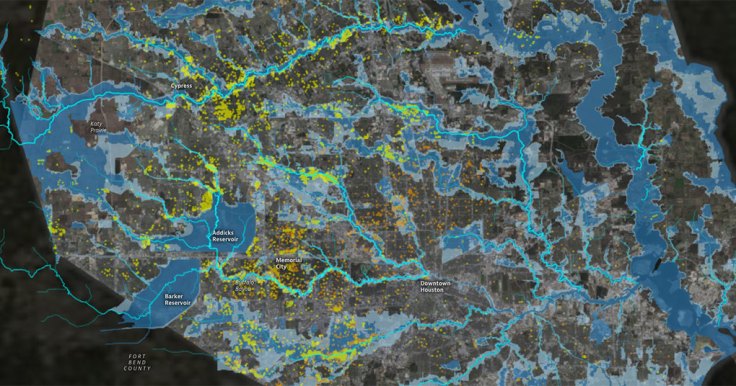
When Climate Change Meets Sprawl: Why Houston’s ‘Once-In-A-Lifetime’ Floods Keep Happening

But a local understanding of place is critical and this viral post–Things non-Houstonians Need to Understand–is pretty good.

“Unchecked development remains a priority in the famously un-zoned city, creating short-term economic gains for some, but long term flood risk for everyone.”

Source: projects.propublica.org

Houston’s development boom and reduction of wetlands leave region prone to more severe flooding.  Here is a great map of the change in impervious surfaces in the region from 1940 to 2017–when you combine that with record-breaking rainfall the results are catastrophic.  But a local understanding of place is critical and this viral post–Things non-Houstonians Need to Understand–is pretty good.   

Tagsphysical, fluvialwatercoastal, urban, planningtransportation, architecture.

The walkable city

How do we solve the problem of the suburbs? Urbanist Jeff Speck shows how we can free ourselves from dependence on the car — which he calls “a gas-belching, time-wasting, life-threatening prosthetic device” — by making our cities more walkable and more pleasant for more people.

Source: www.ted.com

In the 2017 APHG exam, there was a question that dealt with new urbanism and walkability.  This TED talk from Jeff Speck gives a good sense of what planners believe in new urbanism are trying to do (you can also watch his earlier TED talk, 4 ways to make a city more walkable). Here also is information on New Urbanism (dot org) from it’s practicioners, such as the Congress on New Urbanism.  Lastly, here is an academic article reviewing the critiques of new urbanism with rebuttals.    


Tagsplace, neighborhood, urban, planningtransportation, urbanism, scale, TED, video.

Bogotá’s weekly road closures for motorists are a boon for multi-use transportation activities

“Bogotá closes its roads every Sunday. Now everyone wants to do it. The Ciclovía is the world’s most successful mass recreation event.”

Source: www.vox.com

The amount of physical space in our urban environments that is exclusively dedicated to vehicular transportation is staggeringly high; there are efforts in many cities to return the streets to a multi-use space that it was historically.  Bogotá is one of the leading cities in this movement and the Ciclovía is the envy of cyclists and runners around the world.  


Questions to Ponder: What are the benefits and drawbacks to a weekly closure of the roads to vehicular traffic?  Would this make a city a more desirable or less desirable place for you?  What stakeholders would financially harmed by this and which groups might find this profitable?  


TagsSouth America, Colombia, urban, planningtransportation, urbanism, .

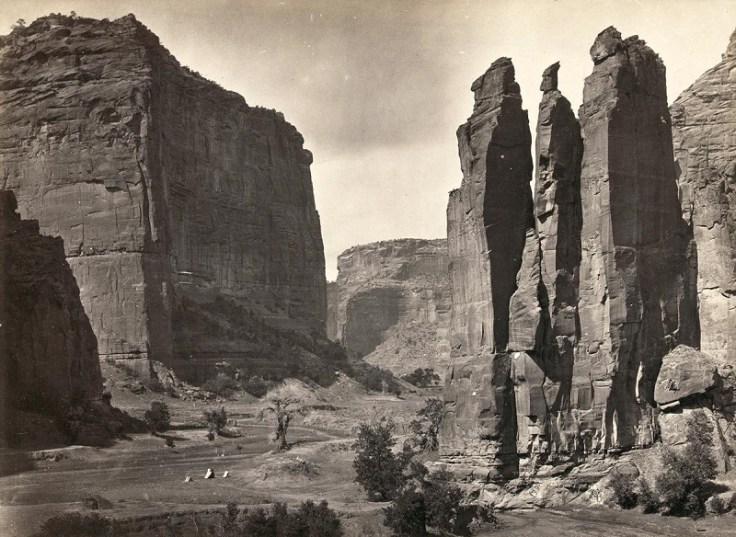
The American West, 150 Years Ago

In the 1860s and 70s, photographer Timothy O’Sullivan created some of the best-known images in American History. After covering the U.S. Civil War, (many of his photos appear in this earlier series), O’Sullivan joined a number of expeditions organized by the federal government to help document the new frontiers in the American West. The teams were composed of soldiers, scientists, artists, and photographers, and tasked with discovering the best ways to take advantage of the region’s untapped natural resources. O’Sullivan brought an amazing eye and work ethic, composing photographs that evoked the vastness of the West. He also documented the Native American population as well as the pioneers who were already altering the landscape. Above all, O’Sullivan captured — for the first time on film — the natural beauty of the American West in a way that would later influence Ansel Adams and thousands more photographers to come.


Tags: images, artlandscape, tourism, historicalUSA.

Source: www.theatlantic.com

Whose Heritage? Public Symbols of the Confederacy

“In [recent years], the South’s 150-year reverence for the Confederacy was shaken. Public officials responded to the national mourning and outcry by removing prominent public displays of its most recognizable symbol [the flag]. It became a moment of deep reflection for a region where the Confederate flag is viewed by many white Southerners as an emblem of their heritage and regional pride despite its association with slavery, Jim Crow and the violent resistance to the civil rights movement in the 1950s and 1960s.”

Source: www.splcenter.org

Just a few more links that I’ve added to the article, Cultural Meaning in Moving Monuments.  Right now, many people are calling for the removal of all memorials that honor the Confederacy and the call for the removal of all Confederate monuments is in full swing.  


Tags: monuments, the South, architectureracecultural norms, landscape.

Cultural Meaning in Moving Monuments

The protests in Charlottesville, VA in August 2017 were all about Confederate statues, and they were never about monuments all at the same time.  This video from HBO’s Vice news has some f-bombs, but frankly, that isn’t the most disturbing content of this unflinching look into the Alt-Right/White nationalist protests and the subsequent counter-protests.  Despite the graphic display of violence, overt racism, and coarse language, I find the video incredibly illuminating and insightful.  It is hard to sanitize and sugar-coat the facts and still give an accurate portrayal of these events.

As I said, it’s about the statues, but not truly.  At stake is the control over public space and the normative messages within the cultural landscape.  Who decides what history gets etched into our public squares?  Who’s heritage? What are the meanings within this landscape?  Even 20 years ago, the thought of marshaling political power in Southern cities and states to remove Confederate statues was unthinkable what these symbols meant is different then what they were mean today.  Modern southern politicians are seeing that supporting them vigorously is the new lost cause. Could we have a cultural landscape that has no public memorials to the Confederacy in 25 years?  The call for the removal of all Confederate monuments is in full swing. What would that say about the society that restructured the landscape?  The cultural landscape isn’t just a reflection of society; it also shows political, ethnic, cultural and economic struggles to as “who we are” and what our communal values are continually get remade.

The symbols of the Confederacy have long been venerated by some as symbols of southern heritage, but implicitly a white heritage.  Today, many are seeking to create public spaces that foster an sense of inclusion of African Americans into that definition of “who we are” in the public places.  In May 2017, New Orleans removed some of their Confederate statues, and Mayor Mitch Landrieu gave a powerful speech that contextualizes (one perspective on the) historical meanings embedded in these statues.  I find his perspective to be the most appropriate for a South that respects all of its citizens and honors its past.

FURTHER READING:  Geographer Jonathan Leib gives a fantastic analysis of the competing politics of the juxtaposition of Confederate statues and Arthur Ashe in Richmond, VA.  Some geographers (Derek Alderman and Joshua Inwood) in an op-ed argue that this is the time for the Trump administration to explicitly repudiate white nationalism.

Source: geographyeducation.org

I added some links to this old article to include a fifth example, that of Charlottesville, VA. 


Tags: monuments, the South, architectureracecultural norms, racism, landscape.
Introduction to AP* Human Geography

“Are you interested in what’s happening in your global community? Explore economic, social, political, and environmental issues through the lens of geography. By exploring human influences and patterns, you can better understand the world around you, make predictions, and propose solutions to current issues. In this course, you will investigate geographic perspectives and analyze historical and current patterns of migration, population, political organization of space, agriculture, food production, land use, industrialization and economic development.

In addition, you will learn helpful strategies for answering multiple-choice questions and free response essay questions on the AP Human Geography test. Each of the seven modules in this course aligns with the concepts in the Advanced Placement* Human Geography course.

This course is specifically designed for students who are interested in learning more about the AP Human Geography course before enrolling, supplementary support and exam review, and for use in blended learning classrooms.”

Source: www.edx.org

This isn’t for everyone, but if you are interested in a 14 week online course about AP Human Geography offered through the University of Texas, you might want to consider this.  It’s free (or $49 for a validated certificate to be included). For a program that offers a full Master’s degree, Elmhurst College offers one with an emphasis in AP Human Geography.     


Tags: APHG, teacher training, geography education.


Self-driving technology and highway trucks with no one at the wheel

Technological innovation and automation are transforming entire industries. As self-driving trucks hit the road, what could possibly go wrong?

Source: www.youtube.com

What jobs can be automated?  This is a question I ask all of my students because job disruption is something that every future wage earner should consider as they plan out their careers.  Would you be outsource-able? Could technology render your skill set unnecessary in the future?  What are the impacts of creative destruction on the economic, cultural, and political characteristics of a place?  How would those changes impact regions? 


Tagseconomicindustry, laborglobalizationtransportation, unit 6 industry.

Create a free website or blog at WordPress.com.

Up ↑