Search

GEOGRAPHY EDUCATION

Supporting geography educators everywhere with current digital resources.

Out of the Mouth of Babes…

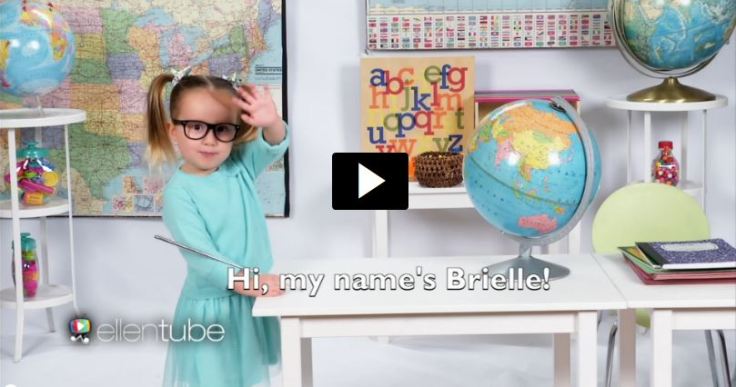
Brielle, Ellen’s periodic table expert is back and now taking on world countries. Are you ready to learn a thing or two from this 4-year-old whiz? Stay tuned for more Brielle-iant episodes!

Source: ellentube.com

If Ellen says she is awesome and adorable, it’s because she’s awesome and adorable. 


Tags: fun, trivia.

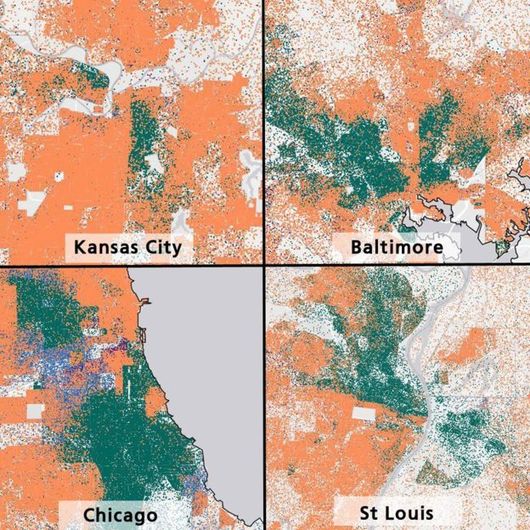
Why don’t black and white Americans live together?

In many parts of the US, Americans of different races aren’t neighbours – they don’t go to the same schools, they don’t always have access to the same services.

Source: www.bbc.com

This article is filled with good geography (and more specifically AP Human Geography) vocabulary.  Redlining, blockbusting, and racial covenants are all discussed as spatial process that have shaped socioeconomic and racial characteristics in American cities. 


Tags: neighborhood, urban, socioeconomic, racepoverty, spatialhousing.

Eratosthenes calculation for the size of the earth around 240 BC

Source: www.youtube.com

Eratosthenes is often referred to as the “father of geography” for creating meridians and parallels on his maps to organize global information, classifying climatic zones, and as shown in the video, calculating the circumference of the Earth. Plus, he coined the terms so he gets the credit. If you have never pondered the meaning of the word “geometry,” the accomplishments of Eratosthenes will certainly show that the mathematical prowess was at the heart of expanding our collective geographic knowledge. 


Tagsmapping, math, location, historical.

Ptolemy’s Map and Geographia

Source: www.youtube.com

Who was Ptolemy and what were some important contributions to geography?  This student-produced video does a nice of introducing him to a modern audience.

Eratosthenes calculation for the size of the earth around 240 BC

Source: www.youtube.com

Eratosthenes is often referred to as the “father of geography” for creating meridians and parallels on his maps to organize global information, classifying climatic zones, and as shown in the video, calculating the circumference of the Earth. Plus, he coined the terms so he gets the credit. If you have never pondered the meaning of the word “geometry,” the accomplishments of Eratosthenes will certainly show that the mathematical prowess was at the heart of expanding our collective geographic knowledge. 


Tagsmapping, math, location, historical.

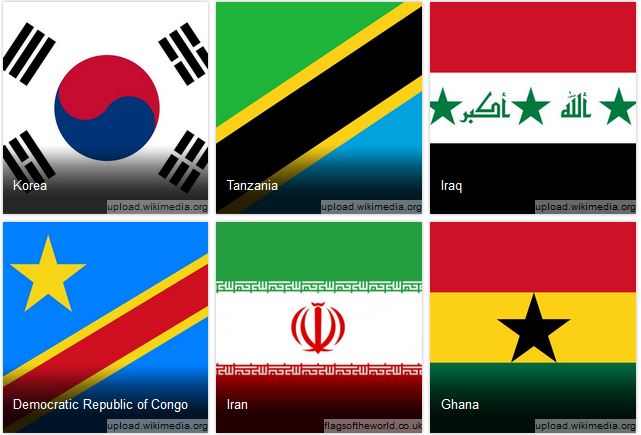
QUIZ: Can you match the country to what it used to be called?

France has not always been called France.

Source: matadornetwork.com

Everybody know that Istanbul was Constantinople, but some countries have also known by other names.  This quiz of 18 countries is fairly easily, but I must object to the website’s characterization for a perfect score: “You’re basically a professional historian.”  The word you were looking for was geographer…and if you now have a song stuck in your head, here is the They Might Be Giants version and the old school Four Lads version of Istanbul (Not Constantinople)–you’re welcome. 


TagsCanada, trivia, games, place, toponyms.

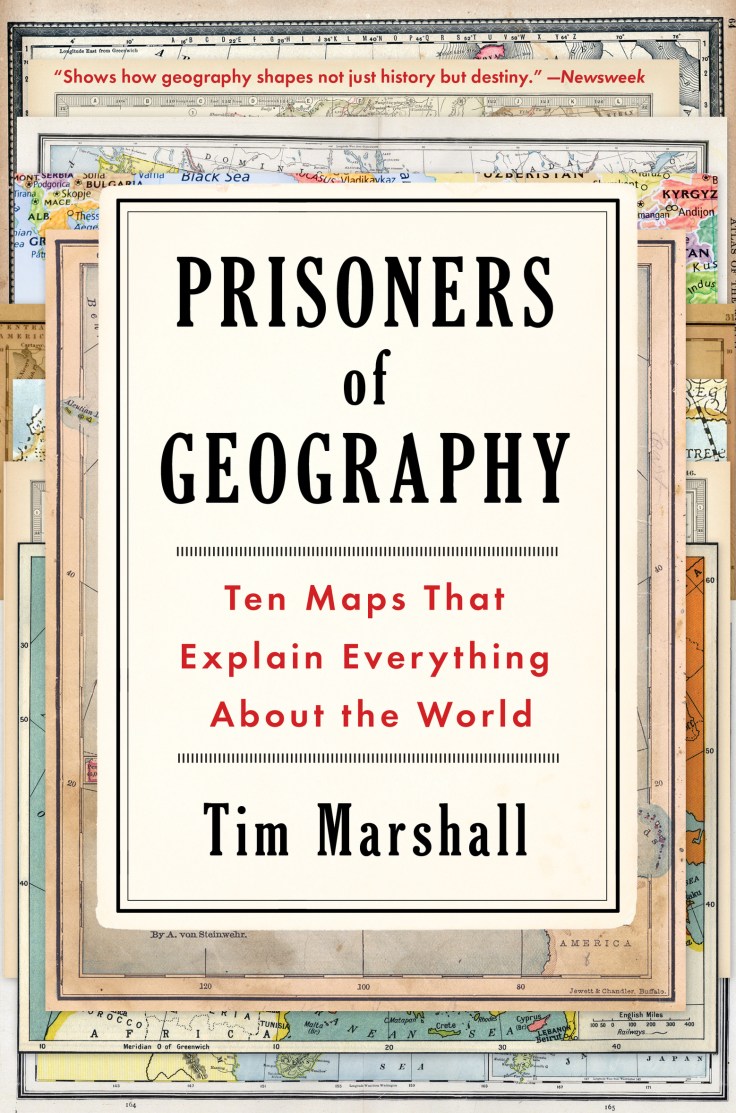
How geography shapes international politics

Tim Marshall explains how world geography colors national development and foreign relations.

Source: www.washingtonpost.com

I haven’t read the book yet, but am interested to see how Tim Marshall handles the topic to see it is a nuanced telling of how geographic impacts politics or if it strays into environmental determinism.  Based solely on the reviews it should be worth a read and my copy is on it’s way. 


Tags: book reviews, historical, geopolitics.

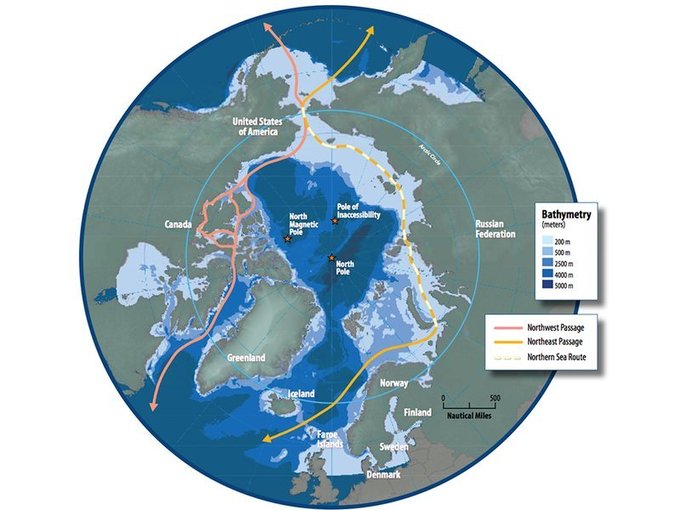
If Atlantic and Pacific Sea Worlds Collide, Does That Spell Catastrophe?

While the Arctic ice melt is opening up east to west shipping lanes, some 75 animals species might also make the journey


Tags: physical, weather and climate, Arcticbiogeography, climate change.

Source: www.smithsonianmag.com

Women expand their home on the range

According to the U.S. Agriculture Department, the number of women-operated farms increased from 5 percent to 14 percent between 1978 and 2007. Today, counting principal operators and secondary operators, women account for 30 percent of all farmers in the United States, or just under 1 million.Some women regard themselves less as entrepreneurs and more as gentle stewards of the land, or bulwarks against corporations overtaking family farms and developers sweeping in with seductive offers. Others are drawn to the farm-to-fork movement, where locally grown produce and meat hold much greater appeal. Also, more women are inheriting farms and ranches.

Source: www.washingtonpost.com

When we discusss gender in an agricultural context, it is usually to point out that around the world, women are approximately half of the agricultural workforce, and in less developed countries they often comprise the majority of the the agricultural sector.  U.S. students find this shocking, given that traditional cultural norms often perceive farm work as a very masculine domain.  However, that has slowing been changing in the last 30 years as more women in the U.S. are owning and operating farms.  There isn’t one simple reason to explain this shift, but it is indicative of broader social changes.


Tags: gender in agriculture, cultural norms, gender, agriculture, labor.
Create a free website or blog at WordPress.com.

Up ↑