Search

GEOGRAPHY EDUCATION

Supporting geography educators everywhere with current digital resources.

Tag

USA

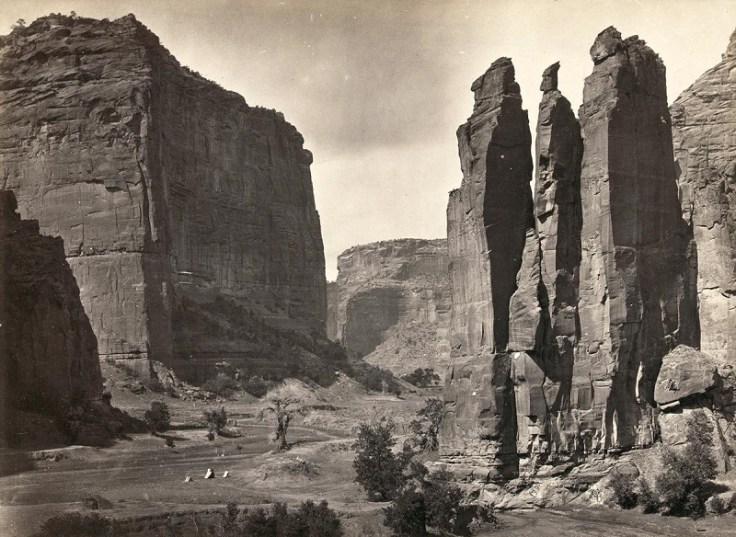
The American West, 150 Years Ago

In the 1860s and 70s, photographer Timothy O’Sullivan created some of the best-known images in American History. After covering the U.S. Civil War, (many of his photos appear in this earlier series), O’Sullivan joined a number of expeditions organized by the federal government to help document the new frontiers in the American West. The teams were composed of soldiers, scientists, artists, and photographers, and tasked with discovering the best ways to take advantage of the region’s untapped natural resources. O’Sullivan brought an amazing eye and work ethic, composing photographs that evoked the vastness of the West. He also documented the Native American population as well as the pioneers who were already altering the landscape. Above all, O’Sullivan captured — for the first time on film — the natural beauty of the American West in a way that would later influence Ansel Adams and thousands more photographers to come.


Tags: images, artlandscape, tourism, historicalUSA.

Source: www.theatlantic.com

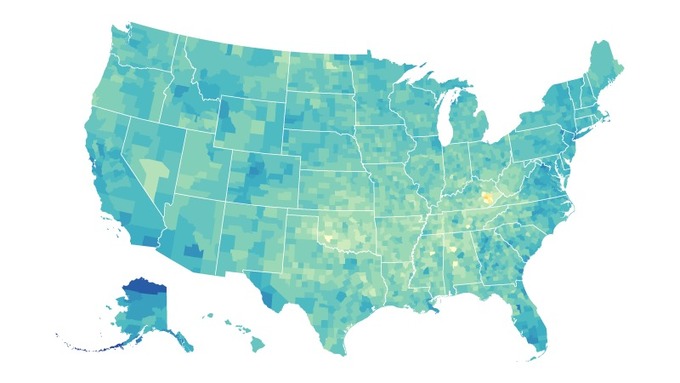
As U.S. Life Expectancies Climb, People In A Few Places Are Dying Younger

“The wealthiest country, which spends the most money on care for the sick, has far from the best health outcomes. Babies born in eastern Kentucky, along the Mississippi Delta and on Native American reservations in the Dakotas have the lowest life expectancies in the country. If current health trends continue, they aren’t expected to live much beyond an average of 70 years. Meanwhile, a baby born along the wealthy coast of California can be expected to live as long as 85 years, the authors found.

Source: fivethirtyeight.com

Questions to Ponder: What geographic and socioeconomic factors shape mortality rates?  What is better about society today then before?  Has anything worsened?  How come?


Tagsmortality, medical, developmentregions, USA, population, statistics.

From Risking His Life To Saving Lives, Ex-Coal Miner Is Happy To Take The Paycut

The “Brave New Workers” series tells stories of Americans adapting to a changing economy. This week: after years working in the coal mines of West Virginia, a miner charts a new career in health care.

Source: www.npr.org

This series, Brave New Workers, is all about workers adapting to the shifting economic geographies.  Some industries are seen as foundational to a community and there is much angst about the loss of particular jobs.  New technologies are disruptive, and the process of job creation/job loss is sometimes referred to as creative destruction.  My uncle, once about a time, was a typewriter repairman.  Clearly, the personal computer was going to render his niche in the economic system obsolete so he became a web developer.  Not everyone successfully makes a seamless transition, but this collection of stories is emblematic of the modern American worker, needing to nimbly adapt to the labor market.


Tagspodcast, industry, manufacturinglabor, economic, USA.  

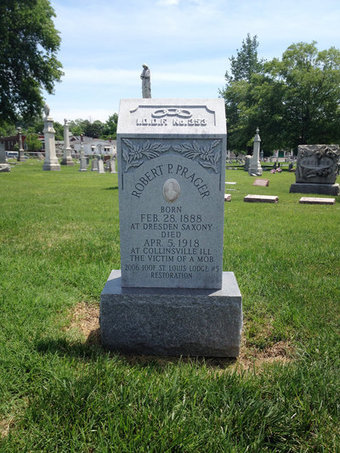
During World War I, Propaganda Erased Visible Markers of German Culture

As the U.S. entered World War I, German culture was erased as the government promoted the unpopular war through anti-German propaganda. This backlash culminated in the lynching of a German immigrant.

Source: www.npr.org

German-Americans are America’s largest single ethnic group (if you divide Hispanics into Mexican-Americans, Cuban-Americans, etc). Yet despite their numbers, they are barely visible. During the first world war, parts of America grew incredibly anti-German. Many stopped speaking German and anglicized their names. “In 1915 about 25% of all high school students in America studied German, but by the end of the World War I German had become so stigmatized that only 1 percent of high schools even taught it.”


Tagsculture, historical, ethnicityUSA.


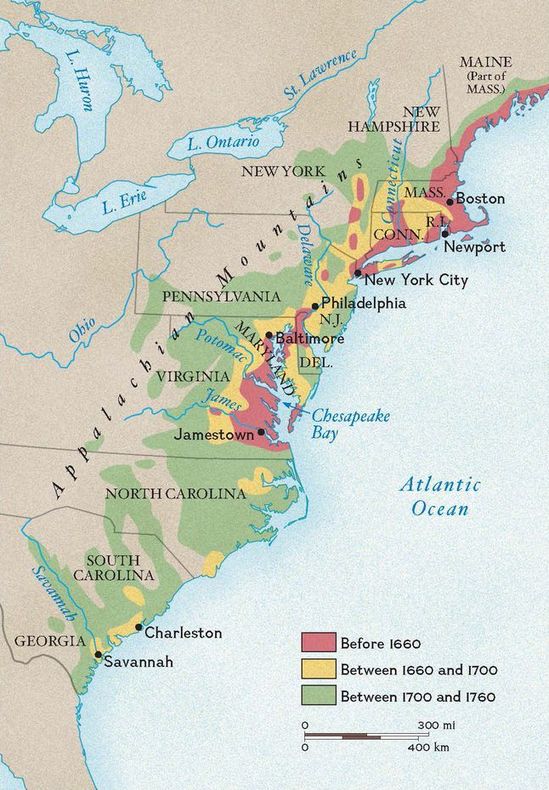
Growth of Colonial Settlement

European settlement began in the region around Chesapeake Bay and in the Northeast, then spread south and west into the Appalachian Mountains.


Questions to Ponder: How did European immigrants settle along the East Coast? How did geography determine settlement patterns? 


Tagsmigrationmap, historicalcolonialism, USA, National Geographic.

Source: www.nationalgeographic.org

America’s Empty-Church Problem

The culture war over religious morality has faded; in its place is something much worse.


In his book Twilight of the Elites, the MSNBC host Chris Hayes divides American politics between “institutionalists,” who believe in preserving and adapting the political and economic system, and “insurrectionists,” who believe it’s rotten to the core. The 2016 election represents an extraordinary shift in power from the former to the latter. The loss of manufacturing jobs has made Americans more insurrectionist. So have the Iraq War, the financial crisis, and a black president’s inability to stop the police from killing unarmed African Americans. And so has disengagement from organized religion.

Source: www.theatlantic.com

Forgive the inflammatory title and the partisan source of this article if those are things that would worry you.  This discussion of how secularization is (and is not) changing the nature of American politics gives people much to consider–no matter where you fit on any political or religious spectrum. 


Tagsop-ed, religion, culture, political, USA.

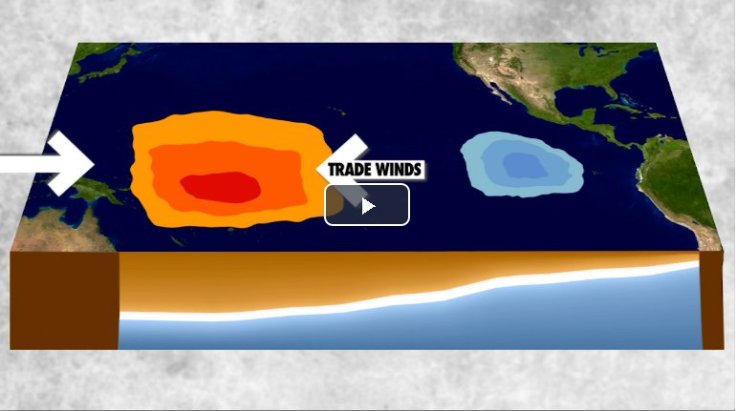
What are El Niño and La Niña?

“El Niño and La Niña are complex weather patterns resulting from variations in ocean temperatures in the Equatorial Pacific–officially known as the El Niño-Southern Oscillation (ENSO) cycle. These deviations from normal surface temperatures can have large-scale impacts not only on ocean processes, but also on global weather and climate.”

Source: oceanservice.noaa.gov

This short video from NOAA is an excellent summary that explains the ENSO cycle.  The video has a particular emphasis on how changing patterns in the Pacific Ocean currents can impact weather patterns in various regions of the United States.  


Tagsphysical, weather and climateregions, USA.

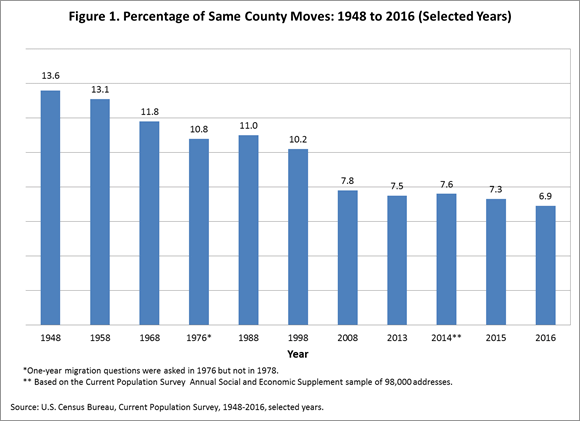
Why Did Americans Stop Moving?

The Census reports that a record-low share of Americans are moving. A recent paper suggests government policies might be curbing mobility.

Source: www.citylab.com

In the past, when I’ve taught world regional geography, I’ve often discussed a major regional characteristic of North America is the high degree of internal mobility…that appears to be changing and it brings up more questions than answers.  


Questions to Ponder: Are there regions in the United States where people are less likely to move?  How does mobility impact economic, cultural, and political patterns in the United States? Why are less people moving now than before?  


Tags: mobilitymigration, USA, statistics.

Minnesota becomes a gateway to Canada for rejected African migrants

More than 430 African migrants have arrived in Winnipeg since April, up from 70 three years ago. Most come by way of Minneapolis, sometimes after grueling treks across Latin America and stints in U.S. immigration detention.


A tangle of factors is fueling the surge: brisker traffic along an immigrant smuggling route out of East Africa, stepped-up deportations under the Obama administration and the lure of Canada’s gentler welcome. Advocates expect the Trump administration’s harder line on immigration will spur even more illegal crossings into Canada, where some nonprofits serving asylum seekers are already overwhelmed. Now Canadians worry smugglers are making fresh profits from asylum seekers and migrants take more risks to make the crossing.


Tags: migration, USACanada, borders, political.

Source: www.startribune.com

Create a free website or blog at WordPress.com.

Up ↑