Search

GEOGRAPHY EDUCATION

Supporting geography educators everywhere with current digital resources.

Tag

USA

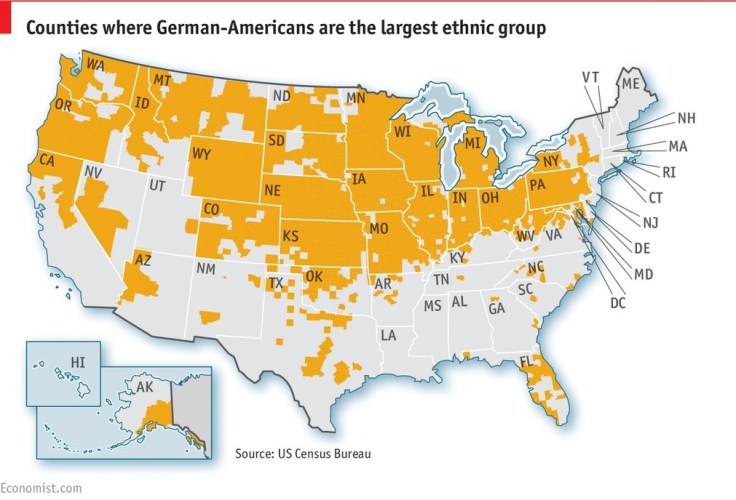
The silent minority

America’s largest ethnic group has assimilated so well that people barely notice it


German-Americans are America’s largest single ethnic group (if you divide Hispanics into Mexican-Americans, Cuban-Americans, etc). Yet despite their numbers, they are barely visible. During the first world war, parts of America grew hysterically anti-German. Many stopped speaking German and anglicized their names. The second world war saw less anti-German hysteria, but Hitler and the Holocaust gave German-Americans more reasons to hide their origins.


Tagsculturemigrationhistorical, ethnicityUSA.

Source: www.economist.com

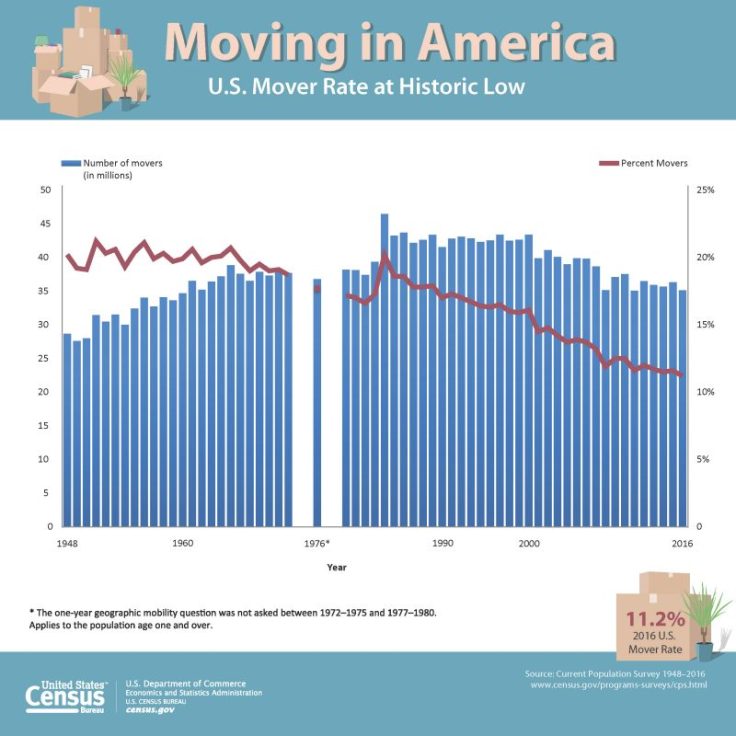
Americans Moving at Historically Low Rates

The percentage of Americans moving over a one-year period fell to an all time low in the United States to 11.2 percent in 2016.

Source: www.census.gov

In the past, when I’ve taught world regional geography, I’ve often discussed a major regional characteristic of North America is the high degree of internal mobility…that appears to be changing and it brings up more questions than answers.  


Questions to Ponder: Are there regions in the United States where people are less likely to move?  How does mobility impact economic, cultural, and political patterns in the United States? Why are less people moving now than before?  


Tags: mobilitymigration, USA, statistics.

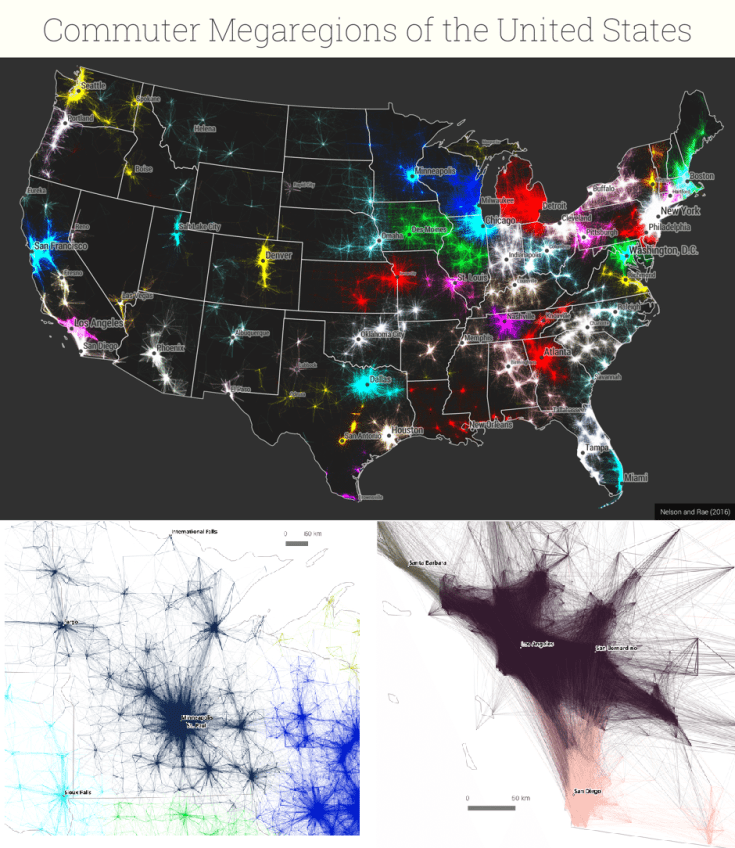
America’s ‘Megaregions’ using Commuter Data

New maps use math to define the amorphous term.

Source: www.citylab.com

By now I’m sure many of you have seen some iteration of this research and data visualization circulating through social media outlets (you can see the article from City Lab, Atlas Obscura or an urban planning program).  We use terms like the greater metropolitan area to express the idea that areas beyond the city boundaries and even beyond the metropolitan statistical areas are linked with cities.  These ‘mega-regions’ are in part the hinterlands of a city, a functional region where the cities act as hubs of economic regions.   

Tags: regions, urban, transportationeconomicvisualization, mapping, USA, planning.

What This 2012 Map Tells Us About America, and the Election

History, race, religion, identity, geography: The 2012 election county-level map has many stories to tell, including about the 2016 race.

Source: www.nytimes.com

The coverage of this election feels less objective than in past years (maybe that’s just my perception, but that is why I’ve shared less electoral resources than in past years).  This article show’s good map analysis and electoral patterns without much of any ideological or partisan analysis of the political platforms.  


Tags: electoral, political, mapping.

Why America’s ‘nones’ left religion behind

With the percentage of U.S. adults who do not identify with a religious group growing, we asked these people to explain, in their own words, why they left.

Source: www.pewresearch.org

The United States’ population is becoming increasingly secularized.  The U.S. used to be predominantly a white, Christian country but that is no longer the case.  As religion becomes less of a factor in the lives of many individuals, it also has larger cultural ramifications. 


Tags: culturereligionUSA, Christianity.

Remembering September 11th

Video and Photographs of the event. All media is from the internet and not my own. I compiled all media from the internet and edited them together to tell the story of the deadliest attack on America.

Source: www.youtube.com

The compilation above was created by a teacher who realized that now none of his students were alive to remember how emotional it was for people to watch the horrific news unfold.  Additionally, this video of how Canadians helped the U.S. paired with this lesson plan from the Choices Program will help students explore the human dimension of the September 11 attacks as will this lesson from Teaching History. For a geospatial perspective on 9/11, this page from the Library of Congress, hosted by the Geography and Map Division is a visually rich resources (aerial photography, thermal imagery, LiDAR, etc.)  that show the extent of the damage and the physical change to the region that the terrorist attacks brought.  The images from that day are a part of American memory and change how the event is remembered and memorialized in public spaces (if you want a touching story of heroism, the Red Bandana is moving). .


21 charts that explain how the US is changing

The US is a big, complicated place that has undergone some big changes over its 238 years, and even in the last few decades. Here are 21 charts that explain what life is like today in the US — who we are, where we live, how we work, how we have fun, and how we relate to each other.


Tags: USA, map, map archives

Source: www.vox.com

‘Normal America’ Is Not A Small Town Of White People

“The sense that the normal America is out there somewhere in a hamlet is misplaced: it’s not in a small town at all.  I calculated how demographically similar each U.S. metropolitan area is to the U.S. overall, based on age, educational attainment, and race and ethnicity.1 The index equals 100 if a metro’s demographic mix were identical to that of the U.S. overall.”

Source: fivethirtyeight.com

We often do imagine that your typical American is from the Heartland, and that very term, strengthens that connotation.  100 years ago that was true that your average American was one a farm or a small town, as 72% of Americans lived in rural areas.  Today, that is decidedly not the case but we still sometimes think (and act) as if it were (84% today live in urban areas).  The United States is urban, diverse, and bi-coastal in it’s primary demographic composition.   


Tag: rural, migration, USA, census.

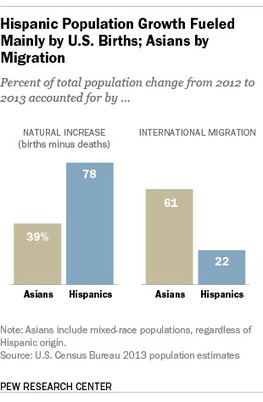
U.S. Hispanic and Asian populations growing, but for different reasons

Both Hispanics and Asians been among the fastest-growing racial/ethnic groups in recent years, but since 2010, number of Asians have increased at a faster rate.

Source: www.pewresearch.org

It is often noted that the cultural composition of the United States is undergoing a shift, referred to by some as the “Browning of America.”  The story of Asian and Hispanic growth in the United States are occurring simultaneously, which makes many assume that they are growing for the same reasons.  The data clearly shows that this is not the case.  

Tags: migration, USA, ethnicity.

Create a free website or blog at WordPress.com.

Up ↑