Search

GEOGRAPHY EDUCATION

Supporting geography educators everywhere with current digital resources.

Tag

colonialism

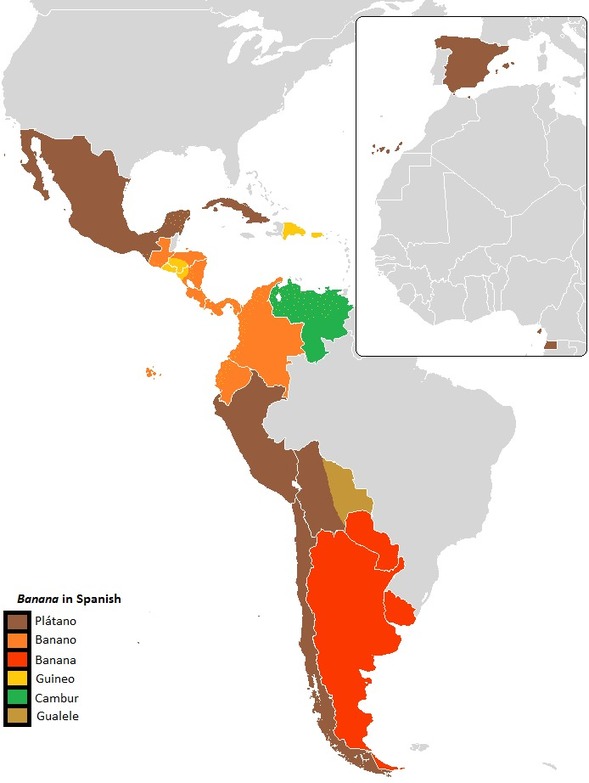
How to Say ‘Banana’ in Spanish

Source: i.imgur.com

I’ve lived in both the plátano and banano sub-regions of the Spanish-speaking realm and this discrepancy was one I always found curious (likewise, peanut butter is called crema de cacahuate in Mexico, but mantequilla de maní in Costa Rica). I’ve had many humorous encounters with friends from throughout the Spanish-speaking world when words that mean one thing in a particular country have VERY different connotations in another.


Questions to Ponder: Why do languages have different vocabularies in distinct places?  Why makes a language especially prone to a varied set of regionalized terms?


Tags: language, colonialismdiffusion, culture, mapping, regions.
When Mexico Was Flooded By Immigrants

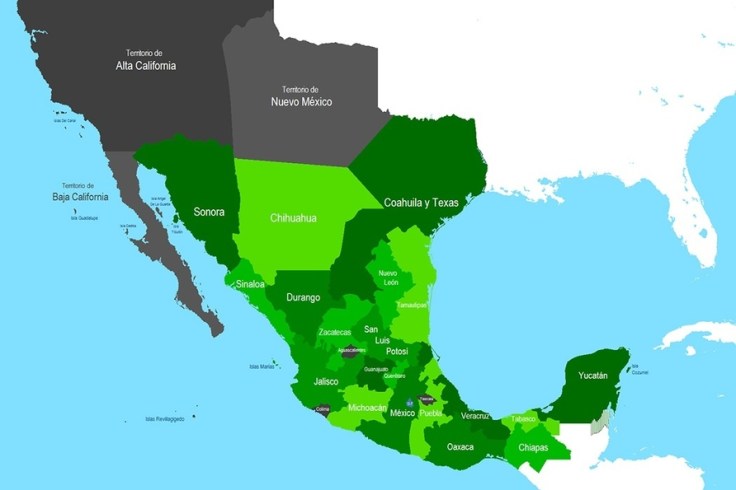
In the early nineteenth-century, Mexico had a problem with American immigrants.

Source: daily.jstor.org

A century and a half ago, the immigration debate and geopolitical shifts in power on the United States-Mexico border reflected a profoundly different dynamic than it does today.  This history has enduring cultural impacts on southwestern states that had the international border jump them.


Tags: culture, demographicsmigration, North Americahistorical, colonialism, borders, political.

African borders

“About the history of the creation of Africa borders and debates about African borders.”

Source: mycontinent.co

Disregard the rough English grammar; this is a nice article to show some of the historical, ethnic, linguistic and political complexities behind African borders.  This would be a great supplemental article to help AP Human Geography students to prepare for Question 2 of the 2014 AP Human Geography Exam that focused on superimposed boundaries within an African context.  

TagsAPHG, language, Africa, colonialism, borders, political.

Iraq’s Current Devolution

“A radical fringe Islamic group names ISIS is fighting to establish a extremist Islamic state in Iraq and Syria…and beyond. They control eastern Syria, western Iraq, just took control of Iraq’s 2nd largest city of Mosul and are advancing on the capital Baghdad.  In this podcast, the professor John Boyer outlines just a few of the contributing factors to why this significant event is taking place, the geographic/historic background of the state, and the consequences for the future of the region.”

Source: www.youtube.com

If you haven’t yet discovered John Boyer, a.k.a. the Plaid Avenger,  I recommend exploring his site.  He has numerous resources for world regional geography and current global affairs.  His colorful persona is highly entertaining for college age-students as his class attracts over 3,000 students each semester (you can decide for yourself whether that personality works for you and your classroom).  This particular ‘plaidcast’ discussion focuses on Iraq’s current devolution and possible total collapse. 

Tags: SyriaIraq, MiddleEast, conflict, political, geopoliticsborders, colonialism, devolution.

Mass Sacrifice Found Near Aztec Temple

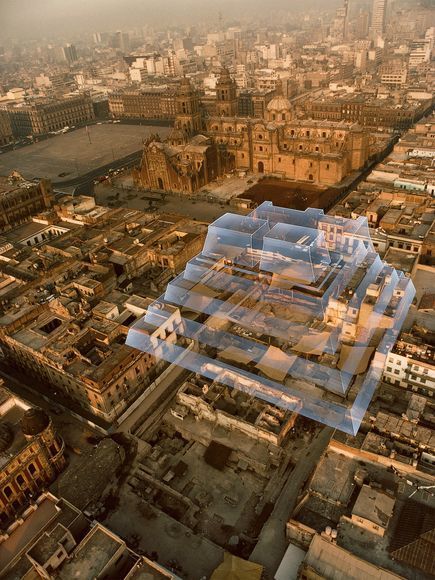
Below street level in Mexico City, archaeologists have found a jumble of bones dating to the 1480s.

In the 1970s, construction workers unearthed numerous archaeological finds as the subway was being constructed.  The Mexican government decided to clear the several block of old colonial buildings to reveal the Templo Mayor, the ancient Aztec religious center.  Not coincidentally, the Spaniards built their religious center in the same place.  During the colonial era, the indigenous residents who spoke Spanish in Mexico City still referred to this portion of the city as la pirámide.  Today more finds such as this one are continuing to help us piece together the past of this immensely rich, multi-layered place filled with symbolic value.

Tags: Mexico, LatinAmerica, historical, images, National Geographic, colonialism, place and culture.

See on news.nationalgeographic.com

The Sun Never Sets: How Facebook Connections Mirror Old Empires

Via Scoop.itGeography Education

How Facebook connections mirror old empires EIGHT years ago Facebook launched as an online social network connecting a small college community from a dorm room at Harvard University.

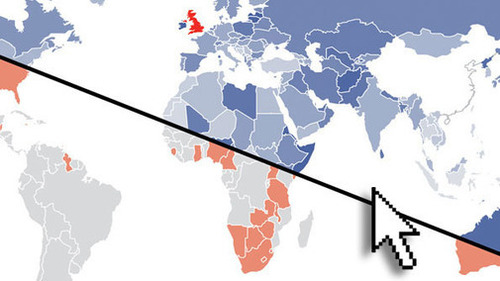
These graphic show how in a post-colonial world, former colonies are still socially intertwined in a cultural network that mirrors the empires of yesteryear.  Why are these modern social networks so similar to imperial patterns?  What economic explanations are there for these patterns?  What is the cultural impact?

Via www.economist.com

Create a free website or blog at WordPress.com.

Up ↑