Search

GEOGRAPHY EDUCATION

Supporting geography educators everywhere with current digital resources.

Tag

conflict

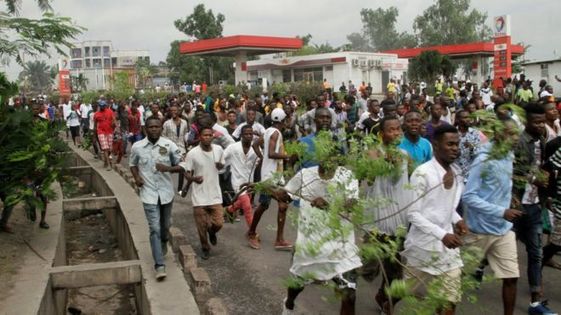
DR Congo election: 17 dead in anti-Kabila protests

Three police officers and 14 civilians die in Kinshasa, capital of DR Congo, during protests calling for President Joseph Kabila to step down.

Source: www.bbc.com

The DRC is a land of great wealth but is impoverished.  This may seem strange to outsiders but the weakness of their social institutions pays a key role in keeping the economy from reaching it’s potential.  Strong institutions matter more than resources for sustained economic development. The most important line in the article was the last one: “DR Congo has never had a smooth transfer of power since independence more than 55 years ago.”  That is a staggering historical burden.  
 

Tags: Congo, political, conflict, Africa.

Introducing ISIS

“The invasion of Iraq was supposed to turn the country into a democracy that posed no threat to the United States, or the rest of the world. Thirteen years later, Iraq has collapsed into three warring states. A third of the country is controlled by ISIS, who have also taken huge amounts of territory in Syria. VICE correspondent Ben Anderson gains exclusive access to the three front lines in Iraq, where Sunni, Shiite and Kurdish forces are fighting for their lives. Anderson visits with the Russian military forces in Syria, meets captured ISIS fighters in Kurdistan, and interviews US policymakers about how the situation in Iraq spun out of control.”

Source: www.youtube.com

Many young students are especially baffled at how a terrorist organization can seize control of large chunks of territory.  If you are looking for a good video introduction that explains how and why ISIS was able to gain power and than gain and maintain territory, this is it (it’s classroom safe despite the source). 


Tags: Syria, war, conflict, political, geopolitics, Iraq, devolution, terrorism, ISISMiddle East.

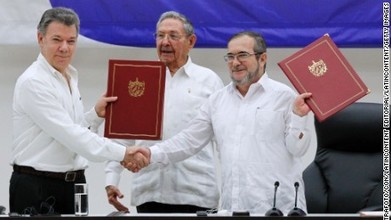
FARC-Colombia peace deal finalized

Negotiators seeking to end the insurgency in Colombia, one of the world’s longest-running conflicts, said they had reached a final peace deal.

Source: www.cnn.com

Farclandia has long been an insurgent state where the Colombian government had no real power to enforce the rule of law and their sovereignty over this area that all the political maps say are Colombia.   This shadowy place became a place where drug cartels could operate freely and many of the concessions that Colombia is making for this deal to happen involve amnesty for past crimes. 


TagsSouth America, Colombiapoliticalnarcotics. conflict.

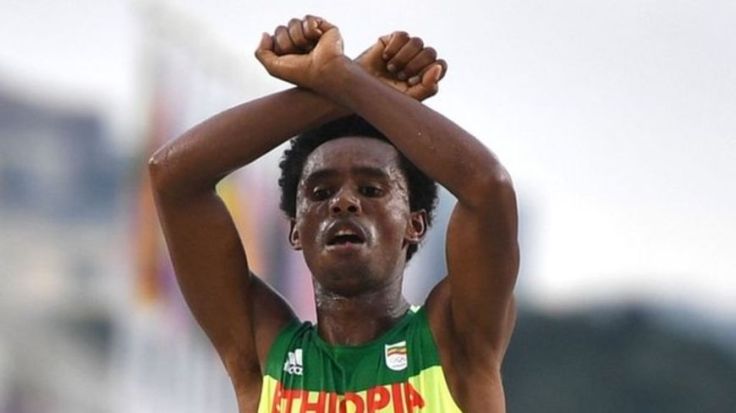
Ethiopian runner makes protest sign as he crosses line in Rio

Feyisa Lilesa crosses his arms as he wins a silver medal – a gesture used by his Oromo people at home to protest against the government.

Source: www.bbc.com

The Olympics can bring to interesting cultural and political issues to a larger international audience.  The Oromo people in Ethiopia are off our collective radar, but this marathoner made the world pay attention and start to ask questions about a part of the world that rarely gets global attention.  Some other examples of how you can link students’ interest in the Olympics to expand their understanding about the world include:

What was your favorite ‘teaching moment’ from the Olympics?

Tags:  political, conflict, sport.

Mexico’s Drug War

“Despite Mexico’s strengthening democracy and booming economy, the country’s security crisis rages on. Fifty thousand people have been killed in the past five years due to drug and organized crime-related violence.”

Source: www.youtube.com

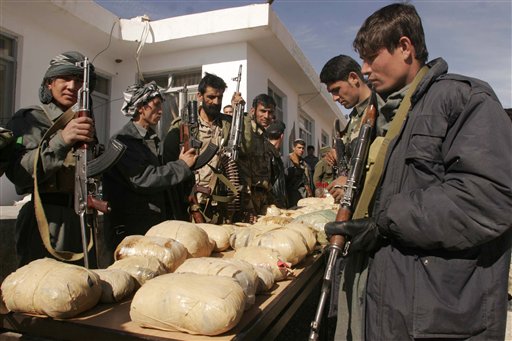
Drug trafficking between Mexico and the Unites States has been burdening both countries for decades. Violence, drug abuse, kidnappings, murders, and government corruption are just a few of the issues that have resulted from it. The Mexican cartela are the culprits behind all of these issues. This gang is funded by drug money. They even exchange drugs for weapons over the U.S border. Recently, many Mexican marijuana farmers have stopped production due to the legalization of pot in many U.S states. Because pot is being produced in smaller quantities in Mexico, the amount of trafficking over the border will decrease, additionally resulting in lower crime rates and violence at the border. The only sure way to help end the drug war is to end the use of illegal drugs in both Mexico and the United States, but that is easier said than done.


TagsMexico, conflictnarcotics.

Do The Math – Why The Illegal Business Is Thriving

“Globalization hit organized crime over the last decade and now is integral to its most profitable business — the international narcotics traffic. Once a regional problem involving a customer base of a few million, and barely a billion dollars in sales, the illegal drug industry is now a worldwide enterprise with tens of millions of hard core consumers spending hundreds of billions on opiates, cocaine and amphetamines and marijuana, as well as other drugs.”

Source: www.pbs.org

The United Nations Office on Drugs and Crime (UNODC) calls drug trafficking “a global illicit trade involving the cultivation, manufacture, distribution and sale of substances which are subject to drug prohibition laws.”  While some individuals are profiting off these drugs, the overall impact of the society and the places involved with the illegal trade is detrimental. 


Tags: globalization, conflictnarcotics.

How Syria Ruined the Arab Spring

How Syria Ruined the Arab Spring « | Foreign Policy | the Global Magazine of News and Ideas

Source: foreignpolicy.com

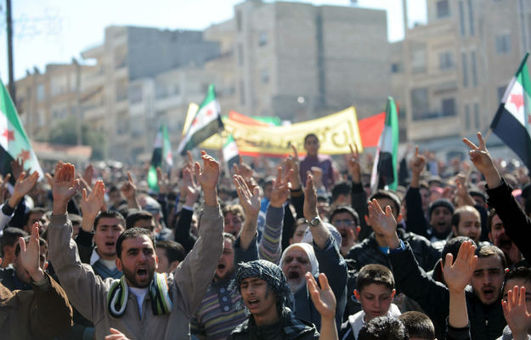
Unraveling the situation on the ground in Syria is much like opening a Russian nesting doll, it’s a battle, inside of a battle, inside of a battle. A complex series of local, regional, and global rivalries all playing out on the battle grounds of Syria, turning the country in a wasteland. It’s created a nightmare for the millions of non-combatants forced to flee, and those stuck within the borders. What started as Syrian leader Bashar al-Assad cracking down on Arab spring protesters in early 2011, quickly escalated into a civil war. Regional rivals Iran, and Saudi Arabia then got involved sending aid to differing sides. Soon, as a result of the rise of ISIS, the west and Russia chose to intervene. Lost in the greater game of Geo-politics is the sad, slow death of the optimism that accompanied the Arab Spring. As Marc Lynch laments in ‘How Syria ruined the Arab Spring’, all of the momentum was lost and forgotten when Al-Assad resorted to force and Syria became a pawn in regional and global geopolitics.


Tagsop-ed, Syria, war, conflict, political, geopolitics, Middle East.

Why Germany’s recognition of Armenian genocide is such a big deal

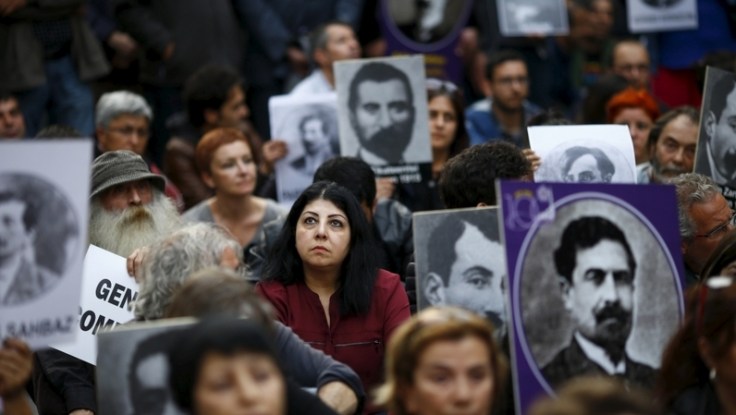
Armenian American journalist Liana Aghajanian says the German parliament’s decision is all the more groundbreaking because it was a politician of Turkish descent who pushed it through.


The German Bundestag’s overwhelming vote last week in favor of this resolution, with just one vote against and one abstention, brought both gratitude and anger. Armenian communities, many of them descendants of genocide survivors who are dispersed across the world, are grateful. Turkey, however, was incensed and recalled its ambassador to Germany. Many Turks see the vote as not just a threat to longstanding German-Turkish relations, but to Turkish national identity.

Source: www.pri.org

I’ve posted in about the Armenian genocide in the past, and until Turkey acknowledges that it was a genocide, this issue will continue to fester.  Considering that Germany has a large Turkish population and an obvious historical connection to genocide, this recognition is far more important some other random country taking this stance. 


TagsArmenia, genocidepolitical, conflict, TurkeyGermanywar, historical.  

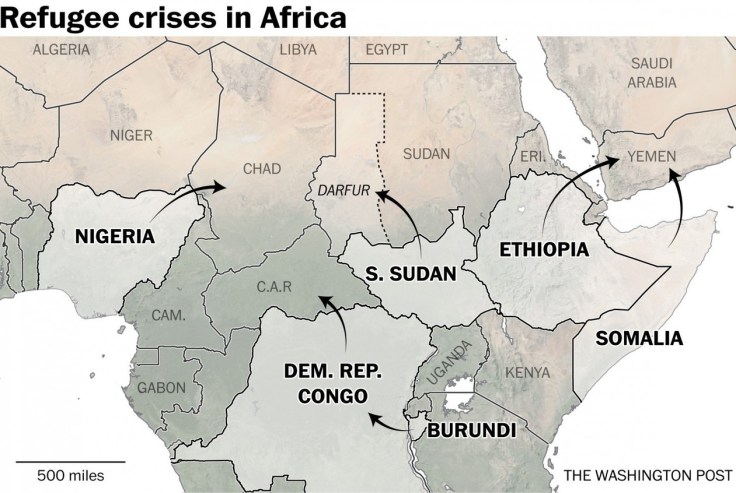
Why Africa’s migrant crisis makes no sense to outsiders

“Violence and insecurity are so bad that other war-torn countries have become sites of refuge.”


In 2015, nearly 100,000 Ethiopians and Somalis traveled by boat to Yemen, one of the world’s most dangerous countries. Last year, nearly 5,000 citizens of Congo, which is fighting powerful rebel groups, were seeking refuge in the Central African Republic, itself torn apart by civil war. And yet 10,000 Burundians have fled their country’s own growing civil unrest for Congo. Thousands of Nigerians escaping the extremist Islamist group Boko Haram have gone to Chad, where different strains of that same insurgency conduct frequent deadly attacks. 


Developing countries have long taken in a disproportionate number of the world’s refugees — roughly 80 percent, according to the United Nations. But even for migration experts and relief workers, the willingness of refugees to leave one war for another is shocking. It’s also proving an enormous challenge for humanitarian agencies, which are already overstretched and often not equipped to welcome refugees in countries that are still racked by conflict.


Tags: refugeesAfrica, migration, conflict, political, war

Source: www.washingtonpost.com

Create a free website or blog at WordPress.com.

Up ↑