Search

GEOGRAPHY EDUCATION

Supporting geography educators everywhere with current digital resources.

Tag

culture

Entomophagy: Bugs in the system

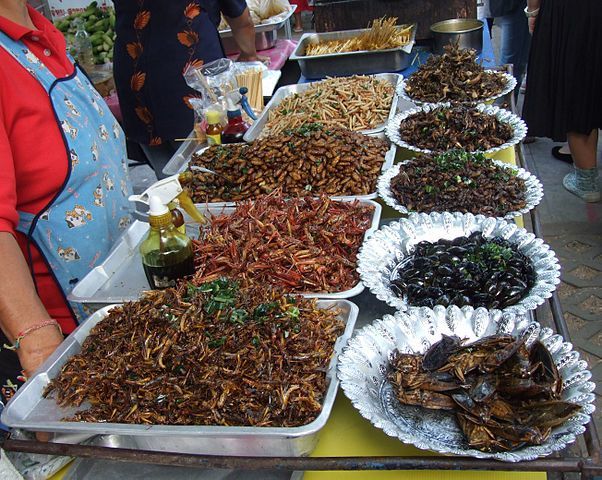
IT WOULD once have been scandalous to suggest the merits of eating insects; these days, it has become old hat. Western-educated entrepreneurs will sell you protein bars made from cricket flour. TED talks extol entomophagy’s virtue. Top-end restaurants in the West’s largest cities tout insect-based dishes.

Source: www.economist.com

While it might make economic, nutritional, and environmental sense, I’m sure that many are squeamish at the idea of insects primarily because in violates many deeply ingrained cultural taboos.  The main reasons listed in the video for promoting the production and consumption of more insects:

  1. Insects are healthier than meat.
  2. It is cheap (or free) to raise insects.
  3. Raising insects is more sustainable than livestock.


Questions to Ponder: Would you be willing to try eating insects?  How do you think this idea would go over with your family and friends?  What cultural barriers might slow the diffusion of this practice?    


Tagsfoodculturediffusion, economic, agriculture.
During World War I, Propaganda Erased Visible Markers of German Culture

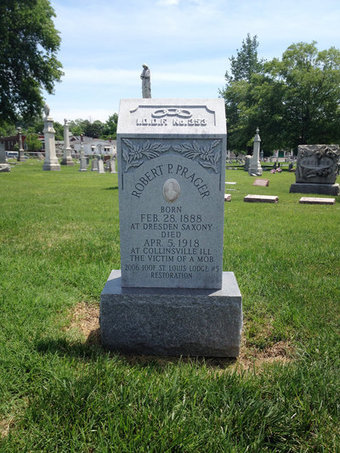
As the U.S. entered World War I, German culture was erased as the government promoted the unpopular war through anti-German propaganda. This backlash culminated in the lynching of a German immigrant.

Source: www.npr.org

German-Americans are America’s largest single ethnic group (if you divide Hispanics into Mexican-Americans, Cuban-Americans, etc). Yet despite their numbers, they are barely visible. During the first world war, parts of America grew incredibly anti-German. Many stopped speaking German and anglicized their names. “In 1915 about 25% of all high school students in America studied German, but by the end of the World War I German had become so stigmatized that only 1 percent of high schools even taught it.”


Tagsculture, historical, ethnicityUSA.


Memorializing Manzanar

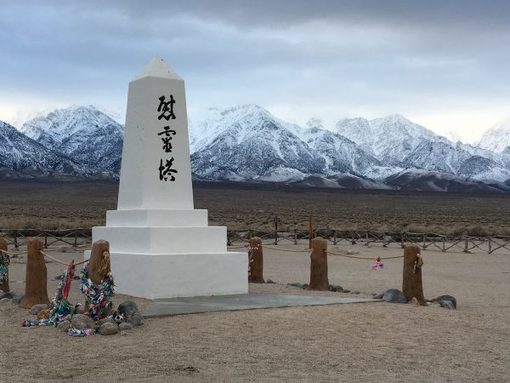
“During World War II the US government incarcerated over 110,000 Japanese Americans, in ten different detention centers throughout the United States.  One of these sites was Manzanar; in 1992, Manzanar was declared a National Historic Site. But apart from the cemetery, there was little there. The committee did not want to settle for a staid, sterile museum and so they worked with the National Park Service to rebuild portions of the camp exactly as they had been during the war. The most powerful symbol might be the site’s newest addition, a replica of the women’s latrine with a trough sink and row of five toilets with no dividers between them. It’s a stark reminder of the humiliation felt by many Japanese Americans during their incarceration.  The annual pilgrimage of Japanese-Americans and others will take place on April 29th, 2017.”

Source: 99percentinvisible.org

How we collectively remember history in the landscape?  Do you erase national embarrassments that open wounds of the past or is the act of memorialization cathartic and part of becoming a better country?  After Pearl Harbor, the U.S. listened to the fears of the public and military officials and interned U.S. citizens of Japanese ancestry.  Today, how this history is remembered is deeply important to many groups in the United States.  There are some great images, videos and primary sources in this episode of the 99 Percent Invisible podcast. 


Tagspodcast, culture, California, historical, monumentsplace, landscape.

Why do women live longer than men?

Despite the social inequality women experience, they live longer than men. This is the case without a single exception, in all countries.

Source: www.weforum.org

The question “why do women live longer than men?” is both biological and cultural.  This means that 1) gender as a cultural construct that influences behavior is a mitigating factor and 2) sex, as a biochemical issue, is a separate set of determining factors.  Estrogen benefits women because it lowers “bad” cholesterol) and “good” cholesterol, but testosterone does the opposite.  Women are more likely to have chronic diseases, but non-fatal chronic disease, but men are more prone to the more fatal chronic illnesses.  For the cultural reasons, men are less likely to seek treatment, adhere to the prescribed treatment, commit suicide, and engage in more risky behavior.  While these may read like a list of gendered stereotypes that don’t apply to all, when looking at the global data sets, these trends hold  and are more likely to be true.  How masculinity and femininity is constructed certainly shapes many of these factors and deserves some discussion. 


Tags: culture, population, mortality, development, cultural norms, statisticsgender

Mapping Reading Preferences

We took a look at how some of your favorite genres play out across the country.

Source: trends.audible.com

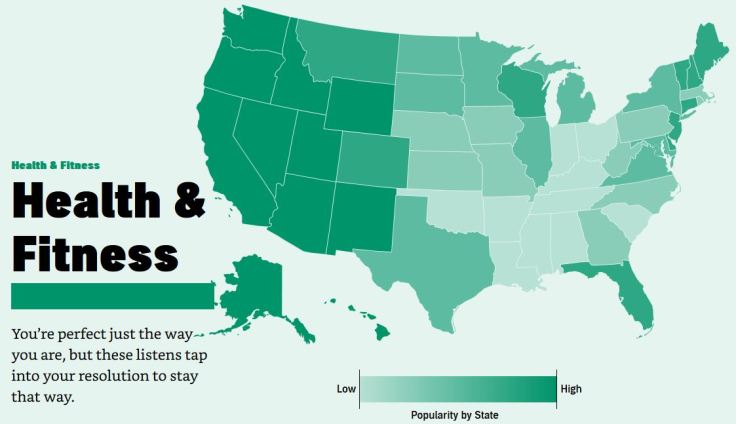
Audible is one of the world’s largest audio book distributors and they have recently mapped out their customers buying patterns at the state level, looking at nine genres.  


Questions to Ponder: What patterns do you see in this set of maps?  What cultural and economic factors help to explain the spatial patterns that you see? 


Tagsmapping, cultureEnglish.

Hijab: Veiled in Controversy

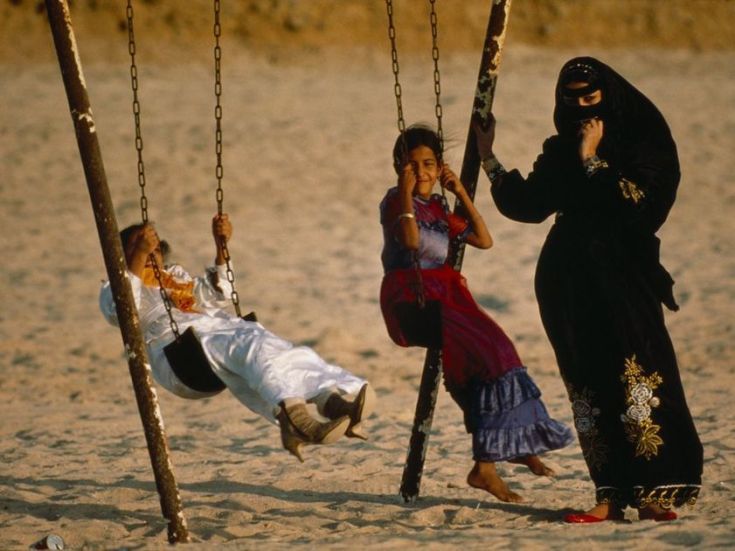
Hijab is an Islamic concept of modesty and privacy, most notably expressed in women’s clothing that covers most of the body.

Source: www.nationalgeographic.org

What is the geography of the hijab?  Covering one’s head pre-dates Islam in the Middle East but many associate this practice strictly with Islam and only for women. Read this article (with teaching tips and supplemental resources) for more context on this cultural and religious practice.

Tags: Islam, perspective, religion, culture, National Geographic.

America’s Empty-Church Problem

The culture war over religious morality has faded; in its place is something much worse.


In his book Twilight of the Elites, the MSNBC host Chris Hayes divides American politics between “institutionalists,” who believe in preserving and adapting the political and economic system, and “insurrectionists,” who believe it’s rotten to the core. The 2016 election represents an extraordinary shift in power from the former to the latter. The loss of manufacturing jobs has made Americans more insurrectionist. So have the Iraq War, the financial crisis, and a black president’s inability to stop the police from killing unarmed African Americans. And so has disengagement from organized religion.

Source: www.theatlantic.com

Forgive the inflammatory title and the partisan source of this article if those are things that would worry you.  This discussion of how secularization is (and is not) changing the nature of American politics gives people much to consider–no matter where you fit on any political or religious spectrum. 


Tagsop-ed, religion, culture, political, USA.

Combatting FGM

“The United Nations Development Programme started to advocate against the practice of female genital mutilation (FGM) back in 2003 when it was taboo even to speak about it. In 2008, the practice was banned. The government of Egypt has institutionalized the adoption of FGM abandonment; while prevalence rates remain high (namely among older women), the response of younger girls and mothers of new generations to FGM abandonment campaigns is much higher.”

Source: www.youtube.com

This is always a difficult topic for me to talk about in my college classes since it is such a sensitive topic.  However, because it touches on so many taboo topics, that is the very reason that that practice of FGM has continued in many African and Middle Eastern countries.  See the map embedded in this article to know which countries have the highest prevalency rates.  Some are concerned that through relocation diffusion, international migrants can bring this practice to areas such as Europe. Western efforts to eradicate FGM are usually ineffective and sometimes backfire (the author in the linked articles feels that the term mutilation, while accurate, is counterproductive).


Tags: culture, gender, media

Language: The cornerstone of national identity

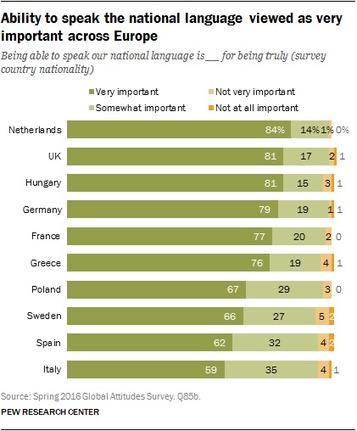
“Of the national identity attributes included in the Pew Research Center survey, language far and away is seen as the most critical to national identity. Majorities in each of the 14 countries polled say it is very important to speak the native language to be considered a true member of the nation.”

Source: www.pewglobal.org

Most Europeans see language as a strong prerequisite to be a part of the “national identity.”  Immigration has put a strain on cultural identities that are often very political. A majority of European agree on the link between language and national identity, but not surprisingly, the older Europeans and those on the political right feel more strongly about the importance of speaking the national language to truly ‘belong.’


Tags: language, culturepolitical, Europe, migration, ethnicity.

Create a free website or blog at WordPress.com.

Up ↑