Search

GEOGRAPHY EDUCATION

Supporting geography educators everywhere with current digital resources.

Tag

development

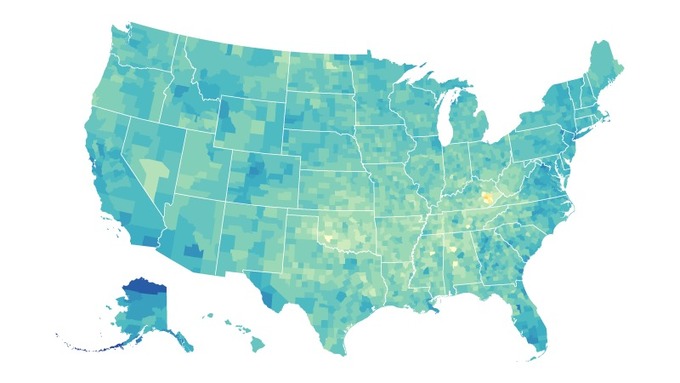
As U.S. Life Expectancies Climb, People In A Few Places Are Dying Younger

“The wealthiest country, which spends the most money on care for the sick, has far from the best health outcomes. Babies born in eastern Kentucky, along the Mississippi Delta and on Native American reservations in the Dakotas have the lowest life expectancies in the country. If current health trends continue, they aren’t expected to live much beyond an average of 70 years. Meanwhile, a baby born along the wealthy coast of California can be expected to live as long as 85 years, the authors found.

Source: fivethirtyeight.com

Questions to Ponder: What geographic and socioeconomic factors shape mortality rates?  What is better about society today then before?  Has anything worsened?  How come?


Tagsmortality, medical, developmentregions, USA, population, statistics.
The Fallacy of Endless Economic Growth

What economists around the world get wrong about the future.


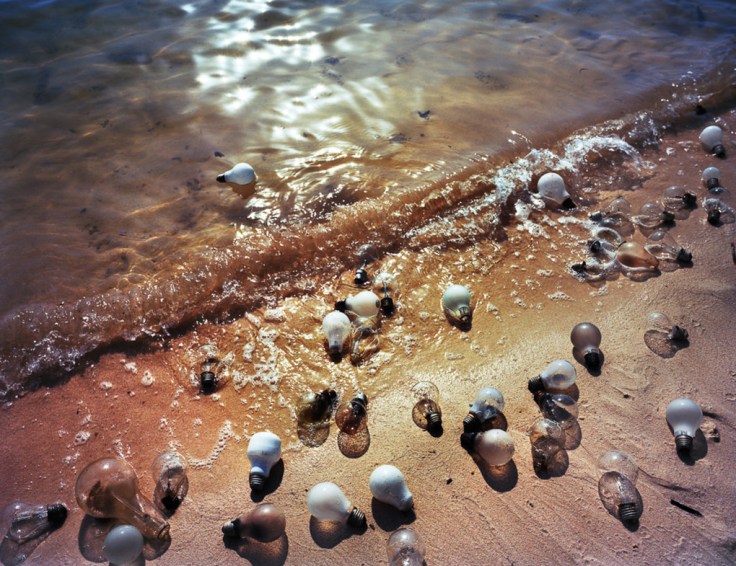
The idea that economic growth can continue forever on a finite planet is the unifying faith of industrial civilization. That it is nonsensical in the extreme, a deluded fantasy, doesn’t appear to bother us. We hear the holy truth in the decrees of elected officials, in the laments of economists about flagging GDP, in the authoritative pages of opinion, in the whirligig of advertising, at the World Bank and on Wall Street, in the prospectuses of globe-spanning corporations and in the halls of the smallest small-town chambers of commerce. Growth is sacrosanct. Growth will bring jobs and income, which allow us entry into the state of grace known as affluence, which permits us to consume more, providing more jobs for more people producing more goods and services so that the all-mighty economy can continue to grow. “Growth is our idol, our golden calf,” Herman Daly, an economist known for his anti-growth heresies, told me recently.


Tagsop-ed, economicindustry, sustainability, development, consumption, climate change, environment, resources.


Source: psmag.com

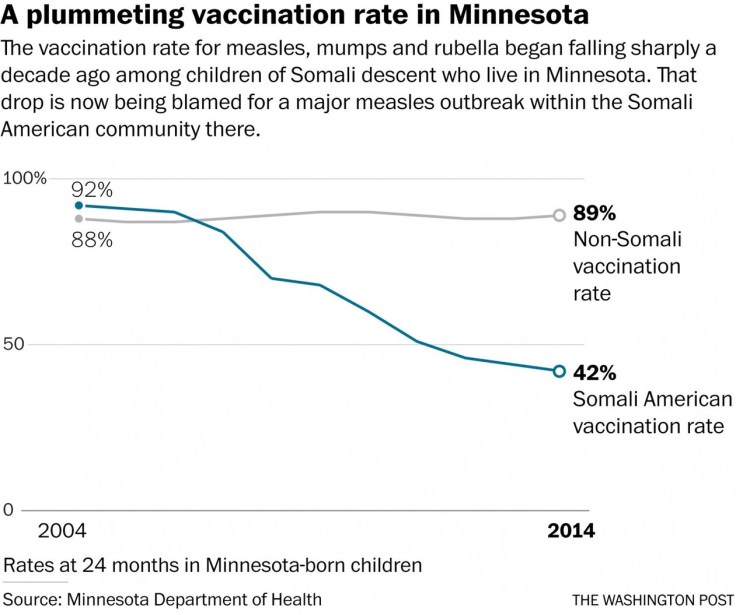
Anti-vaccine activists spark Minnesota’s worst measles outbreak in decades

In Minnesota, the Somali American community has been hit hard, with a fourth of the young patients hospitalized.

Source: www.washingtonpost.com

I had measles as a child. I am so disheartened to see this now-perfectly preventable disease that nearly killed me resurface in the United States because of a fear-baiting, anti-intellectual movement.  The spread of any disease carries spatial component that interests geographers, but there is also cultural geographies that help to understand, explain, and (hopefully) combat this issue.  Please vaccinate the ones you love.   


Tagsmedicaldiffusion, culture, mortality, development, cultural norms.

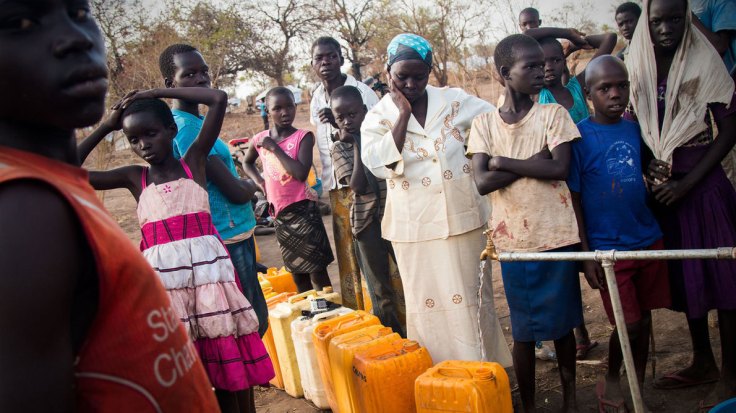
Short Film: How Water Gets From The Nile To Thirsty Refugees

Hundreds of thousands of refugees have fled the civil war in South Sudan and resettled in Uganda. This 12-minute documentary shows the daily struggle to get water.

Source: www.npr.org

Next to nothing in this video will make you happy about the way things operate for refugees in Northern Uganda who have fled from South Sudan.  We all know the about the dire conditions that refugees face, but knowing about the specifics, and hearing stories from the refugees about their lives and living conditions is powerful.  A huge influx of refugees can tax local resources, especially water.  Food can be shipped in, but water a much more locally variable resource.   The UN refugee camps recommend at least 15 liters of water per person be made available each day, but often it is more like 4-8 liters in these camps.  Dedicated wells (or boreholes) are more effective, but costly.  Trucking in water from the Nile River is the preferred method to simply keep these drowning people’s heads above water.    

Questions to Ponder: Consider how much water you drink, use for cooking, bathing, etc. per day in your household.  How difficult would it be to live on 4 liters of water a day?  What about your lifestyle would be changed? 


Tags: Africa, development, Uganda, migrationrefugees, environment, water, sustainability, resources.

Why do women live longer than men?

Despite the social inequality women experience, they live longer than men. This is the case without a single exception, in all countries.

Source: www.weforum.org

The question “why do women live longer than men?” is both biological and cultural.  This means that 1) gender as a cultural construct that influences behavior is a mitigating factor and 2) sex, as a biochemical issue, is a separate set of determining factors.  Estrogen benefits women because it lowers “bad” cholesterol) and “good” cholesterol, but testosterone does the opposite.  Women are more likely to have chronic diseases, but non-fatal chronic disease, but men are more prone to the more fatal chronic illnesses.  For the cultural reasons, men are less likely to seek treatment, adhere to the prescribed treatment, commit suicide, and engage in more risky behavior.  While these may read like a list of gendered stereotypes that don’t apply to all, when looking at the global data sets, these trends hold  and are more likely to be true.  How masculinity and femininity is constructed certainly shapes many of these factors and deserves some discussion. 


Tags: culture, population, mortality, development, cultural norms, statisticsgender

Water Is Life

Hundreds of thousands of refugees have fled South Sudan to escape the civil war. When they arrive in Uganda, water is what they need most. Without it, they will die.

Source: www.youtube.com

Next to nothing in this video will make you happy about the way things operate for refugees in Northern Uganda who have fled from South Sudan.  We all know the about the dire conditions that refugees face, but knowing about the specifics, and hearing stories from the refugees about their lives and living conditions is powerful.  A huge influx of refugees can tax local resources, especially water.  Food can be shipped in, but water a much more locally variable resource.   The UN refugee camps recommend at least 15 liters of water per person be made available each day, but often it is more like 4-8 liters in these camps.  Dedicated wells (or boreholes) are more effective, but costly.  Trucking in water from the Nile River is the preferred method to simply keep these drowning people’s heads above water.    


Questions to Ponder: Consider how much water you drink, use for cooking, bathing, etc. per day in your household.  How difficult would it be to live on 4 liters of water a day?  What about your lifestyle would be changed? 


TagsAfrica, development, Uganda, South Sudan, migrationrefugees, environment, waterenvironment depend, sustainability, resources.

Senegal’s Great Green Wall combats desertification

“A 7,000 km barrier is being built along the footsteps of the Sahara to stop the desert expanding. The Great Green Wall project started in 2007 in Senegal, along with 10 countries in Africa to combat the effects of climate change. Al Jazeera’s Nicolas Haque reports from Widou, deep in the Sahel.”

Source: www.youtube.com

The Great Green Wall initiative is composed of 11 countries that are cooperating together to combat the physical and human geographic characteristics that make the Sahel one of the more vulnerable ecosystems in the world.  This swath running through Africa is the transition zone where tropical Africa meets the Sahara.  The Sahel is susceptible to drought, overgrazing, land degradation and desertification.  These issues of resource management and land use transcend international borders so this “Green Wall” was created with the intent to protect the environment, landscapes and people of the Sahel from desert encroachment (the shorter, social media friendly version of this video is available here).


Tags: Africa, Senegal, development, environment, waterbiogeography, ecology, environment depend, physical, weather and climate, supranationalism, political ecology.

Death toll doubles in Ethiopia garbage dump collapse

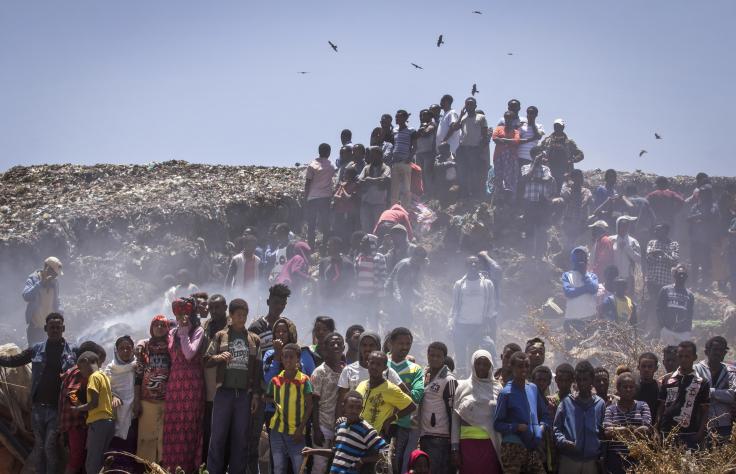
“The death toll from a collapse at a landfill outside Ethiopia’s capital has risen sharply to 113, an Addis Ababa city official said Wednesday, as the country began three days of mourning for victims who were mostly women and children. Saturday’s collapse of a mountain of garbage buried makeshift mud-and-stick homes inside the Koshe landfill on the outskirts of the capital.”

Source: www.cbsnews.com

Some geographies are uncomfortable to discuss because they expose some of the social and spatial inequalities that we wish weren’t part of economic geographies.


Questions to Ponder: Why did this happen?  Why were so many people in the landfill?  


Tags: Ethiopia, Africa, development, urbanpoverty, squatter.

How did Zimbabwe get so poor?

President Mugabe’s economic mismanagement of Zimbabwe has brought the country poverty and malnutrition. After 36 years in charge, he’s looking to extend his rule by 5 more years.

Source: www.youtube.com

Poverty at the national level is usually not a function of limited resources, but more often it is a sign of weak institutions.  This is but one example of how governmental mismanagement can put a country’s developmental progress back decades.


Tags: Africa, Zimbabwe, development, economic, political.

Create a free website or blog at WordPress.com.

Up ↑