Search

GEOGRAPHY EDUCATION

Supporting geography educators everywhere with current digital resources.

Tag

development

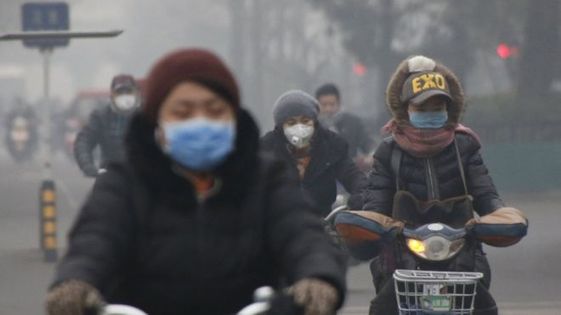
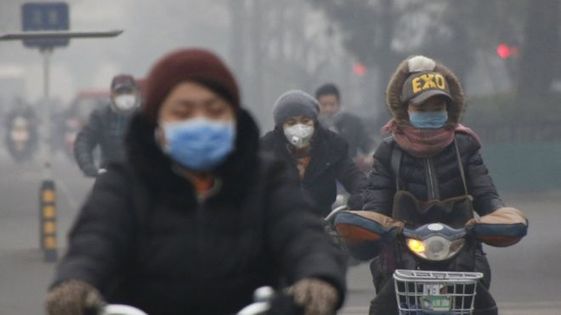
China pollution: First ever red alert in effect in Beijing

“Schools in Beijing are closed and outdoor construction halted as the Chinese capital’s first ever pollution “red alert” comes into effect over smog levels.”

Source: www.bbc.com

A large part of China’s rapid economic growth has been dependent on cutting corners in labor and environmental standards.  This is one reason why I don’t think that the Chinese economy can continue this growth indefinitely.


Tags: pollutionChina, development, economic, megacities, East Asia, industry, sustainability, urban ecology.

China pollution: First ever red alert in effect in Beijing

“Schools in Beijing are closed and outdoor construction halted as the Chinese capital’s first ever pollution “red alert” comes into effect over smog levels.”

Source: www.bbc.com

A large part of China’s rapid economic growth has been dependent on cutting corners in labor and environmental standards.  This is one reason why I don’t think that the Chinese economy can continue this growth indefinitely.


Tags: pollutionChina, development, economic, megacities, East Asia, industry, sustainability, urban ecology.

Are we better off than we think?

https://www.youtube.com/v/0fSiiAunc2A?fs=1&hl=fr_FR

“Despite global inequalities, most of the world is better off than you think – and better off than it has ever been before.  Watch Hans Rosling explain why.”


Tags: media, models, gapminderdevelopment, perspective.

Source: www.youtube.com

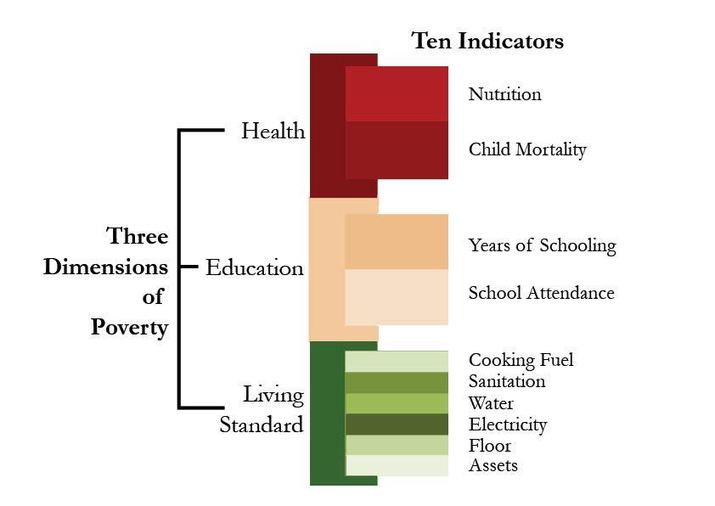
Global Multidimensional Poverty Index

“The global Multidimensional Poverty Index (MPI) is an international measure of acute poverty covering over 100 developing countries. It complements traditional income-based poverty measures by capturing the severe deprivations that each person faces at the same time with respect to education, health and living standards.”

Source: www.ophi.org.uk

The MPI was developed out of a desire to fill some of the gaps in the HDI’s applicability and utility.  Allow me to quote the editor of one the NCGE’s journals, the Geography Teacher, on the usefulness of the MPI website for classroom use: “With the infographics, maps, graphs, country briefings, and case studies, you have a ready-made lesson activities to demonstrate patterns of fertility, mortality, and health for a population unit, and access to health care, education, utilities, and sanitation for an Industrialization and Economic Development Unit. Connections can also be made to malnutrition and water, as well as to key concepts such as pattern and scale, to key geographical skills such as how to use and think about maps and geospatial data, and to the use of online maps and online data.”  Also, this article from the World Bank also give a run-down on the key findings of the MPI in 2014. 

Tags: statisticspopulation, development, unit 2 population, unit 6 industry.
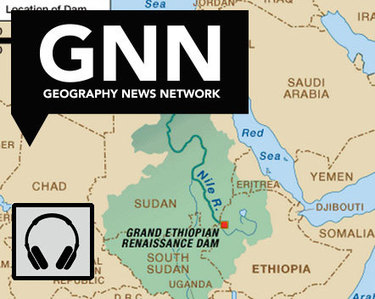
Ethiopia’s Dam Problems

“Ethiopia is three years from completing a dam to control its headwaters, and while Egypt points to colonial-era treaties to claim the water and to stop the project, the question remains as to who own the Blue Nile.”

Source: maps101blog.com

This 7-minute Geography News Network podcast (written by Julie and Seth Dixon) touches on some key geographic concepts.  85% of the Nile’s water comes from the Blue Nile that originates in the Ethiopian highlands–it is the Blue Nile that Ethiopia has been working on damming since 2011.  The Grand Ethiopia Renaissance Dam (GERD) will be located  near the border with Sudan.  Egypt is adamantly opposed to Ethiopia’s plan and is actively lobbying the international community to stop construction on the dam, fearing their water supply with be threatened. 

Tags: Ethiopia, Africa, development. environment, water, energy, borders, political.

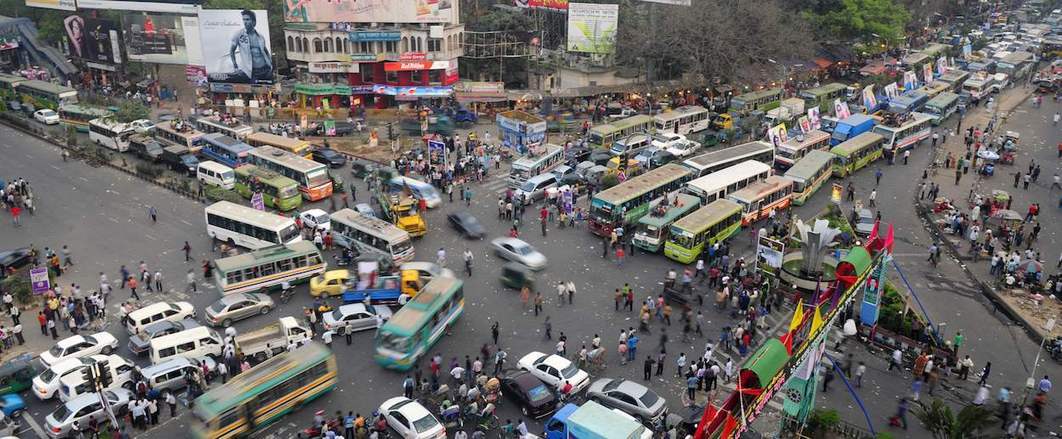
This Is the Traffic Capital of the World

There are only 650 major intersections here—but somehow only 60 traffic lights.

Source: www.newrepublic.com

Dhaka is the capital of Bangladesh and (as I often tell my students) it is the biggest city that nobody has ever heard of.  The infrastructure is so incredibly limited that traffic jams cost the city an estimated $3.8 billion in delays and air pollution.  This is an excellent article to explore some of the problems confronting megacities. 

Tags: Bangladeshtransportation, planning, density, South Asia, development, economic, megacities.

Guns, Germs and Steel

Via Scoop.itGeography Education

This video (like the book of the same title) explores the course of human history to find the geographic factors that can help to explain the global inequalities between societies. Jared Diamond’s answer lies in the military strength (guns), superior pathogens (germs) and industrial production (steel) that agricultural societies were able to develop as the critical advantages over hunter/gatherer societies. The raw materials at the disposal of the societies inhabiting particular environments partially explain the economic possibilities before them.

Diamond hypothesizes that the orientations of the continents play a critical role in the relative advantages among agricultural societies (East-West orientations allow for greater diffusion of agricultural technologies than North-South orientations since the growing seasons and ecology are more compatible), giving Eurasia an advantage over Africa and the Americas. The Fertile Crescent had native plant and animal species ideal for domestication, which then diffused to Europe. Societies that have more developed animal husbandry develop a resistance to more powerful germs. Consequently, when two societies come in contact those with the best resistance to the worse diseases are more successful. Similarly, industrial production depends on an agricultural surplus since specialization requires that some workers not needing to produce their own food to work on technological innovations. Societies that had agricultural advantages were able to invest in technologies (primarily steel) that would enhance their advantages over other societies, as seen during colonization. Societies that had the best environments had access to large plant eating mammals suitable for domestication and the most productive grains would be poised to produce more dangerous guns, germs and steel—the key resources for economic dominion resulting in global inequalities.

Diamond’s critics argue that the ‘geography hypothesis’ is environmental determinism that does not properly value human choices into the equation. Still, the core of this book is the search for connections between the themes of Geography with a spatial framework and the video is available via Netflix, public libraries and many other outlets.

Via www.pbs.org

No, a nation’s geography is not its destiny

Via Scoop.itGeography Education
One of the most widely accepted alternative theories of world inequality is the geography hypothesis, which claims that the great divide between rich and poor countries is created by geographical differences.

This article is an excerpt of the forthcoming book “Why Nations Fail” that should serve as an ideological counterweight to the book “Guns, Germs and Steel.”  The authors argue that the wealth of a country is most closely correlated with the degree to which the average person shares in the overall growth of its economy, meaning that political institutions are more relevant to economic success and development than physical geographic resources.

For more on this upcoming book and it’s hypothesis see this New York Times review.

Via blogs.reuters.com

America Is Stealing the World’s Doctors

Via Scoop.itGeography Education
Who wants to practice medicine in a country where they use power tools in surgery? The dilemma of doctors in the developing world.  

This article’s title is inflammatory, but it touches on some very real interconnected geographic issues.  Economic development in the many parts of the world is complicated by the migration issue of ‘brain drain.’  The individual choices that doctors from the less developed world face often lead the best and brightest workers to leave their home country.  If you could make a very good living as in the United States(the median salary of a surgeon in New Jersey is $216,000) or go back to your home country where your skills are more desperately needed (in Lusaka, Zambia a surgeon makes about $24,000 a year), which would you choose?  This is not a hypothetical example (nor one with only one right answer) but one rooted in a globalized economy, where the places that offer the greatest opportunities for individual advancement get the top talent–excellent for the individual and family economies but problematic at the national scale.
Via www.nytimes.com

Create a free website or blog at WordPress.com.

Up ↑